



By Aziz Khatri
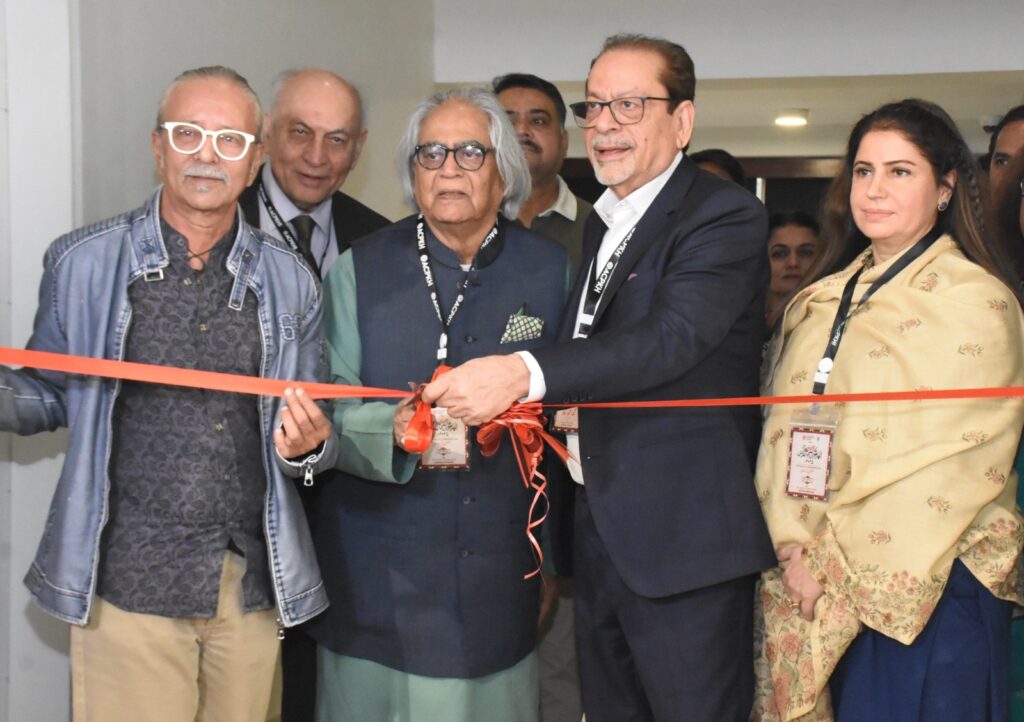
KARACHI: The Arts Council of Pakistan Karachi inaugurated a four-day event, the “18th World Urdu Conference 2025: Pakistan Celebration,” alongside a National Art Exhibition featuring portraits of Quaid-e-Azam Muhammad Ali Jinnah, commemorating his birth anniversary.
The exhibition, held at the Ahmed Parvez Art Gallery, was inaugurated by renowned poet Iftikhar Arif and Arts Council President Muhammad Ahmad Shah. The event brought together leading artists including Nasir Abbas Naeir, Farukh Tanveer Shahab, Tanveer Farooqi, Shahid Rasam, G.N. Qazi, Ijaz Farooqi, Fatima Hassan, and Chand Gul Shah.
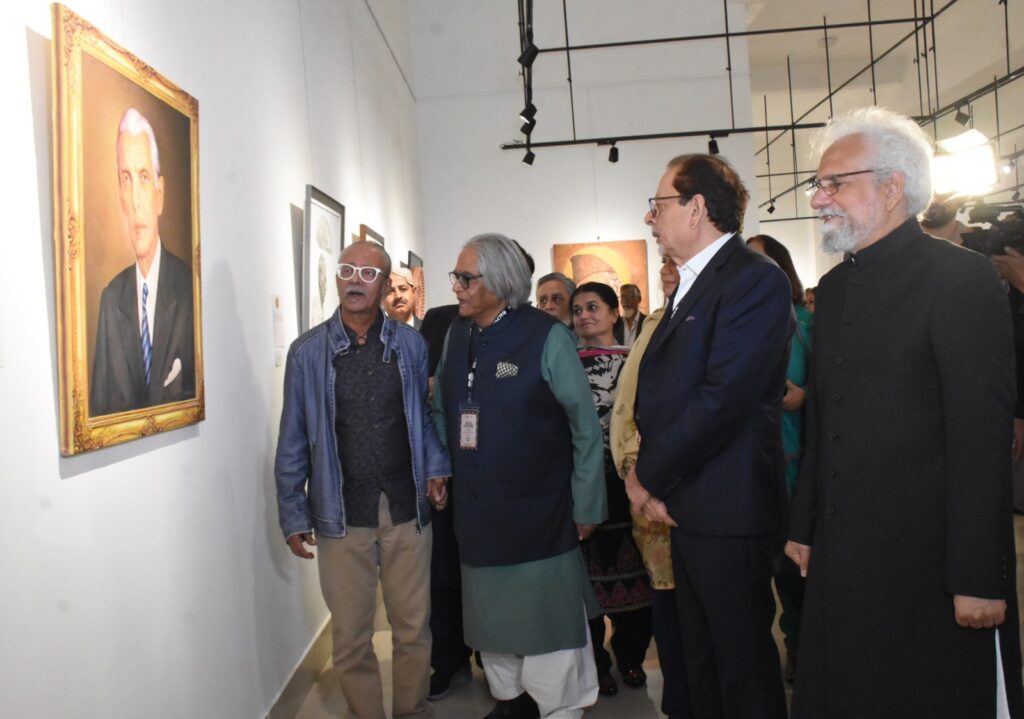
The exhibition displayed works of 20 prominent Pakistani artists, whose portraits of the Father of the Nation drew widespread attention. During the inauguration, Iftikhar Arif praised the Arts Council for its cultural contributions, noting that the global Urdu conference had elevated Pakistan’s cultural profile internationally.
He highlighted the importance of cultural diplomacy and stressed that such initiatives foster dialogue between different identities while strengthening national cohesion. Arif described the Arts Council as a globally recognized institution that attracts participants from around the world and noted the inclusion of artists representing Balochi, Sindhi, Punjabi, and Pashtun communities.
President Muhammad Ahmad Shah said the exhibition was a tribute to the Founder of Pakistan, coinciding with his birthday and the Christmas celebrations. He highlighted the Council’s commitment to promoting art and culture, noting past successful events such as the World Culture Festival concert featuring Rahat Fateh Ali Khan.
Shah emphasized that the Arts Council celebrates art, literature, film, dance, and Urdu language, providing a platform for writers, poets, and artists to showcase their work since 1947. He condemned efforts to undermine Pakistan’s foundations and stressed unity against divisive forces.
The 18th World Urdu Conference, commencing on 25 December, will feature more than 50 sessions over four days. Highlights include poetry recitals, literary discussions, and panels on regional languages and cultures, including Sindhi, Saraiki, Pashto, Punjabi, and Balochi. Sessions will explore Urdu criticism, research, ghazal, prose, modern literature, music, television, traditional media in the digital age, climate change, education standards, and Pakistan’s economic situation.
Notable events include a theatre performance by Peerzada Salman, a session commemorating Shaheed Benazir Bhutto, and musical performances by Fareed Ayaz and Abu Muhammad Qawwal. The conference will conclude on 28 December, continuing the Arts Council’s tradition of fostering Urdu language, literature, and culture while celebrating Pakistan’s heritage.
