



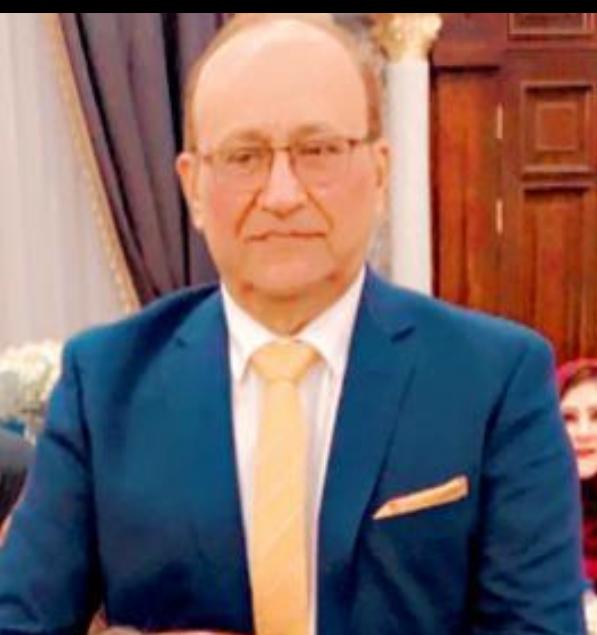
By Amir Muhammad Khan
As the sun rises on 2026, Pakistan steps into a new year filled with both hope and responsibility. The transition from one year to another is never just a celebration; it is a moment for reflection, a chance to consider the triumphs and trials of the past and to chart a course for the future. While the global New Year is marked in festive gatherings, for Muslims in Pakistan and around the world, it is also a time of prayer and contemplation, as many journey to the holy cities of Mecca and Medina to seek blessings for the year ahead. The prayers of these faithful are a quiet but potent force shaping the moral and spiritual fabric of our world.
The year 2025 proved to be a decisive period for Pakistan, a year that tested the nation’s resilience on multiple fronts—security, economy, and geopolitics. Pakistan confronted challenges from an adversary that, despite its larger population, area, and resources, has sought since independence to undermine Pakistan’s sovereignty. Yet, in 2025, the aspirations of this adversary were thwarted. Thanks to the leadership of Chief of Defence Forces Field Marshal Syed Asim Munir and the determined efforts of the armed forces, Pakistan not only safeguarded its borders but also preserved its dignity and international standing. Military courage, strategic acumen, and unity of purpose shattered attempts to malign the country on the global stage, exposing the true face of aggression and terrorism perpetuated by India.
Across continents—from Australia to France and Britain—India’s campaign to portray Pakistan as a terrorist state faltered under the weight of its own actions, highlighting a stark reality: it is often the aggressor itself that propagates violence while attempting to shift blame. The global landscape of 2025 was fraught with conflict and humanitarian suffering. Wars and unrest in Gaza, Palestine, Iran, and the Middle East left millions of civilians in peril, and countless lives were lost amid the rubble of cities. The hypocrisy of world powers, often guided by strategic and economic interests, remained evident as human suffering continued unabated. Against this backdrop, Pakistan’s role as a stabilizing actor, capable of both self-defense and diplomatic engagement, has grown in significance.
The leadership of Saudi Crown Prince Mohammed bin Salman, among others, is widely seen as pivotal to promoting unity in the Muslim world in 2026, a unity that Pakistan must continue to support and strengthen. Domestically, Pakistan faced significant economic and political pressures. Inflation eroded the purchasing power of ordinary citizens, employment opportunities remained scarce, and uncertainty weighed heavily on families across the nation. Yet, the resilience of the Pakistani people shone through. The year was marked by patience, perseverance, and a collective commitment to the country’s future. Despite adversity, the people demonstrated that even in moments of hardship, hope endures.
The sacrifices of Pakistanis living abroad, their remittances and engagement with the homeland, continue to sustain the nation’s spirit and economy, highlighting the interconnectedness of national well-being and global citizenry. Security challenges remained a central concern in 2025. In Khyber Pakhtunkhwa, political instability intersected with terrorist activity, with certain groups prioritizing disruption over governance. At the borders, particularly the Afghan frontier, cross-border threats and the proliferation of weapons continued to test Pakistan’s strategic readiness. Yet, Pakistan’s military leadership maintained vigilance, ensuring that these challenges were contained while protecting civilians and national interests.
These experiences underscored a broader lesson: political stability, economic reform, and coordinated security measures are not optional—they are essential foundations for sustainable national development. The New Year offers a chance to reaffirm shared responsibilities. It is a time for government and opposition, institutions and citizens alike, to commit to upholding the law, promoting integrity, and prioritizing national interest over individual or partisan agendas. Cooperation and collective problem-solving must replace blame and discord. Political stability, economic recovery, and social cohesion are the pillars upon which 2026 can be built, and they require participation from every sector of society.
For the Pakistani diaspora, especially in Saudi Arabia, the New Year brings tangible reasons for optimism. The long-awaited appointment of a new Consul General, Syed Mustafa Rabbani, signals a renewed commitment to strengthening community ties and addressing the concerns of Pakistanis abroad. The handover of the historic Pakistani consulate building in Jeddah after forty years is a symbolic gesture, reflecting both respect for citizens and a vision of future engagement. These developments are not just administrative; they reaffirm the bond between Pakistan and its citizens, at home and overseas, and provide a platform for more robust diplomatic and communal relations.
(The writer is a veteran journalist having decades of experience across print and broadcast media in Pakistan and the United States, can reached at editorial@metro-morning.com)
