





By Aziz Khatri
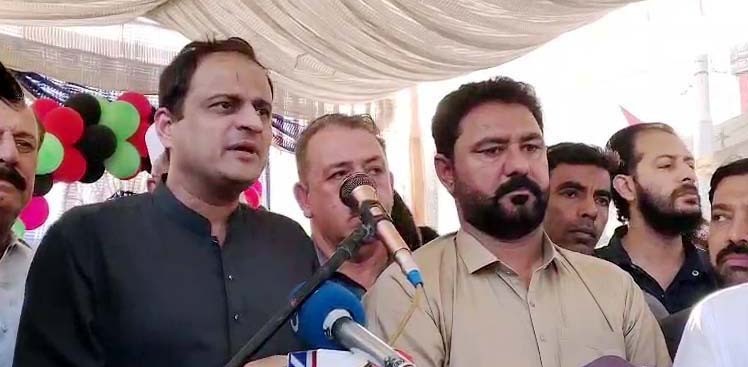
KARACHI: Mayor Karachi Barrister Murtaza Wahab laid the foundation stone for a series of development projects worth Rs. 120 million in Mominabad Town, District West. The ceremony was attended by Member of the Provincial Assembly Ali Ahmed Jan, local office-bearers of the Pakistan Peoples Party, City Council members, deputy parliamentary leaders, UC chairmen, and a large number of residents.
Addressing the gathering, Mayor Wahab emphasized that the visit was not a symbolic gesture but a practical demonstration of the Pakistan Peoples Party Chairman Bilawal Bhutto Zardari’s commitments to Karachi’s residents. He highlighted that road rehabilitation and improvement projects in UCs 22, 23, and 25 of Mominabad have formally commenced, with the installation of 113,796 square feet of modern paver blocks and upgrades to the sewerage system. These initiatives aim to provide safer, more efficient transportation for citizens.
The Mayor stressed that development in District West would be carried out on a priority basis through the joint efforts of the Sindh Government and the Karachi Metropolitan Corporation (KMC), ensuring modern and sustainable infrastructure. He criticized political hypocrisy, asserting that the PPP delivers results through performance rather than slogans, and pledged that public issues would be resolved by elected representatives.
Mayor Wahab further announced that KMC plans to spend Rs. 30 billion on the city this year to provide essential services. He outlined upcoming projects, including the construction of Metroville Road starting January 8, the establishment of pumping stations in Mominabad and Manghopir, and the completion of the second Hub Dam canal. He also visited the Orangi Town congregation ground to review arrangements for the Tablighi congregation and reassured residents that water supply issues in Mominabad were being addressed.
He concluded by urging residents and stakeholders to prioritize action over politics, emphasizing that Karachi belongs to all its citizens. The Mayor affirmed that development work would proceed without discrimination, and leadership would be judged by the ability to deliver on promises through practical performance.
