





By Sajjad Shah
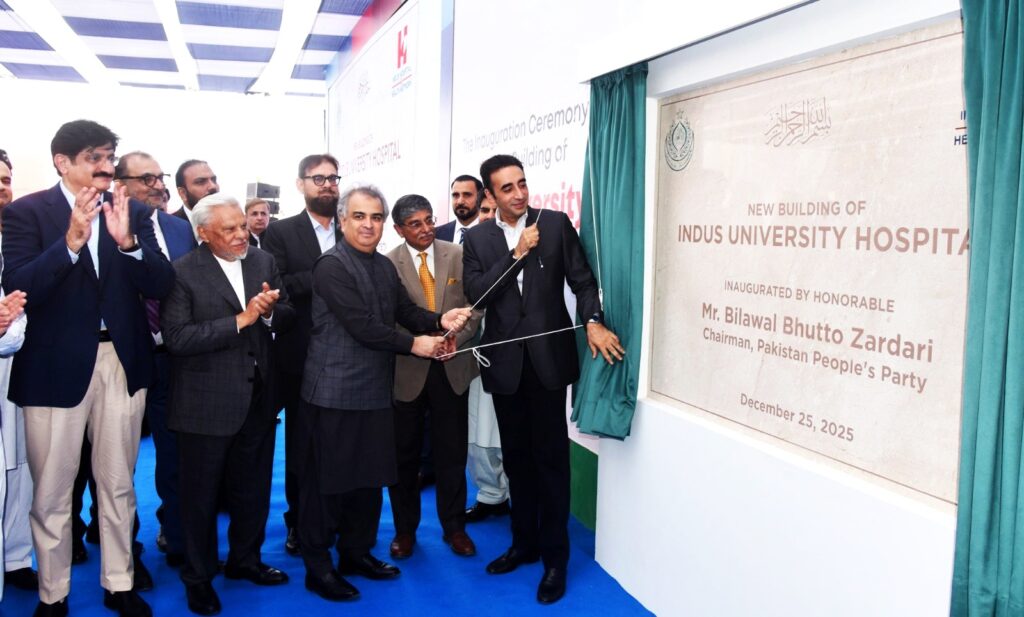
KARACHI: Pakistan People’s Party chair Bilawal Bhutto Zardari on Wednesday inaugurated the Indus University Hospital in Karachi, describing the project as a historic step towards strengthening the country’s healthcare system and expanding access to free, quality treatment for those unable to afford it.
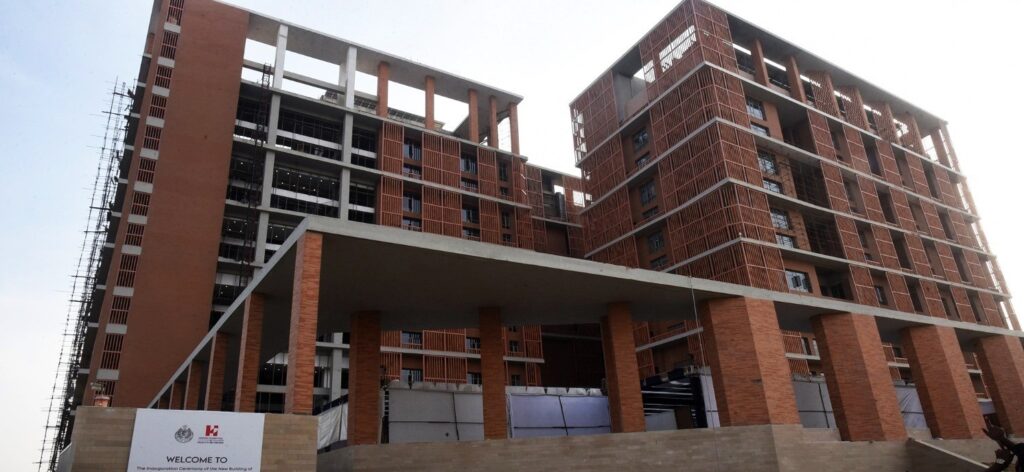
Once fully completed over the next three years, the hospital is expected to become Pakistan’s largest provider of free medical care, with a total capacity of 1,350 beds. The project has been designed to meet Karachi’s growing healthcare needs and, upon completion, will offer comprehensive services across multiple medical specialties at no cost, benefiting millions of patients each year.
The inauguration ceremony was attended by Sindh chief minister Syed Murad Ali Shah, members of the provincial cabinet, chief secretary Asif Hyder Shah, health secretary Rehan Iqbal Baloch, the chairman of the Indus Hospital and Health Network (IHHN) board Abdul Karim Paracha, board members Khalid Khanani and Saleem Razzak Tabba, prominent donors and other senior figures.
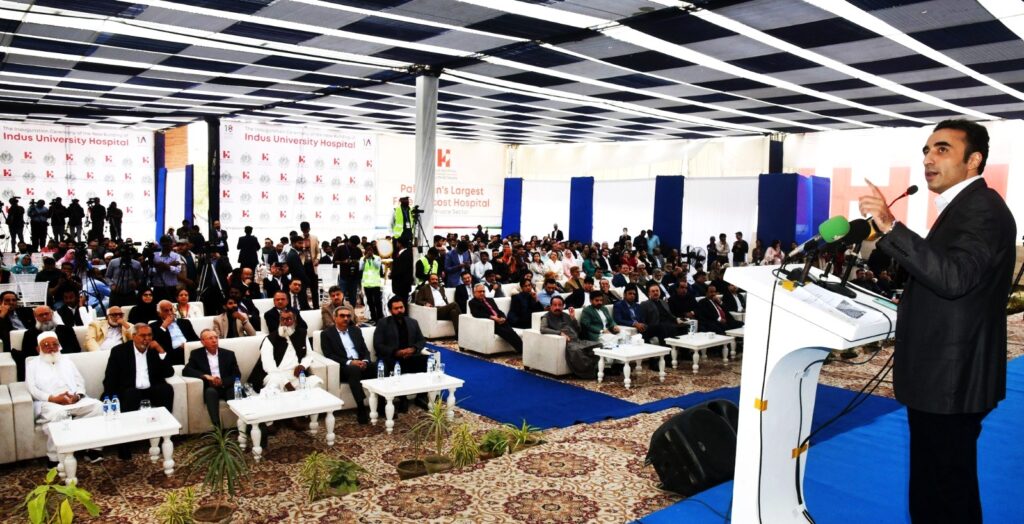
Addressing the gathering, Bilawal said the Indus University Hospital represented a major advance in delivering dignified and affordable healthcare to those who could not bear the burden of medical expenses. He said that once completed, the hospital would play a transformative role in improving public health for Karachi’s population.
During his visit, Bilawal toured the newly inaugurated sections of the hospital alongside senior leadership of the Indus Hospital and Health Network. The facilities include a state-of-the-art emergency department and outpatient services, advanced diagnostic systems, internationally standard operating theatres and patient-friendly infrastructure developed in line with global healthcare benchmarks. Further construction and expansion are scheduled to be completed within three years.
Speaking on the occasion, chief minister Murad Ali Shah said the Sindh government remained fully committed to providing free, affordable and quality healthcare, adding that the Indus Health Network had emerged as one of the province’s most successful public-private partnership models.
Recalling the early days of the Indus Hospital, Shah said the journey began with a modest grant request and the purchase of land, supported by volunteers who offered professional services without charge. He said the provincial government’s initial grant of Rs300m had steadily increased over time and now stood at Rs8bn annually, which he said was being paid regularly.
He noted that the partnership expanded from Karachi to other districts, including Badin, and later included the Jamshoro Regional Blood Centre, which now has the capacity to provide around 20,000 blood units across the region. Shah said collaboration with the Indus Health Network grew stronger after 2018, particularly during the Covid-19 pandemic, when the hospital played a critical role in expanding testing capacity at a time of national emergency.
Despite economic pressures following the pandemic, Shah said the Sindh government continued to stand by the Indus Hospital, stressing that the network was not working alone but as a partner of the provincial government. He said patient data showed that nearly half of those treated came from outside Karachi, including Balochistan and Punjab, reflecting the reach and credibility of Sindh’s healthcare initiatives.
The chief minister also announced plans to further strengthen healthcare services in Badin by linking the entire district to a central hospital and upgrading taluka headquarters hospitals in collaboration with the Indus Health Network. He said work on these initiatives would begin in the first week of the coming year.
At the ceremony, Abdul Karim Paracha praised the Sindh government’s sustained support, while Indus Hospital president Dr Abdul Bari Khan described the project as a revolutionary step for Pakistan’s health system. The network’s chief executive, Professor Syed Zafar Zaidi, said the Indus University Hospital reflected a vision centered on compassion, dignity and patient-focused care, bringing treatment, education and research under one roof.
Built at an estimated cost of Rs72bn, the Indus University Hospital is spread over a 20-acre campus with a covered area of 3.52m square feet. Once completed, it will operate under an integrated care model, offering free primary, secondary and tertiary healthcare services, with 36 international-standard operating theatres, specialized cancer care, and centers for medical innovation and research linked to a health sciences university comprising seven colleges.
