





MM Report
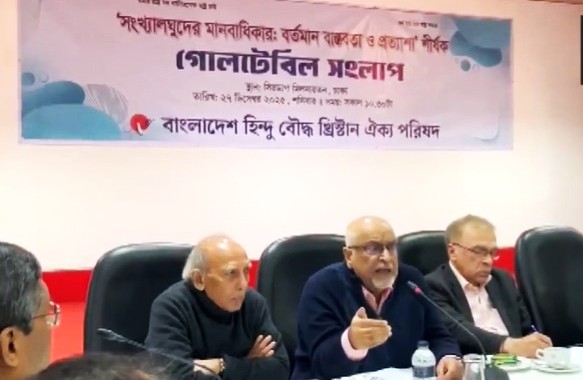
DHAKA: Dhaka witnessed a significant gathering of minority community leaders this week, as the Bangladesh Hindu Buddhist Christian Unity Council (BHBCUC) convened a roundtable discussion to address the political representation of religious minorities in the country.
The meeting, chaired by the council’s general secretary, Monindra Kumar Nath, brought together activists, community representatives, and policymakers who voiced their concerns over the ongoing marginalization of minority communities in national politics. During the discussion, participants underlined the urgent need for structural reforms to ensure that minorities are given a meaningful role in the country’s political process.
At the heart of their demands was a call for a 10 per cent nomination quota for minority candidates, which they argued would help correct long-standing imbalances in representation. The council also presented an eight-point agenda to guide lawmakers and political parties in creating a more inclusive political landscape, although the details of the agenda were not disclosed in full.
Monindra Kumar Nath emphasized that the roundtable was not merely a symbolic exercise, but a substantive effort to bring the issues of religious minorities to the forefront of the national discourse ahead of the upcoming elections. “Our communities have contributed significantly to Bangladesh’s social, cultural, and economic life, yet our voices remain underrepresented in the decision-making process,” he said, calling on political parties to respond positively to their proposals.
The gathering reflected broader anxieties among minority groups in Bangladesh, who have often expressed concerns over discrimination and political exclusion. By presenting concrete demands in a structured manner, the BHBCUC signaled its intent to engage constructively with the political process and ensure that the upcoming elections are a platform for equitable representation, rather than perpetuating historical marginalization.
The roundtable concluded with a consensus that meaningful political inclusion would require both legislative commitment and active participation from civil society, underscoring the council’s determination to make minority rights a central issue in the national agenda.
