





By Aziz Khatri
KARACHI: The four-day 18th Aalmi Urdu Conference 2025 – Jashan-e-Pakistan, organised by the Arts Council of Pakistan Karachi, ended on Sunday at the YMCA Ground, bringing together writers, scholars and artists in a wide-ranging celebration of literature and the fine arts.
The closing session was presided over by the poet Iftikhar Arif, with Sindh’s chief secretary, Syed Asif Hyder Shah, attending as chief guest. A packed stage reflected the scale of the gathering, with leading literary figures including Muhammad Ahmed Shah, president of the Arts Council, Khurshid Rizvi, Nasir Abbas Nayyar, Asghar Nadeem Syed, Hameed Shahid, Ghazi Salahuddin, Abaseen Yousafzai, Zia-ul-Hassan, Yousaf Khushk, Ejaz Farooqi, Syed Naqvi, Fatima Hasan, Adil Soomro and Munawar Saeed in attendance.
A highlight of the ceremony was the presentation of a Lifetime Achievement Award to the distinguished Arabic and Urdu scholar Professor Syed Khurshid Hasan Rizvi, in recognition of his long-standing contribution to literature.
Addressing the gathering, the chief secretary said language and literature were passing through difficult times, with declining public engagement in cultural life. Paying tribute to Muhammad Ahmed Shah, he said the Arts Council president had built a major cultural institution with limited resources, transforming it into what he described as an “art city”.
“When I feel stressed, I come to the Arts Council; the atmosphere here carries the fragrance of freedom,” he said. He noted that organising a 40-day World Culture Festival followed immediately by the Aalmi Urdu Conference required exceptional commitment, and assured full cooperation from the Sindh government in implementing proposals put forward by the Arts Council. He also stressed the importance of reviving a reading culture among children.
Muhammad Ahmed Shah said holding the conference so soon after the World Culture Festival had seemed almost impossible, but was achieved through collective effort. He thanked scholars and writers who travelled from across Pakistan and abroad, and said the strength of Urdu lay in its ability to bring diverse voices together, reinforcing the federation.
“If cultural work is happening anywhere in Pakistan, it is in Sindh,” he said, describing the province as a shared space for Pashtuns, Punjabis, Baloch, Gilgitis and Saraikis. He called on the federal government to invest more seriously in cultural infrastructure across the country, arguing that a nation’s identity is shaped by its culture and civilisation.
Iftikhar Arif said he had not encountered any other institution where so many cultural traditions converged under one roof. He urged stronger literary and cultural links with neighbouring countries, arguing that wars and military action could not resolve political conflict. “Dialogue and a culture of conversation are the only way forward,” he said.
The fourth and final day featured sessions on a wide range of themes, including Urdu fiction, progressive literature in Pakistan, poetry and prose, Balochi literature and culture, Pakistan’s economic situation, Sindhi literature and criticism, centenary discussions on Jameeluddin Aali and Nasir Kazmi, Pakistani sports champions, Saeed Naqvi’s short stories, experimental Urdu poetry, the evolution of painting in Pakistan, a conversation with actor Imran Ashraf, and readings by poets representing the new generation. Sixteen books were also launched.
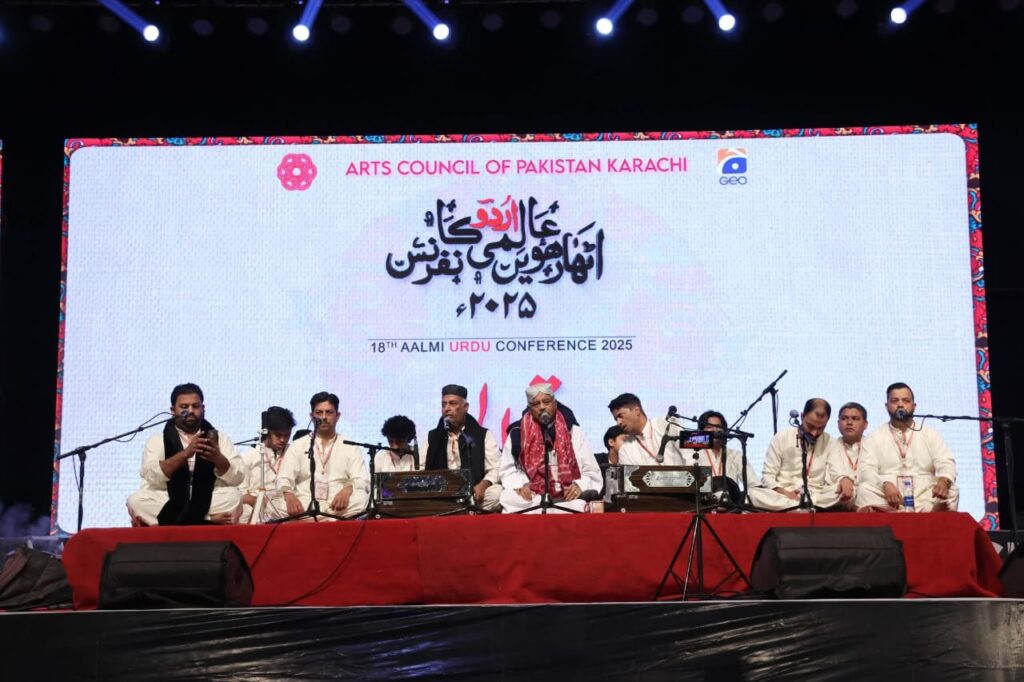
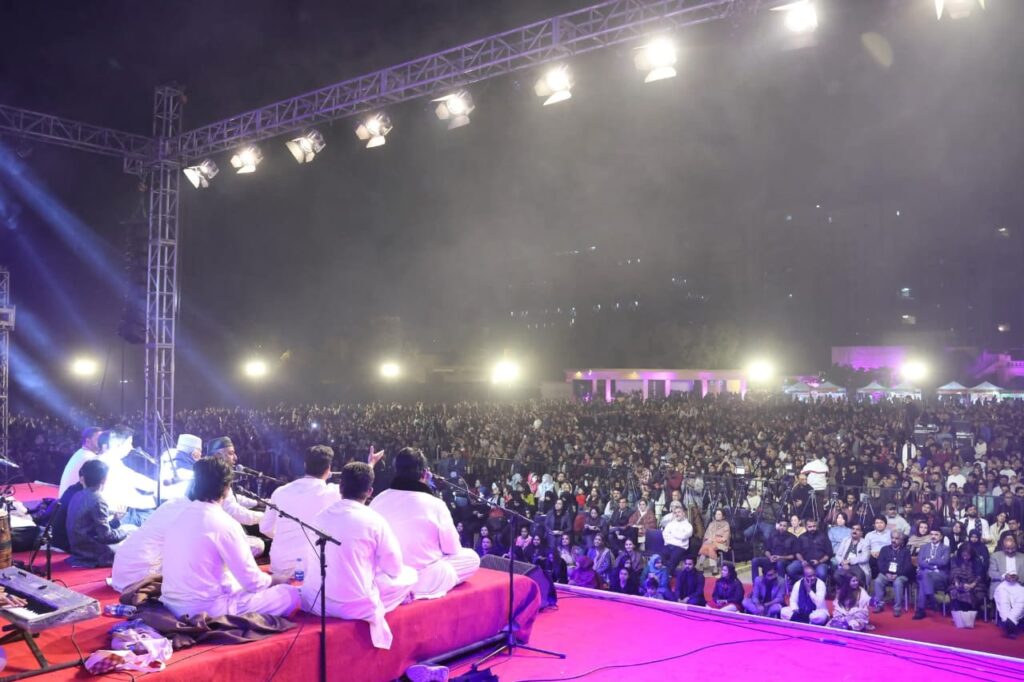
The conference concluded with Aahang-e-Khusrawi, a qawwali performance by Fareed Ayaz and Abu Muhammad, who captivated the audience late into the evening. Thousands of people attended the final day of the four-day event, bringing one of Karachi’s largest annual literary gatherings to a close.
