





The PSIB aims to ensure tangible results, offering certification, job placement, and a minimum of six months’ employment retention for every trainee
By Mehrab Shah Afridi
ISLAMABAD: Pakistan on Tuesday launched its first-ever private-capital-funded Pakistan Skills Impact Bond (PSIB), a milestone in the country’s approach to workforce development.
Backed by a guarantee from the Ministry of Finance, the bond will operationalize an inaugural Rs1 billion pilot tranche of a three-year program aimed at scaling technical skills training across the country. The PSIB is designed to deliver measurable outcomes, including certification, job placement and at least six months of employment retention for each trainee.
It marks a shift from traditional input-based public spending toward outcome-driven, private-sector-enabled social investment. Future tranches are expected to link repayment to a portion of trainee salaries, creating long-term sustainability while monetizing Pakistan’s demographic dividend both domestically and through the export of certified talent.
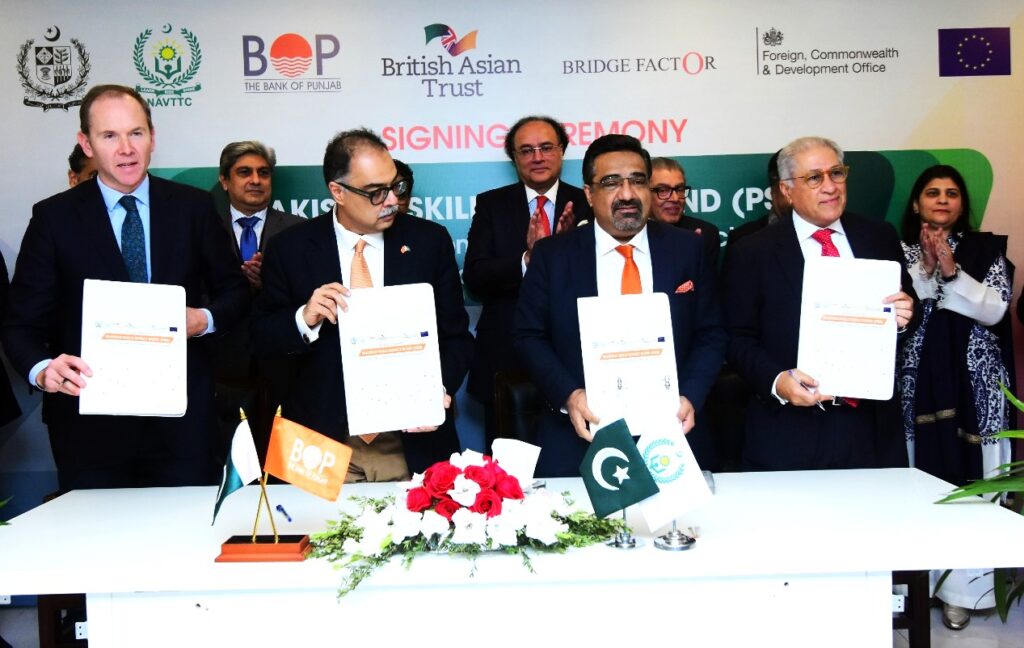
The launch ceremony, which included the signing of investor and issuer agreements, was attended by senior government officials, development partners, private sector leaders and representatives of international organizations. He described the PSIB as “an important moment focused on education and training.”
Speaking at the event, Federal Minister for Finance and Revenue Muhammad Aurangzeb said Pakistan’s demographic dividend can only be realized if the country succeeds in upskilling and reskilling its youth at scale. He emphasized that the bond reflects a strategic shift away from traditional budget-based social spending toward outcomes, evidence and accountability.
Aurangzeb noted that Prime Minister Shehbaz had tasked him last year to chair a multi-stakeholder committee on Social Impact Financing, which developed Pakistan’s first Social Impact Financing Framework. The framework identifies six national priority pillars, with education and human capital at its core, followed by gender equality, health and well-being, population stabilization, climate resilience, and poverty and migration.
Highlighting gender inclusion, the finance minister welcomed a recommendation from the British Asian Trust that 40 percent of PSIB trainees be women. He added that the Ministry of Finance’s Rs1 billion guarantee is catalytic, aimed at attracting private capital and establishing credibility for this pioneering initiative.
Aurangzeb congratulated NAVTTC, the program’s steering committee, the Foreign, Commonwealth & Development Office (FCDO) and the Bank of Punjab for their roles in advancing this landmark project.
