





By Uzma Ehtasham
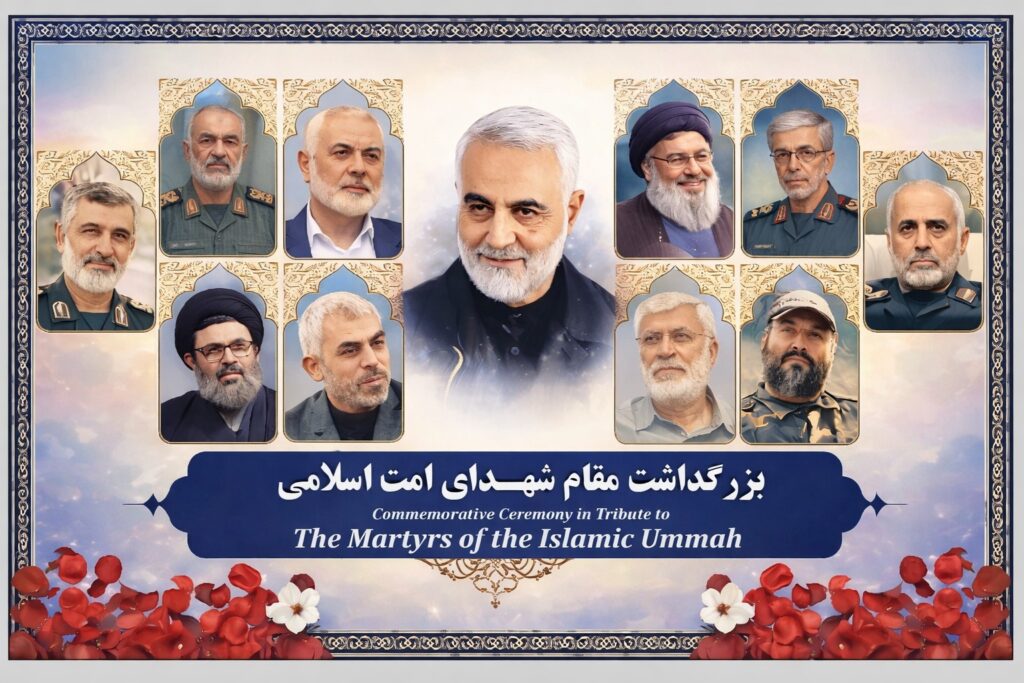
KARACHI: A ceremony marking the birth anniversary of Hazrat Ali (AS) and the “World Day of Resistance” was held at the Iranian consulate in Karachi, where speakers paid tribute to the “martyrs of Quds” and reaffirmed their support.
Welcoming the guests, Iran’s Consul General in Karachi, Akbar Eissa Zadeh, said the resistance front had not weakened but had instead entered what he called a new phase that would produce “meaningful results”. He argued that the Muslim world had no alternative path to progress and higher goals except resistance.
Eissa Zadeh said Iran would continue its political, legal and moral support for the resistance front, adding that Tehran believed the future of the Middle East lay not in the hands of external powers but with regional forces themselves. He stressed that resistance was not limited to armed struggle, but also included economic, cultural, artistic, media and diplomatic efforts.
Today, Iran’s Consul General said, resistance had become not only a defensive strategy but also a means of influence and development at both regional and international levels. Speaking at the event, Hasan Habib, chairman of the Pakistan Council for Foreign Relations and a former senior diplomat, underlined the growing importance of Muslim unity in the face of what he called global arrogance.
Eissa Zadeh warned that Muslims must not allow their opponents to exploit internal differences, saying that a united Muslim world would be impossible to defeat. He criticized global powers for exploiting minor differences among Muslims and said the Organization of Islamic Cooperation had failed to strengthen unity and solidarity within the Muslim world.
Pakistan’s foreign office director general in Karachi, Irfan Soomro, described Iran as an important neighbor and said it had strongly supported Pakistan’s position during the recent Pakistan-India conflict. He recalled that Pakistan, in turn, had stood by Iran during the 12-day Iran-Israel war and had offered unconditional support at international forums. Regional disputes, he said, should be resolved through dialogue rather than coercion or domination.
Maulana Muhammad Hussain Mehnati, former head of Jamaat-e-Islami Sindh, said Imam Khomeini had given special attention to the Palestinian issue and embedded it in Iranian political culture. Referring to events after 7 October, he said the world had witnessed what he described as a global shift, with international public opinion moving away from Israel and towards the resistance front and Palestine.
Allama Ghulam Shabbir Meesami, secretary general of the Shia Ulema Council Pakistan, paid tribute to the martyrs of the resistance front, saying Imam Khomeini had transformed the global political landscape by presenting resistance as the only path to freedom. He strongly condemned a statement attributed to US president Donald Trump, in which he warned Iran over dealing with protesters, and said any individual or institution seeking the destruction of Iran’s Islamic system should be firmly rejected and condemned.
Abul Khair Zubair, head of the Milli Yakjehti Council of Pakistan, criticised the participation of some Muslim countries in the Abraham Accords, describing it as indirect support for Israel. He said Iran was, in his view, the only country in the Islamic world consistently backing Palestine, and urged other Muslim states to follow its example.
Maulana Syed Ahmed Iqbal Zaidi, deputy chairman of Majlis Wahdat-e-Muslimeen Pakistan, claimed that Islamic State was created by the US and Israel to weaken the resistance front. He said the group had planned to seize control of Muslim countries, but that Qassem Soleimani had played a decisive role in thwarting what he described as a dangerous plan. Soleimani, he said, had fought not only for the Muslim world but for humanity as a whole. He added that colonial powers continued to inflame sectarian differences to undermine Muslim unity, and argued that Iran had grown stronger despite threats of attack.
Senior Sunni scholar Maulana Azad Jameel praised the Iranian representative office in Karachi for organizing the event in memory of the martyrs of Quds. He described the martyrs as a symbol of unity among Muslims and criticized what he called the selective outrage of those who campaign for animal rights while remaining silent on human rights violations and the killing of Palestinians.
The event, organized under the auspices of Iran’s consulate, drew participation from religious scholars of different Islamic schools of thought, university teachers, diplomats, civil society figures and members of the media from across the city.
