





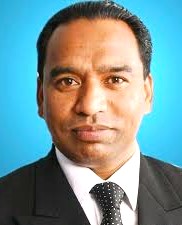
By Asghar Ali Mubarak
For much of its turbulent history, Pakistan has struggled to present a coherent face of the state. Civilian governments and the military have often spoken in different registers, sometimes at cross-purposes, weakening policy execution at home and credibility abroad. In 2025, however, that familiar discord gave way to something rarer: a sustained alignment between elected authority and the military command, particularly around the National Action Plan and the long war against terrorism. Whether one agrees with every claim made by those in power or not, it is difficult to deny that the tone, coordination and confidence of the state shifted in a way that marked the year out as consequential.
At the center of this alignment stood Prime Minister Shehbaz Sharif and army chief Field Marshal Asim Munir, a pairing that projected unity at a moment of acute pressure. Pakistan faced a volatile regional environment, a renewed wave of terrorist violence, and the aftershocks of political instability at home. In earlier eras, such conditions might have deepened institutional fault lines. Instead, the civilian and military leadership articulated a shared narrative of security, stability and state authority, repeatedly stressing that counter-terrorism was not the project of one institution but a national obligation.
That message gained force during and after the brief but intense conflict with India in May 2025, which lasted just four days but altered regional calculations. Beyond the military dimension, the episode was used domestically and internationally to underline political–military coordination. Decisions were presented as jointly owned, consultations as continuous, and outcomes as proof that Pakistan could act decisively without visible internal rupture. For a state long caricatured as divided at the top, this image mattered.
The alignment also had diplomatic consequences. Relations with Washington, which had cooled in recent years, warmed noticeably after the conflict. US officials publicly praised Pakistan’s crisis management, while President Donald Trump, in his characteristically blunt style, expressed admiration for what he described as decisive leadership. At an international gathering linked to Gaza diplomacy, Trump singled out Pakistan’s prime minister and army chief in unusually warm terms, a moment seized upon by Islamabad as evidence that its global standing had improved. Western media commentary, including in this newspaper, noted that Pakistan’s leadership appeared to have turned a moment of danger into an opportunity to reset its image.
Yet the most consequential arena of this civil–military harmony lay at home, in the renewed emphasis on the National Action Plan against terrorism. Lieutenant General Ahmed Sharif Chaudhry, the director general of Inter-Services Public Relations, repeatedly stressed that there was now no daylight between political parties, security institutions and the state narrative on terrorism. In briefings that were unusually detailed, he framed the fight as a collective national war, rejecting distinctions between “good” and “bad” terrorists and warning against what he described as appeasement politics.
The statistics he presented were stark. Thousands of intelligence-based operations were conducted across the country in 2025, with the heaviest concentration in Khyber Pakhtunkhwa and Balochistan. Hundreds of civilians and security personnel lost their lives, while thousands of suspected terrorists were killed. Suicide attacks, including those involving women, underscored the evolving nature of the threat. According to the military’s account, the balance on the battlefield had shifted, with fewer casualties per terrorist neutralized than in previous years, a claim intended to signal improved capacity and strategy.
Central to this narrative was the assertion that terrorism in Pakistan is inseparable from developments in Afghanistan. The army spokesperson repeatedly accused the Afghan Taliban of providing space, weapons and ideological cover to groups targeting Pakistan, pointing to US military equipment left behind after the 2021 withdrawal and alleging links between terrorist networks and India. Video confessions, border incidents and named attacks were cited to reinforce the argument that the threat was external as well as internal. In this telling, Pakistan’s counter-terrorism operations were framed not as discretionary policy choices but as unavoidable acts of self-defence.
The sharpest language was reserved for domestic political actors who oppose military operations or call for negotiations. Without always naming names, the ISPR chief accused sections of the political class of creating a permissive environment for terrorists, questioning why some parties had never been targeted by extremist violence. Such remarks revealed the limits of consensus: while the state speaks of unity, the boundaries of acceptable dissent on security policy appear narrow, and critics argue that conflating opposition politics with terrorism risks deepening polarization.
Still, it is clear that the civil–military alignment of 2025 produced a level of narrative clarity not seen in recent years. The leadership spoke with one voice on the definition of the enemy, the legitimacy of force, and the centrality of the National Action Plan. Religious justification was invoked alongside constitutional authority, and regional geopolitics were woven into a broader story of national survival. For supporters, this coherence was overdue; for sceptics, it raised familiar questions about accountability, proportionality and the space for democratic debate.
(The writer is a senior journalist covering various beats, can be reached at editorial@metro-morning.com)
