





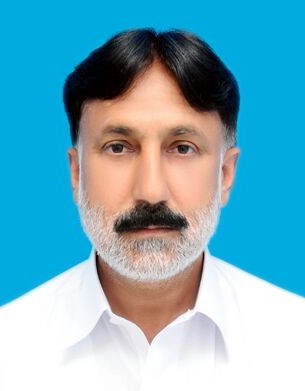
By Sudhir Ahmed Afridi
I agree unreservedly with the federal minister for planning and development, Ahsan Iqbal, when he describes Pakistan’s rapid population growth as a grave national problem and likens it to a state of emergency. His call to treat population control as a national priority is not alarmist; it is overdue. Anyone who has recently navigated the chaotic traffic of Islamabad or Peshawar cannot escape a troubling thought: if this pace continues, the simple act of walking may soon become an ordeal. The congestion we experience daily is not merely an urban inconvenience; it is a visible symptom of a deeper, structural crisis.
Pakistan has already joined the ranks of the world’s most populous countries. According to the latest official census, the population stands at around 241.5 million. Unofficial and international estimates push the figure beyond 257 million. With an annual growth rate hovering close to 2.5%, the trajectory is deeply worrying. If this momentum is not checked, Pakistan will, within a few decades, face acute shortages of water, food, healthcare, education and employment. The rapid swelling of cities, relentless pressure on roads, housing shortages and the steady erosion of basic public services are not future threats; they are present realities.
History offers clear lessons. States that think ahead seek to balance population with resources, and often plan to generate resources faster than population growth. Much of Europe’s prosperity rests on this equilibrium: relatively smaller populations supported by robust institutions and abundant resources. China presents a different but equally instructive example. Its population is vast, yet the state invested heavily in education, science, technology and industry, transforming human numbers from a liability into a source of strength. Employment opportunities expanded, productivity rose and population became an asset rather than a burden.
Pakistan, regrettably, has moved in the opposite direction. Population continues to surge while resources remain constrained. The education and training system is weak, institutions are fragile and governance appears increasingly directionless. Society itself seems fractured along intellectual, ideological and social lines. The absence of discipline, long-term planning and a shared national vision is stark. In such conditions, unchecked population growth is not a blessing waiting to be unlocked; it is a risk that multiplies every other crisis.
Religion is often invoked in this debate, sometimes sincerely, sometimes carelessly. Islam’s teaching that sustenance comes from God is frequently misunderstood to suggest that family planning is unnecessary or even forbidden. This is a distortion. The faith warns against killing children out of fear of poverty, but it does not sanction irresponsibility. Islam emphasizes balance, moderation and foresight. Spacing births, ensuring children receive proper education and upbringing, and acting responsibly towards society are fully consistent with its principles. Without organization and restraint, population growth will spiral beyond control, bringing with it social unrest, conflict and the normalization of hunger in the homes of the poor.
This is also an age defined by technology. Across agriculture, industry and even warfare, machines and innovation increasingly replace brute human numbers. Where hundreds of workers were once required, a single trained individual equipped with modern tools can now deliver far greater output. Pakistan is neither at war nor facing a pandemic that demands population expansion for survival. On the contrary, national survival now depends on slowing population growth. The brake is not a luxury; it is a necessity.
Compounding the problem is a crisis of governance. Our rulers and bureaucracy too often appear so incompetent and compromised that they struggle to manage even functioning institutions. Instead of reforming systems, the state sells national assets into private hands, sheds responsibility under the banner of outsourcing and normalizes commissions and kickbacks. The media and the public, meant to act as watchdogs, have been largely ineffective, allowing those in power to operate with impunity.
If genuine reform is the goal, it must begin at the top. The culture of protocol needs to end. Free electricity, gas, vehicles and other privileges for the elite should be withdrawn. Austerity must be practiced, not preached. Let ministers and senior officials use public transport, rely on government hospitals and send their children to public schools. The day those in power share the same services as ordinary citizens, those institutions will begin to improve. Accountability, in this sense, is not a slogan but a lived experience.
(The writer is a senior journalist at tribal region, covers various beats, can be reached at editorial@metro-morning.com)
