





Chairman PPP Bilawal Bhutto claimed Sindh had become a testing ground for progressive social policies, pioneering welfare and inclusion initiatives later adopted nationally
By Sajjad Shah
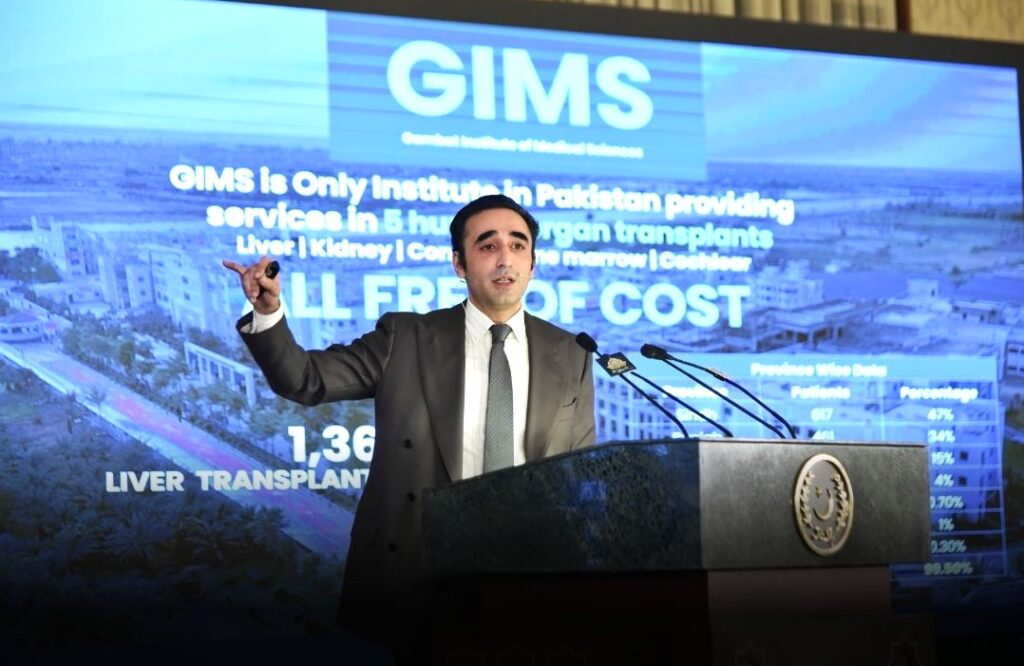
KARACHI: Pakistan People’s Party Chairman Bilawal Bhutto Zardari presented his party’s record in Sindh to a mixed audience of national and international participants, framing the province as a testing ground for welfare-led governance and progressive legislation during the PPP’s time in power.
Speaking during the presentation, Bilawal Bhutto said Sindh had positioned itself at the forefront of social protection and inclusion, arguing that many initiatives later discussed at the federal level had first been piloted in the province. He said Sindh was the first province in the country to pass legislation establishing a dedicated Department of Empowerment of Persons with Disabilities, calling it a shift from charity-based thinking to a rights-based approach.
The PPP Chairman highlighted the launch of Pakistan’s first government-run autism center in Karachi, which he said had been set up as a fully free facility. According to Bilawal Bhutto, the model had since been expanded across the province, with 10 autism centers now operational, aimed at easing the financial burden on families and improving early diagnosis and support.
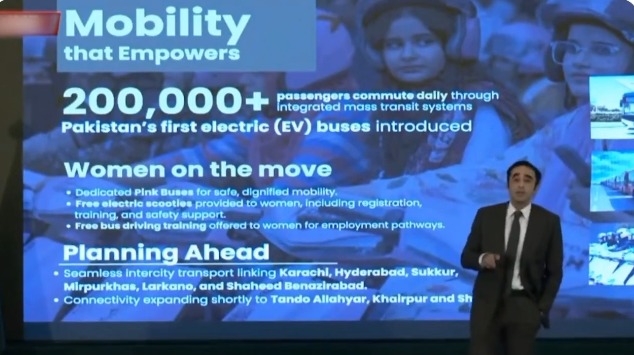
The PPP leader also focused on women-focused poverty alleviation programs, particularly those implemented through the Sindh Rural Support Organization. He said interest-free loans and other forms of financial and technical assistance had been provided largely to women in rural areas, claiming that the initiative had helped lift around 1.4 million women out of poverty so far. He described this as one of the largest women-centered empowerment drives undertaken by a provincial government.
Turning to agriculture, Bilawal Bhutto said the Benazir Hari Card had been introduced to support small farmers owning between one and 25 acres of land. Through the scheme, he said, farmers had received direct cash assistance to purchase essential inputs such as DAP and urea fertilizer, at a time when rising costs had squeezed farm incomes and threatened food security.
Bilawal Bhutto said labor reforms had also been a priority, with the introduction of the Benazir Mazdoor Card extending social security coverage to private sector and self-employed workers. He said the move allowed informal workers to access benefits previously limited to government employees, including support during health emergencies, marriages and bereavement.
