





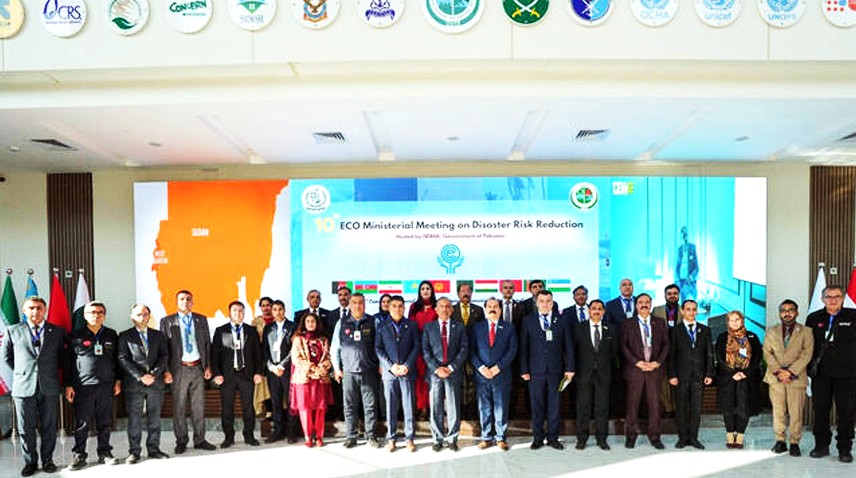
By Mehrab Shah Afridi
ISLAMABAD: The tenth two-day Ministerial Meeting of the Economic Cooperation Organization on Disaster Risk Reduction concluded in Islamabad Thursday, bringing together ministers, senior officials, and representatives from regional and international organizations to discuss collective strategies for disaster resilience.
The meeting ended with member states reaffirming their commitment to strengthen regional cooperation, enhance disaster preparedness, and coordinate action in response to emergencies. According to the National Disaster Management Authority, these commitments were reflected in the Islamabad Declaration 2025, which aligns with the Izmir Treaty, ECO Vision 2025, and the Sendai Framework on Disaster Risk Reduction.
Speaking at the conclusion of the meeting, NDMA Chairman Lt General Inam Haider Malik described the Islamabad Declaration as a shared resolve to safeguard communities across ECO countries against the increasing threats posed by natural and human-induced disasters. He emphasized Pakistan’s readiness to share its expertise and advanced capabilities, noting that the National Emergencies Operation Center could serve as a hub to support regional preparedness and resilience.
The ministerial forum provided a platform for exchanging experiences, best practices, and technical knowledge, reflecting a growing regional consensus on the need for coordinated action. Delegates discussed strategies to improve early warning systems, emergency response mechanisms, and risk mitigation measures, highlighting the importance of collective planning and shared resources.
The event underscored the region’s commitment to proactive disaster management, recognizing that rising vulnerabilities, including climate change impacts and rapid urbanization, require comprehensive and collaborative approaches.
