





By our correspondent
KARACHI: At a landmark international conference on “Sustainable Green Energy, Environment, and Digital Innovations,” held at the Dr. A.Q. Khan Institute of Biotechnology and Genetic Engineering, University of Karachi, leading scientists, engineers, and policymakers urged urgent action on electronic waste (e-waste), climate protection, and sustainable development in Pakistan.
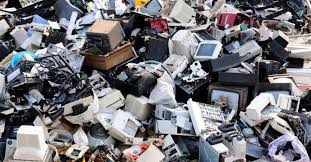
The event was jointly organized by the Department of Chemical Engineering, University of Karachi, and the Institution of Engineers Pakistan, Karachi Center. Opening the conference, Vice-Chancellor of Dawood University of Engineering and Technology, Engineer Professor Dr. Samreen Hussain, highlighted the growing global challenge of electronic waste. She warned that the world produced nearly 62 million tonnes of e-scrap in 2022, averaging 7.8 kilograms per person, and projected that this figure could rise to 82 million tonnes by 2030.
Dr. Hussain cautioned that while international discourse has focused on sustainability and water management, the rapid rise of e-waste remains insufficiently addressed. “This is a time for foresight,” she said. “Without proactive strategies, e-waste could severely undermine sustainability efforts. As engineers, our role is not just remediation but prevention.” She emphasized that local experts and institutions should be entrusted with solving indigenous challenges, rather than relying solely on foreign consultants, as they are best placed to understand the dynamics and administrative complexities of local issues.
University of Karachi Vice-Chancellor Professor Dr. Khalid Mahmood Iraqi echoed these concerns, calling environmental protection the most pressing global challenge. He stressed that effective policies integrating engineering, social sciences, and governance are essential to deliver practical outcomes. Highlighting Pakistan’s ongoing challenges—including water scarcity, food insecurity, and energy deficits—he urged comprehensive strategies aligned with sustainable development goals.
Adding an international perspective, Professor Dr. Iqbal Muhammad Mujtaba of the University of Bradford, UK, said that resilient and coordinated governance is vital for sustainable societies. He noted that climate change, soil and water contamination, and energy scarcity are intertwined issues that require political dialogue alongside scientific solutions. Dr. Mujtaba also cited everyday examples, such as how a 10-minute shower can consume 90 litres of water, while a bathtub uses 190 litres, stressing that even small behavioural changes can conserve resources.
Conference participants further highlighted the enormous environmental impact of food wastage. According to the United Nations, in 2020, global households discarded roughly 1 billion meals daily, while 783 million people faced hunger, with one-third of the world population experiencing food insecurity. Producing the wasted food consumed 250,000 cubic meters of water and 1.4 billion hectares of agricultural land, generating 3.3 billion tonnes of carbon dioxide equivalent greenhouse gases.
Engineer Muhammad Farooq Arabi, Chairman of the Institution of Engineers Pakistan, Karachi Center, said that addressing challenges such as climate change, energy insecurity, environmental degradation, and rapid digital transformations requires integrated, innovative, and sustainable digital solutions. He emphasized that the role of local scientists and engineers extends beyond technological development to include clean energy promotion, environmental protection, and responsible implementation of digital innovations.
President of the Institution of Engineers Pakistan, Engineer Sohail Bashir, highlighted universities and national institutions as critical centers for knowledge creation, applied research, and national development, stressing that future engineering solutions depend on collaboration rather than isolated efforts. He added that Pakistan, with its young population, rapidly growing engineering workforce, and abundant renewable energy resources—solar, wind, hydro, biomass, and green hydrogen—has a strong foundation for sustainable transformation.
Dean of the Faculty of Sciences, University of Karachi, Professor Dr. Balqees Gul, emphasized that current global challenges demand interdisciplinary, innovative, and sustainable approaches, and that universities and professional bodies have a pivotal role in offering solutions that are scientifically sound, economically viable, and environmentally responsible.
The opening ceremony featured a technical presentation by Professor Dr. Attila Evgin from Turkey and addresses by Saeed Shujaat Rizvi, with a welcome speech delivered by Professor Dr. Shagufta Ishtiaq. Conference proceedings were coordinated by Engineer Dr. Ahsan Abdul Ghani, who outlined the objectives and expressed gratitude to the participants.
The conference concluded with a strong consensus that local expertise, strategic policy, sustainable technology, and cross-sector collaboration are essential to address Pakistan’s environmental, energy, and digital challenges effectively.
#EWasteManagement #SustainablePakistan #GreenEnergy #ClimateAction #DigitalInnovation #EnvironmentalProtection #SustainableDevelopment #CleanEnergySolutions #PakistanScience #EngineeringForChange #WasteReduction #RenewableEnergy #LocalExpertise #TechForGood #EcoFriendlyPakistan
