





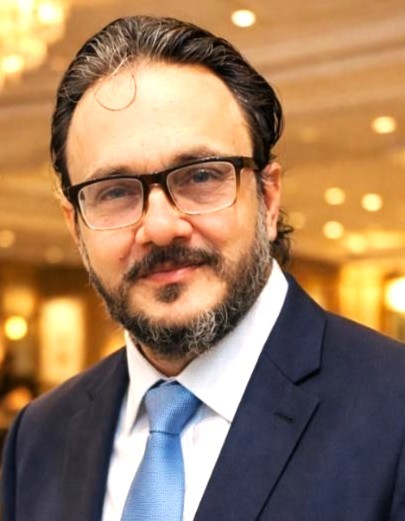
By Syed Shamim Akhtar
The suicide bombing at the central mosque and imambargah Qasr Khadija al-Kubra in Islamabad’s Tarlai area is not merely another entry in Pakistan’s long and tragic ledger of militant violence. It is a brutal reminder that the infrastructure of extremism targeting the country remains intact, adaptive and deeply embedded across borders, despite years of military operations, intelligence work and political assurances that the worst was over. The blast tore through a place of worship, a space meant for prayer and communal reflection, underlining once again how militants deliberately choose symbols of social cohesion to maximize fear and fracture trust.
Investigators say the trail of the attack stretches far beyond the capital. Arrests in Islamabad, Peshawar and Karachi, combined with forensic evidence drawn from national databases, have pointed towards a network of facilitators operating across Pakistan and into Afghanistan. According to security officials, the bomber, identified as Yasir, son of Bahadur Khan, was radicalized, trained and directed by Islamic State operatives based across the border. An Afghan national described as the mastermind is now in custody, several facilitators have been detained, and one key suspect was killed during an operation in Nowshera. The authorities have presented this as a significant breakthrough, yet the broader picture it reveals is deeply unsettling.
For Pakistan, the attack has reopened old and unresolved questions about the regional ecosystem that allows militant groups to survive. Government ministers have responded with unusually stark language. Information minister Ataullah Tarar has vowed to pursue those responsible without compromise, framing the issue as one of national survival rather than routine law enforcement. Interior minister Mohsin Naqvi has gone further, arguing that Pakistan is effectively facing a state of war, in which militant groups operating from Afghan soil are allegedly financed and directed with external backing. Both have pointed to what they describe as a recurring pattern of cross-border terrorism, alleging Indian involvement alongside Afghan-based sanctuaries.
Such claims are not new, but their re-emergence after an attack in the heart of the capital reflects a growing sense of siege within the Pakistani state. For more than two decades, Pakistan has lived with sustained militant violence, paying a heavy human and economic price while presenting itself as a frontline ally in the global fight against terrorism. Tens of thousands of civilians and security personnel have been killed, entire regions have been destabilized, and billions of dollars have been drained from an already fragile economy. The social scars are visible in displaced communities, disrupted education and a pervasive sense of insecurity.
Successive military operations dismantled many domestic militant structures, particularly after the peak of violence in the late 2000s and early 2010s. Yet the promise of a definitive end to terrorism has remained elusive. Islamabad argues that the persistence of sanctuaries across the border has allowed groups such as the Pakistani Taliban and Islamic State to regroup, plan and strike, retreating to areas where they are beyond Pakistan’s reach. Each major attack, officials say, reinforces the same conclusion: without regional cooperation and pressure on these safe havens, counterterrorism gains inside Pakistan will remain fragile.
The burden of this violence has fallen disproportionately on Khyber Pakhtunkhwa and Balochistan. In these provinces, attacks on security forces, political workers, development projects and ordinary citizens have become grimly routine. Beyond the immediate loss of life, the objective appears to be the erosion of state authority and the deepening of social fault lines. Sectarian attacks, such as the bombing in Tarlai, are designed not only to kill but to provoke fear, suspicion and communal tension, undermining the fragile fabric of coexistence.
Pakistan has repeatedly sought to internationalize its concerns, presenting dossiers and intelligence at global forums to support its allegations of foreign sponsorship and interference. Past disclosures have highlighted what Islamabad describes as Indian intelligence activities and financial networks linked to militancy. Yet global responses have largely been limited to condemnations and calls for restraint. There has been little appetite, Pakistan complains, for sustained pressure on actors operating from Afghan territory, particularly since the Taliban’s return to power in Kabul reshaped regional calculations.
The bombing in Tarlai is therefore both a tragedy and a warning. It underscores the resilience of militant networks and the limits of unilateral action in a region where borders are porous and conflicts deeply intertwined. Pakistan’s argument that it is fighting a war with transnational dimensions deserves serious consideration, not ritual dismissal. If the international community continues to treat such attacks as localised tragedies rather than symptoms of a broader failure, the consequences will not remain confined to Pakistan. Violence that finds space to grow in one corner of the region has a habit of travelling, and history suggests that indifference today often becomes regret tomorrow.
(The writer has diverse in knowledge and has a good omen in politics, can be reached at editorial@metro-morning.com)
#FaithUnderFire #IslamabadBlast #TarlaiAttack #QasrKhadijaAlKubra #Terrorism #CounterTerrorism #PakistanSecurity #Extremism #MilitantNetworks #IslamicState #RegionalSecurity #CrossBorderTerrorism #Afghanistan #NationalSecurity #SectarianViolence #KhyberPakhtunkhwa #Balochistan #WarOnTerror #PeaceAndStability #Pakistan
