





News Desk
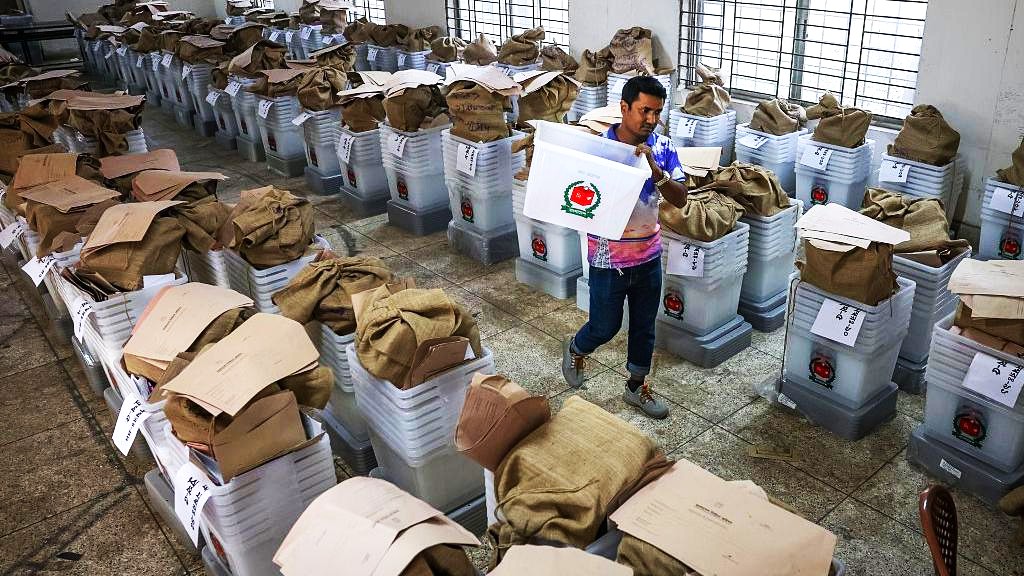
DHAKA: Bangladesh went to the polls today in a general election that saw more than 127 million eligible voters across 64 districts casting ballots for 300 parliamentary seats. The contest was primarily between two alliances: one led by the Bangladesh Nationalist Party and another 11-party coalition headed by Jamaat-i-Islami.
The election drew attention both domestically and internationally due to the exclusion of the Awami League, the party of former Prime Minister Sheikh Hasina Wajid, whose registration had been suspended by the Bangladesh Election Commission. This barred the party from participating, reshaping the electoral landscape and raising concerns about the inclusiveness of the process.
Officials said polling was conducted amid heightened security measures, reflecting concerns over potential unrest or disruptions. Election observers and analysts noted that the absence of the Awami League—a dominant force in Bangladeshi politics—would likely influence voter turnout and the distribution of support across constituencies.
Political commentators suggested that the election would serve as a test for the remaining alliances to consolidate their voter base and demonstrate organizational strength, while also providing insight into public sentiment amid ongoing economic and social challenges.
The results are expected to determine the composition of Bangladesh’s next parliament and the direction of its domestic and foreign policy, particularly as the country navigates complex regional and economic dynamics.
#Pakistan #Cambodia #BilateralTrade #TextileIndustry #IndustrialCooperation #MSME #EconomicPartnership #InvestmentOpportunities #RegionalTrade #JointVentures #IndustrialGrowth #Innovation #KnowledgeSharing #TradeDiversification #SoutheastAsia #EconomicDevelopment #BusinessCollaboration
