





The talks unfolded as PM Shehbaz attended a summit hosted by US President Trump, underscoring Pakistan’s active role in regional and global security
By Amjad Qaimkhani
WASHINGTON: In Washington D.C., the United States reaffirmed that its partnership with Pakistan remained a cornerstone in the global fight against terrorism, following high-level talks between senior officials from both countries.
The discussions took place as Prime Minister Shehbaz Sharif attended an international summit hosted by US President Donald Trump, highlighting Pakistan’s continuing engagement on major regional and global security initiatives.
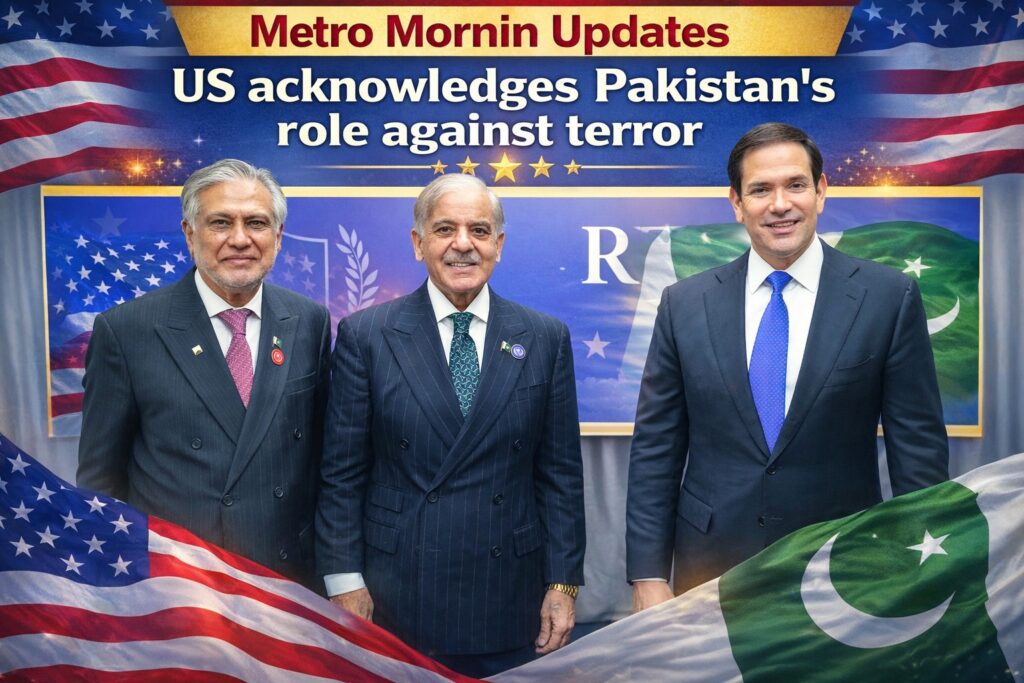
US Secretary of State Marco Rubio met the Prime Minister in a bilateral session, during which he expressed gratitude for Pakistan’s support of President Trump’s Gaza peace plan and acknowledged the country’s role as a founding member of the newly established “Board of Peace.”
In a statement issued by the Department of State, Rubio also offered condolences for the “horrific” attacks in Balochistan on 31 January and the “devastating” bomb blast in Islamabad on 6 February, reaffirming that Washington viewed its security and counterterrorism cooperation with Islamabad as vital.
The leaders explored avenues for broader collaboration beyond security, including energy development, critical minerals, and trade and investment opportunities for US companies. Rubio welcomed Pakistan’s active participation in a recent “Critical Minerals Ministerial” held in Washington, describing it as an important platform to strengthen economic and strategic ties.
The meetings underscored the United States’ interest in deepening bilateral engagement at a time when Pakistan is asserting a more proactive role in regional diplomacy. Sharif, according to an official statement from Islamabad, was expected to hold additional discussions with senior US officials during his visit, further exploring avenues for mutually beneficial economic and security cooperation.
Observers noted that the talks came against a backdrop of growing international concern over regional stability, with both sides signaling that sustained engagement on terrorism, economic investment, and multilateral initiatives remained central to their shared agenda.
The visit also positioned Pakistan as a key interlocutor in emerging diplomatic efforts, including the Board of Peace, which seeks to bring together diverse nations to address conflicts and foster reconstruction in fragile regions.
