





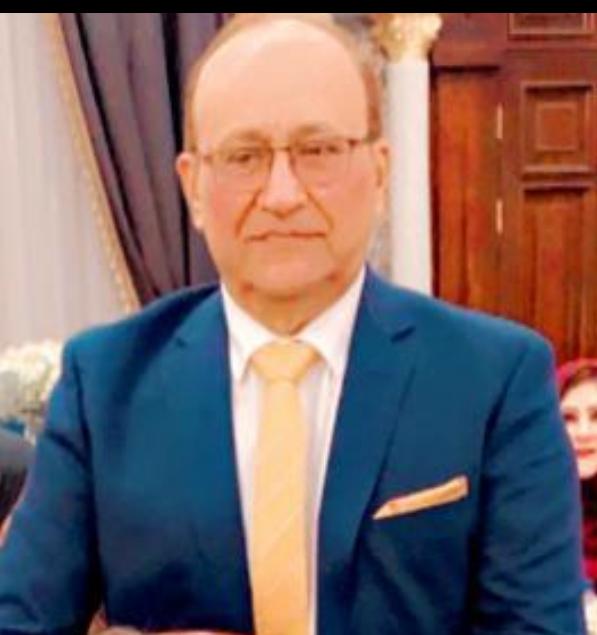
By Amir Muhammad Khan
Once again, there has been discussion about making Karachi a separate province. The fact that Karachi generates 46% of the country’s total revenue has long weighed on the minds of various stakeholders. Yet the notion that a province could be carved out simply because someone believes he has an exclusive claim over that revenue is misguided. No patriot would argue that a federating unit should be formed on the basis that its income belongs to one group alone. Pakistan’s provinces function through mutual support, particularly in economic terms. That said, if those raising the slogan of a Karachi province are highlighting genuine excesses or administrative failures, then those concerns deserve sober attention.
Both the federal and provincial governments can address them honestly, without descending into linguistic or ethnic antagonism. The Muttahida Qaumi Movement (MQM-P), founded in 1984 by its exiled leader Altaf Hussain, emerged initially as a student movement. It sought to articulate the political and social grievances of the Urdu-speaking migrant community in urban Sindh, especially in Karachi and Hyderabad. For a time, it unified much of Karachi under a single political voice. Later, it presented itself as a national party. Its record, however, has been mixed.
On the one hand, it provided political identity and representation to sections of the urban middle and lower classes who had felt neglected. Civic issues such as sanitation, transport, water supply and municipal services featured prominently in its agenda. On the other hand, allegations of violence and militancy dogged the party for decades. Some of those accusations were substantiated; others remain contested. Extortion became widespread, and even the collection of sacrificial animal skins — once associated with Jamaat-e-Islami — was reportedly monopolized, with those who refused facing intimidation.
MQM-P’s defenders often argued that rising crime was rooted in youth unemployment. Yet it is difficult to sustain the logic that economic deprivation justifies criminality, particularly when it damages the party’s own standing. Over time, the MQM-P faced accusations of target killings and maintaining armed wings, contributing to Karachi’s deteriorating law and order situation. In the 1990s, severe tensions between the party and state institutions led to major operations that disrupted the political process. The pattern bears comparison with the Pakistan Tehreek-e-Insaf (PTI), which now finds itself in confrontation with the same institutions of power. Internal divisions further weakened the MQM-P.
Leadership rivalries and factional splits eroded its cohesion and confused voters. Politics associated with violence, alleged misuse of authority and institutional clashes severely harmed its reputation. Leadership tensions remain visible. At one press conference, Khalid Maqbool Siddiqui appeared overshadowed as Farooq Sattar repeatedly passed him written notes, creating the impression of discord. The following day, Sattar addressed the same issues separately, reinforcing perceptions of internal competition. In Pakistan’s coalition politics, smaller parties often play the role of kingmaker. Just as a car carries a spare tyre — a stepney — major parties lacking a clear majority rely on these smaller groups to form governments.
In return, such parties may secure ministries or leverage their position to exert pressure. The MQM-P has frequently occupied this space. Critics argue that invoking the demand for a Karachi province, or fueling Urdu-Sindhi tensions, serves as political leverage. A more constructive slogan would urge the Sindh government to treat Karachi as an integral part of the province and ensure equitable access to employment and services. For 17 years, the Sindh government has struggled to deliver adequate facilities across the province, and Karachi often appears marginal to its priorities. Yet it is equally the responsibility of the MQM-P to temper rhetoric, demonstrate political maturity and secure tangible benefits for its voters.
Recent remarks by Khalid Maqbool Siddiqui — questioning electoral outcomes and implying injustice — have strained relations with both the Pakistan People’s Party (PPP) in Sindh and the Pakistan Muslim League-Nawaz (PML-N) at the center. If the claim that another party secured 170 seats is accepted, then consistency would demand relinquishing the MQM-P’s own 18 seats. Such statements risk appearing less like principle and more like brinkmanship. Despite periodic turbulence, the MQM-P is unlikely to abandon the national mainstream.
(The writer is a veteran journalist having 45 years of experience across print and broadcast media in Pakistan and the United States, can reached at editorial@metro-morning.com)
#Karachi #Sindh #SeparateProvince #PakistanPolitics #MQM #PoliticalDebate #CurrentAffairs #MetroMorning
