





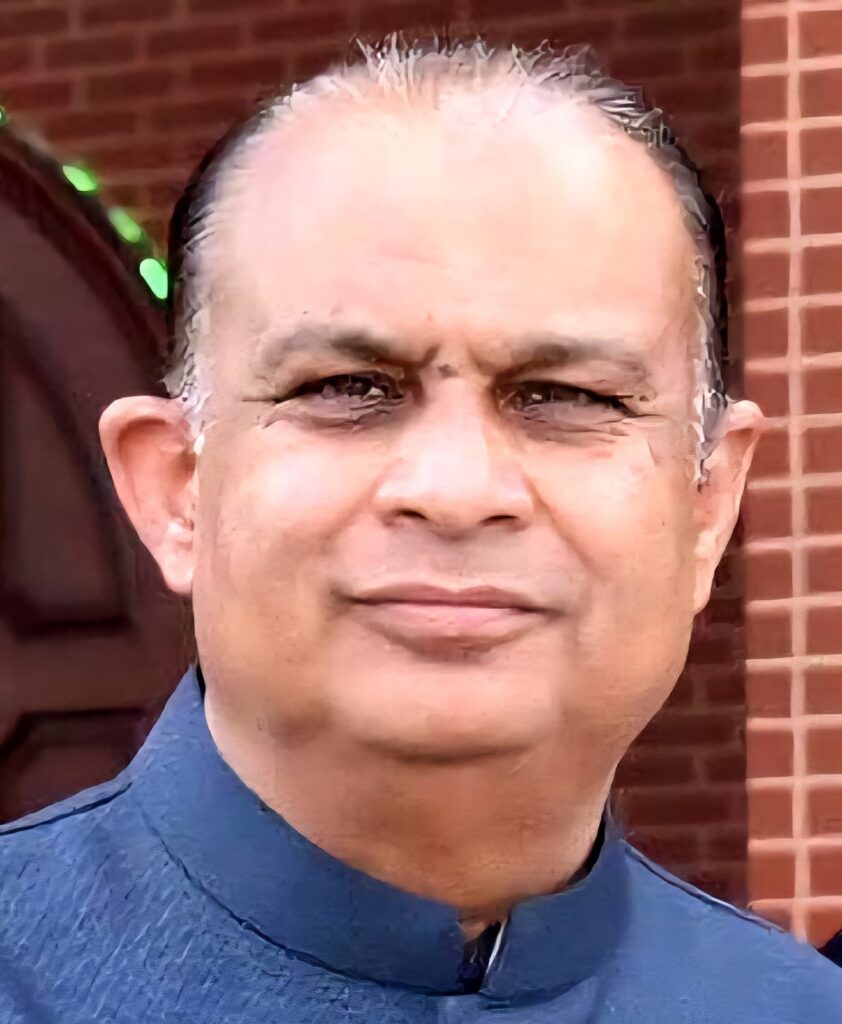
By Abdul Rehman Patel
In many cities across the world, a familiar rhythm is beginning to gather pace. Streets grow busier, homes are scrubbed clean, and markets swell with the quiet urgency that precedes a festival. Children argue over colors and fabrics, determined that this year’s clothes must be just right. Mothers, with practised care, assemble the small rituals that turn a day into Eid — lists of dishes, trays of sweets, the careful distribution of time and attention. What emerges is not simply preparation, but a shared choreography of anticipation, repeated year after year with subtle variations and enduring meaning.
Then comes the evening that holds a special place in the Muslim imagination: Chand Raat. It arrives not with ceremony, but with expectation. People drift towards rooftops and balconies, phones raised not just to capture a moment but to confirm it. And when the announcement finally comes — that the moon has been sighted — joy spreads with an immediacy that feels almost instinctive, as though something ancient and collective has been quietly waiting to be released.
In some homes, children clap, their excitement unrestrained. In others, envelopes filled with Eidi wait quietly, set aside with intention, ready to be handed out in the morning. The scent of henna lingers in the air, marking hands with patterns that will fade, but never entirely disappear from memory. It is a night shaped by small gestures and unspoken understanding — a night that belongs to hope, to renewal, to the simple promise that tomorrow will be a day of happiness.
This is the Eid many know, the one that returns each year with reassuring familiarity, carrying with it a sense of continuity that binds generations together. Yet, even as that familiarity settles in, it exists alongside a reality that is far less visible but no less real. Under the same sky, at the same moment, there are places where that moon may not be seen at all. Not because clouds have obscured it, but because something far heavier has taken their place.
Markets, too, tell different stories depending on where one stands. In some places, they remain crowded, filled with last-minute purchases and familiar bargaining. In others, they stand damaged or deserted, their purpose suspended. The act of buying new clothes, of choosing sweets, of preparing for guests — all depend on a sense of normality that conflict erodes with ruthless efficiency. What is routine in one place becomes unimaginable in another.
The contrast extends to places of worship. In cities untouched by conflict, mosques will fill with worshippers offering Eid prayers, their voices rising together in gratitude. In other places, those same spaces may no longer stand. Prayer, if it happens at all, takes place among ruins or in hurried, uncertain gatherings. Yet, in both places, the sky remains unchanged. It would be convenient to accept such disparities as inevitable, as the by-product of a world too complex to resolve.
However, to do so risks normalizing what should never be considered normal. Because at its core, Eid is not merely a festival. It is an expression of shared values — compassion, generosity, and a recognition of human dignity. When those values are absent in the wider world, the celebration itself begins to feel incomplete. There is, ultimately, more than one Eid unfolding at any given moment. There is the Eid of celebration, marked by laughter and abundance.
In addition, there is another, quieter Eid — one defined by absence, by memory, and by the effort simply to continue. In one home, a door will swing open on Eid morning, children rushing in with familiar excitement. In another, that same door may open slowly, with no urgency at all, leading not to a gathering, but to remembrance. The moon will rise over both, unchanged and indifferent. Yet in some skies, its light will struggle to break through — not because it has dimmed, but because the world beneath it has allowed too much smoke to rise.
(The Pakistani-origin American writer and columnist, sheds light on various social and political issues, can be reached at editorial@metro-morning.com)
#EidReflections #MetroMorning #AbdulRehmanPatel #Eid2026 #MoonSighting #ChandRaat #HumanStories #OpinionPiece #EidAroundTheWorld #ThoughtLeadership
