





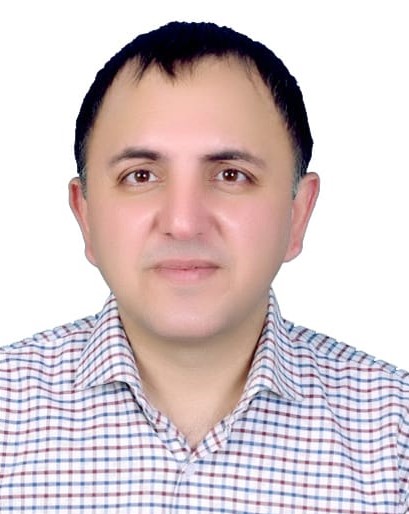
By Atiq Raja
In an era dominated by the relentless churn of social media likes, quarterly earnings reports and the dopamine hit of viral fame, the notion of legacy feels almost quaint, like a relic from a slower age. Yet it persists as a quiet rebellion against our obsession with the now. A legacy mindset isn’t about etching your name in stone or amassing a fortune to rival the billionaires who dominate headlines. It’s a profound shift: from asking “What can I grab today?” to pondering “What will endure because I was here?” It’s the art of planting seeds whose fruits you may never taste, but which will nourish generations long after the soil has claimed your bones.
Consider the world we inhabit. We’re bombarded by messages that equate success with speed—get rich quick schemes, 30-day fitness transformations, apps promising overnight expertise. Politicians chase poll numbers that evaporate by the next news cycle; CEOs tout stock surges that crash just as swiftly. Even our personal lives mirror this frenzy: the perfect Instagram feed, the promotion that demands 80-hour weeks, the holiday snaps that vanish into digital ether. It’s exhausting, isn’t it? This short-termism traps us in a hamster wheel of reaction, where tomorrow’s worries eclipse any vision of the horizon. A legacy mindset breaks that cycle. It invites us to lift our gaze, to weigh not just the immediate payoff but the echoes of our choices rippling through time.
Take the everyday heroes who embody this without fanfare. Think of the teacher in a rundown comprehensive school in Manchester, patiently coaxing algebra from a class of sceptical teens from fractured homes. She won’t make the headlines, won’t snag a knighthood. But years later, one of those kids—now a software engineer—credits her with igniting a spark that lifted them from poverty. Or the factory worker in Leeds who mentors apprentices, passing on not just skills but a quiet ethic of reliability in an age of gig economy disposability. These aren’t grand gestures; they’re the incremental deposits in a bank of human potential. Legacy builders understand that true wealth isn’t in pounds sterling but in the lives they elevate, the values they embed like roots in fertile soil.
This mindset breeds responsibility, elevating us from mere actors to stewards of the narrative. Words sharpen their edge when you know they’re blueprints for others’ behavior. In boardrooms or family kitchens, your choices are observed, mimicked, amplified. Remember the banking crisis of 2008? Greedy short-termism at the top poisoned trust for a generation. Legacy thinkers flip that script: they lead by example, prioritizing integrity over image. It’s stewardship, not domination—guiding a football team to play fair, nurturing a startup ecosystem where failures are lessons, not scandals. In politics, it’s leaders like Sadiq Khan, steadily greening London’s buses while battling naysayers, planting the seeds for a cleaner capital that his successors will harvest.
At its most potent, a legacy mindset turns individuals into bridges. Success isn’t a solo sprint but a relay where you grip the baton firmly and pass it with velocity. Mentors don’t hoard wisdom; they dispense it lavishly, watching protégés soar past their own ceilings. In tech hubs like Cambridge, it’s the professors spinning out startups not for royalties but to seed innovation waves. In communities, it’s the elder organizing youth clubs, countering knife crime with belonging. This chain—parent to child, teacher to pupil, leader to follower—creates exponential good. Imagine a refugee arriving in Dover, mentored by a local who once fled pogroms themselves; that newcomer thrives, then pays it forward. Legacy isn’t hoarding the ladder; it’s welding rungs for the climb.
Ultimately, life’s ledger balances not on bank statements or follower counts but on lives touched, injustices chipped away, kindnesses multiplied. Titles tarnish, fortunes dissipate, but the warmth of a hand extended in dark times lingers. A legacy mindset infuses the quotidian with eternity: the email that changes a career trajectory, the protest that bends policy arcs, the conversation that mends a rift. It humanizes us, reminding that we’re threads in history’s tapestry, not its sole weavers. Long after our pulses fade, those ripples persist—in a child’s moral compass, a community’s solidarity, a world’s incremental justice. That’s the alchemy: ordinary lives transmuted into enduring light. In choosing this path, we don’t just live; we outlive ourselves, whispering to posterity: I was here, and it mattered.
(The writer is a rights activist and CEO of AR Trainings and Consultancy, with degrees in Political Science and English Literature, can be reached at editorial@metro-morning.com)
