





By Imtiaz Hussain
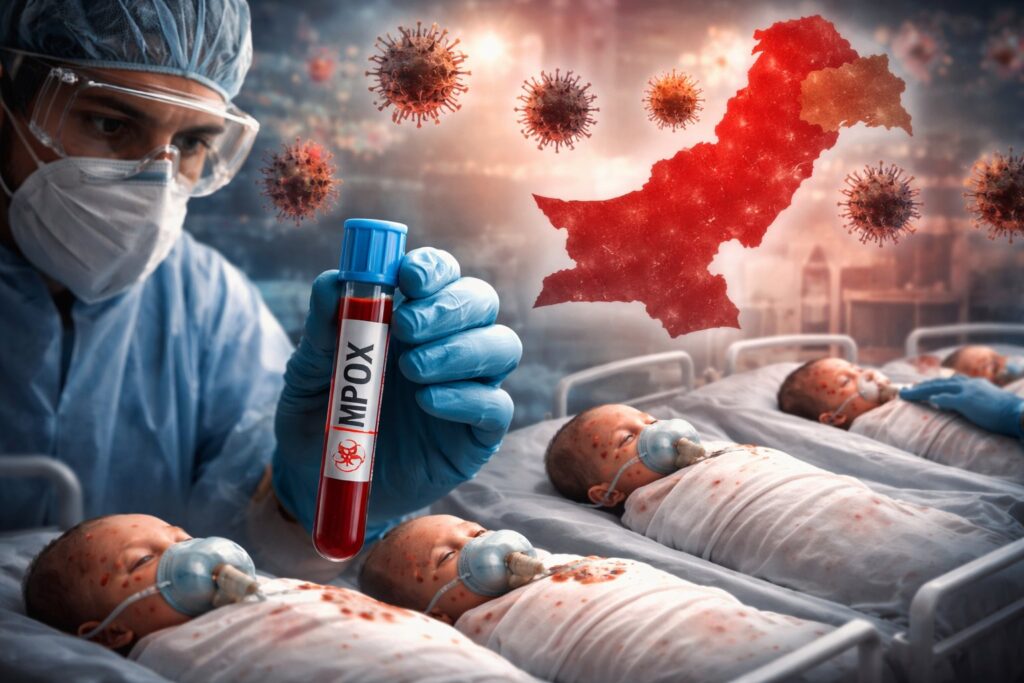
SUKKUR: The Mpox outbreak has struck Khairpur, claiming the lives of eight neonates so far, authorities said. In the past 24 hours, three more children—Subhana, Muzamil and Maimoona—were admitted to the isolation ward with symptoms of the viral infection.
The district administration has established an emergency cell at the Deputy Commissioner’s office, with health teams on high alert to contain the spread. Health experts noted that while Mpox cases had previously been reported among adults in 2022, 2023 and 2025, this is the first confirmed outbreak among neonates in Khairpur, raising serious concerns.
A child specialist, speaking on condition of anonymity, said the outbreak had caused panic due to delays by the health department. He explained that the first two cases, reported in March 2026, were not promptly disclosed while authorities waited for the 21-day incubation period to pass.
He added that despite clear signs of viral infection, the children were admitted to a general children’s ICU rather than being isolated, contrary to established protocols, allowing skin-to-skin transmission. No thorough investigation of travel or exposure history was conducted. Initially, the cases were mistakenly classified as chickenpox before being correctly identified as Mpox, a virus more commonly reported in South African countries.
The specialist warned that immunocompromised children were particularly vulnerable, and the virus could spread to parents and caregivers who spent extended time with infected children. The Pakistan Paediatric Association also expressed concern over the recurring Mpox outbreaks in Khairpur, urging authorities to investigate the root causes and advising the public to follow preventive measures.
Commissioner Sukkur, Abid Saleem Qureshi, visited Gambat to assess preparedness for potential cases. He met officials, including Assistant Commissioner Salahuddin Ghumro, to review the formation of rapid response teams (RRTs). Three RRTs have been established in each taluka, led by the Assistant Commissioner and including members from health, veterinary, local government and education departments.
The Commissioner instructed the teams to implement infection prevention protocols, carry out daily inspections, and submit evening reports to the Deputy Commissioner. He also stressed the importance of public awareness campaigns and vaccination drives for livestock.
