





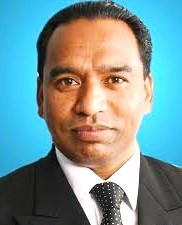
By Asghar Ali Mubarak
For forty days, the world held its breath. The Strait of Hormuz, that slender waterway through which a fifth of global oil passes, had been slammed shut. What began on February 28 as a series of American and Israeli strikes on Iranian territory spiraled into a full-blown crisis, with Tehran sealing the strait and issuing dire warnings to any commercial vessel from enemy nations. Tankers idled, supply chains snapped, and the global economy teetered on the edge of a recession. Then, late on a Friday, came the crack of light. Iran announced the temporary reopening of the strait. And in a flurry of posts on his Truth Social platform, President Donald Trump did something unusual: he thanked Pakistan.
Specifically, the president lavished praise on Prime Minister Shehbaz Sharif and the country’s chief of defence forces, Field Marshal Asim Munir, calling them “two wonderful personalities” who played a central role in mediating between Washington and Tehran. For a US administration not known for sharing diplomatic credit, the gesture was striking. It also raised an obvious question: how did Islamabad, a country often portrayed in western capitals as a peripheral and troubled ally, end up as the indispensable go-between in a superpower standoff?
President Trump’s reaction was a study in contradictions, which is to say it was entirely in character. He celebrated the strait’s reopening as “a great day for the world.” He thanked the Gulf states, singling out Saudi Arabia, the UAE and Qatar for their “great bravery and support.” He then turned his fire on NATO, dismissing the alliance as “useless” and a “paper tiger” for only offering help after the crisis was resolved. And in the same breath, he warned Israel to refrain from attacks on Lebanon, while insisting that the US naval blockade of Iran would continue until a final “deal” with Tehran was “100% completed.” For commercial shipping, the strait is open; for Iranian vessels, it remains shut. This is not peace, exactly. It is a pause.
Yet even a pause is precious. Global oil prices tumbled on the news, with Brent crude falling nine per cent to ninety dollars a barrel, a dramatic drop from the near one hundred and twenty dollars seen in late March. Stock markets rallied. The European Stocks 600 index rose 1.3 per cent. The expectation of normalized supply through the strait eased the most acute fears of a global economic seizure. For ordinary people, far from the chancelleries and war rooms, that translates into something tangible: the price of fuel, of heating, of food.
Behind the scenes, the negotiations are far more delicate than the president’s bullish posts suggest. According to a report from the US news website ExxonMobil, the next round of talks is expected to take place in Islamabad this weekend, with American and Iranian officials considering new proposals on frozen assets and uranium stockpiles. Washington is reportedly weighing the release of about twenty billion dollars of Iranian assets, frozen for years. In exchange, Tehran might make concessions on its stockpile of roughly two kilograms of enriched uranium. A draft memorandum of understanding is on the table, just three pages long but dense with consequence. One proposal involves transferring some nuclear material to a third country, with the remainder kept at low enrichment under international supervision. The Americans are asking for a twenty-year pause on enrichment; the Iranians are offering five. The gap is wide, but it is being measured in years, not in megatons.
All of this has given Pakistan an international profile it has not enjoyed in decades. President Asif Ali Zardari welcomed the news, saying his country would continue to support every sincere initiative to reduce regional tensions. Prime Minister Shehbaz Sharif, for his part, praised Trump’s “bold and wise diplomatic efforts” while reaffirming support for Lebanon’s sovereignty, after Israel warned that displaced Lebanese civilians might face fresh evacuations if fighting with Hezbollah resumes. That warning was a reminder that the broader Middle East remains a tinderbox. The ceasefire between the US and Iran has, for now, contained one blaze, but others still smoulder.
It is worth remembering that this is not the first time Pakistan has played this role. Back in October of last year, after the signing of the Gaza peace agreement in Egypt, Trump publicly thanked Sharif and his “favorite” Field Marshal Munir for their efforts. At that ceremony, Sharif returned the favor by nominating the US president for the Nobel Peace Prize, calling him “a true peacemaker” who had helped prevent a catastrophic war between nuclear-armed India and Pakistan. “If this man had not intervened,” Sharif said, “that war might have reached a catastrophic level, and then who would have been there to tell the story?”
Trump, for once, seemed almost speechless. He smiled, joked that he had nothing more to say, and thanked the room. It was a fleeting moment of grace in a long history of bluster. Whether that grace can be stretched into a lasting peace, across Hormuz and beyond, is now the question upon which so much depends. For the moment, the strait is open, the tankers are moving, and two men from Islamabad have the ear of a superpower. In this dark and uncertain spring, that is no small thing.
(The writer is a senior journalist covering various beats, can be reached at editorial@metro-morning.com)
