





By Imtiaz Hussain
SUKKUR: The Sir Cowasjee Institute of Psychiatry & Behavioral Sciences in Hyderabad recently hosted a one-day seminar titled “Bridging the Minds and Cultures: Introducing the Intersections of Anthropology and Psychiatry to Prioritize Mental Healthcare in Sindh,” highlighting the growing importance of cultural understanding in mental health practice. Held at the Dr. Hyder Ali G. Kazi Auditorium on October 18, 2025, the event brought together doctors, pharmacists, nurses, paramedical staff, students, and institute personnel to explore how anthropology and psychiatry can collaboratively enhance mental healthcare delivery.
On the invitation of Dr. Nisar Ahmed Sohoo, Medical Superintendent of the institute, distinguished anthropologists from the University of Sindh, Jamshoro, participated as guest speakers. Dr. Abdul Razaque Channa, Chairman of the Department of Anthropology and Archaeology, and Dr. Rafique Ahmed Wassan, a faculty member of the same department, shared insights into how anthropological perspectives can enrich psychiatric education, research, and clinical practice. The seminar began with Tilawat and Naat, followed by welcome remarks from Dr. Sohoo, while Dr. Mushtaq Sargani moderated the session as stage secretary.
Dr. Channa emphasized anthropology’s holistic approach, outlining its four major subfields and their contributions to understanding complex human behavior, stressing that culture remains central to the discipline. Dr. Wassan introduced participants to Psychological Anthropology, highlighting the work of Ruth Benedict and the Culture and Personality school of thought, demonstrating its enduring relevance in understanding the cultural dimensions of mental health. He elaborated on concepts such as cultural-psychological types and national character, underscoring their significance for psychiatry.
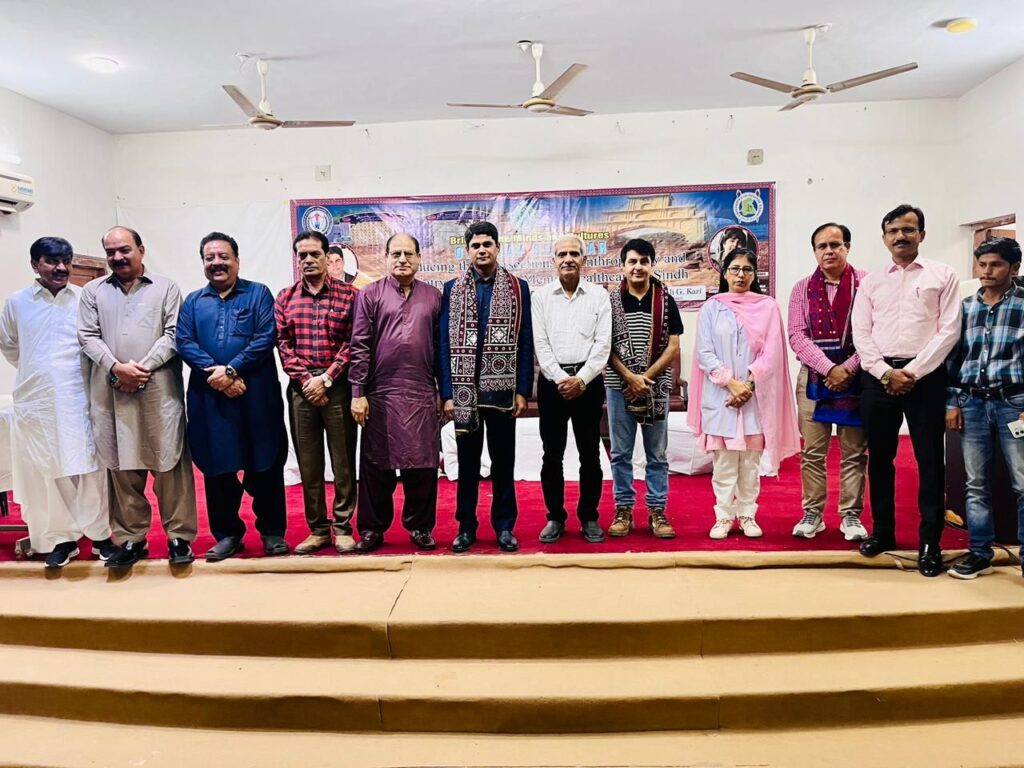
The seminar concluded with a ceremony honoring the guest speakers with traditional Sindhi Ajrak and shields of appreciation, followed by a vote of thanks. Organizers said the event represented a key step toward integrating anthropology with psychiatry in Sindh, reinforcing a vision to humanize mental healthcare through cultural sensitivity, interdisciplinary collaboration, and compassionate practice.
