





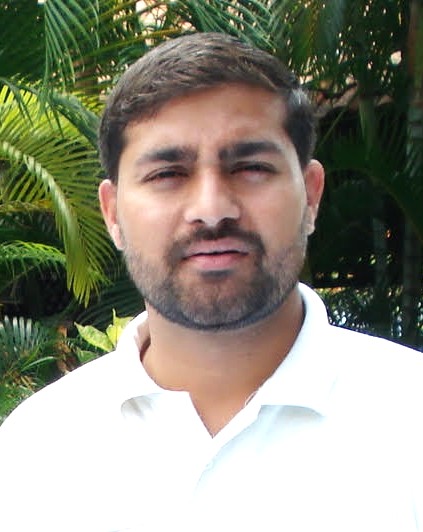
By Dr. Zawwar Hussain
In the rapidly expanding world of geospatial intelligence, technology has redrawn almost every surface of the cartographic landscape, yet the fundamental purpose of a map remains unchanged. Whether etched on parchment or streamed through a cloud-based platform, a map is still a communicative artefact — a visual reasoning system, a spatial language and a bridge between lived geography and human understanding.However, the environment in which maps are imagined, analyzed and shared has transformed beyond anything classical cartographers could have foreseen. The modern GIS student is no longer a quiet operator of survey instruments and paper charts. Today’s emerging geospatial professional steps directly into a universe of remote-sensing satellites, open-source geodatabases, AI-driven analyses, machine-learning models, city-scale digital twins and interactive dashboards alive with real-time global data streams.
A generation ago, GIS was rooted in the desktop. Analysts worked from powerful individual machines, using specialized software to store and manipulate spatial information. Desktop GIS still matters — it is indispensable for rigorous analysis, complex modelling and precise cartographic craft. But it no longer occupies the cartographic throne alone. It now sits within a far larger architecture of cloud-based services, multi-user geospatial platforms and distributed data environments that update, synchronize and evolve across continents. Institutions such as ESRI have long recognized this shift. GIS education can no longer stop at desktop training; it must embrace a web-centered literacy that teaches how spatial data lives, moves and adapts across interconnected systems.
The challenge for educators, then, is clear: how do we prepare future GIS thinkers to preserve timeless cartographic principles while navigating globally networked geospatial ecosystems? The answer begins with intellectual fluency. Students must understand not only how to operate tools, but why and when to use them. They need to know how to sequence analytical processes, integrate conflicting datasets and judge the integrity, relevance and visual logic of their representations. This marks the transition from technical operation to technical intelligence. It also requires returning to a fundamental question: what is a map? A map is not a mirror of reality; it is a purposeful abstraction. It compresses overwhelming spatial complexity into intelligible patterns.
Every map reflects a series of choices — what to highlight, what to silence, how to symbolize, how to simplify. That editorial function is the soul of cartography. From ancient Chinese astronomers charting the skies, to Egyptian surveyors dividing land along the Nile, to Roman engineers plotting roads, to Islamic scholars mapping trade routes, the task has always been the same: compress reality into insight. Today’s mapmakers face different challenges. Modern maps shift automatically with zoom depth, screen size and user behavior. They carry live data feeds, temporal layers, open-standards formatting, multiscale rendering and mobile optimization for everything from smartphones to augmented-reality glasses. Yet the foundational principles endure, as Ken Field has neatly observed: concepts remain, technology changes.
Effective maps still demand conceptual precision, visual hierarchy, meaningful symbology, coherent color logic, structural balance and factual fidelity, whether they appear in a historical atlas or an interactive planning dashboard. Digital dynamism has expanded the power of cartography dramatically. Maps have become operational instruments. Governments monitor infrastructure and population trends in real time. Environmental scientists trace ecosystem shifts and climate patterns. Businesses plot logistics, markets and distribution. Humanitarian agencies respond to crises through spatial intelligence. Smart cities manage utilities, mobility, traffic and emergency operations on synchronized geospatial platforms.
With this power comes responsibility. Modern GIS practitioners are no longer technicians; they are interpreters and decision-shapers. Their work influences public policy, scientific modelling, humanitarian strategy and economic planning. This demands not only analytical rigor but creative discernment. Technology may accelerate thought, but it cannot replace it. A poorly conceived map will mislead, even when built with the most advanced software. The ability to click is not the same as the ability to think. GIS education must therefore protect two legacies simultaneously: the craft of spatial storytelling and the competence to work across rapidly evolving technological environments. Hybrid proficiency — the ability to move fluently between desktop analysis, web-based collaboration, mobile data capture, federated cloud systems and open-standard services — has become the hallmark of the modern cartographer.
(The writer is a PhD scholar with a strong research and analytical background and can be reached at news@metro-Morning.com)

1 Comment
Your article explains the evolution of GIS in a very clear and engaging way. I especially appreciate how you highlighted the shift from traditional static maps to smart, dynamic, real-time mapping using cloud-based geodatabases, satellite data, and interactive dashboards. It’s insightful and shows the true power and practical importance of modern GIS