





The Jirga warned that any future assault on civilians or security officials would be met with direct retaliation, declaring that communities would now take revenge into their own hands
MM Report
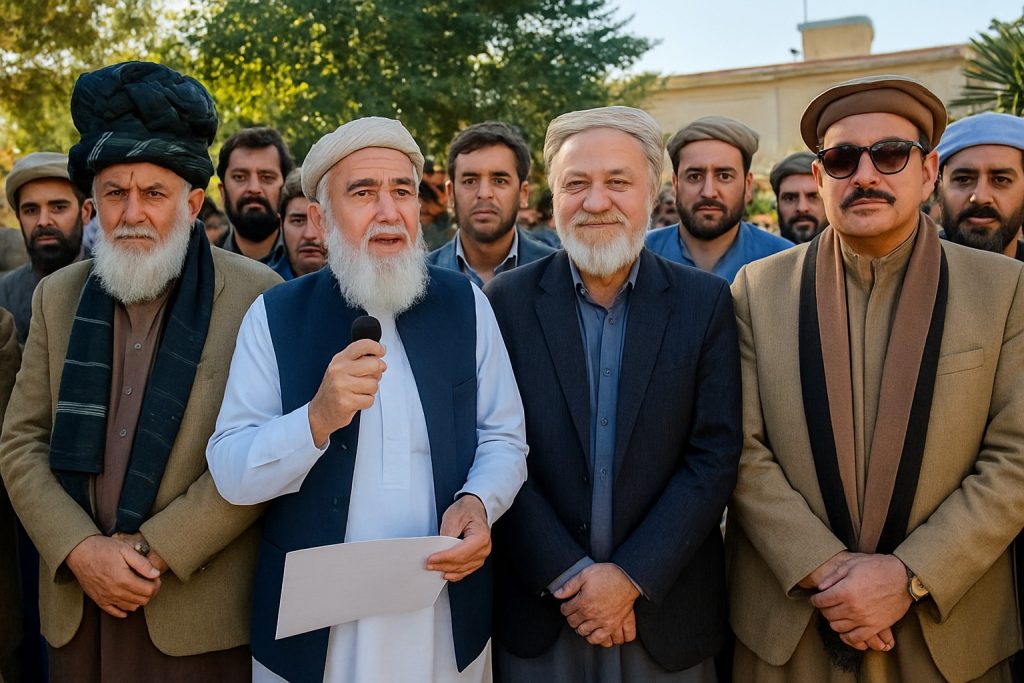
BAJAUR: A drone strike on the home of a Khyber Pakhtunkhwa provincial assembly member triggered a rare and unusually forceful tribal mobilization in Bajaur, where the Salarzai tribe convened a jirga and asked the government to maintain security in one of the most volatile border districts.
The gathering, held deep in the tribal belt and attended by elders, political figures and local influencers, became a forum for frustration that has been building for months as violence steadily crept back into the region. Speakers told the jirga that the communities had been left exposed to a resurgence of terrorist activities, targeted killings and extortion rackets in the name of Jehad or Islamic militancy.
The drone strike appeared to serve as a breaking point. One elder’s warning captured the mood of the assembly: “The state tells us that the Taliban are in Afghanistan, but we know where their families are and who their facilitators are. From now on, if attack would be carried out against the civilians and the security officials, we will take our revenge ourselves.”
Elders insisted they did not seek confrontation with authorities, but they argued that communities would not remain passive if targeted attacks continued unchecked. The jirga laid out eight demands, including an immediate end to drone strikes, a crackdown on extortion networks and a coherent plan to restore peace to Bajaur and adjoining areas.
They said they wanted clarity, action and a demonstrable commitment from Islamabad that the border districts would no longer be treated as an afterthought. The jirga went further, suggesting that if the state lacked the ability—or willingness—to secure the region, then authority over local resources and security mechanisms should be handed back to the tribes themselves.
They argued that tribal structures had historically maintained order when the state was absent, and that the community could again assume responsibility if necessary. For many in Bajaur, the gathering represented more than emotional rhetoric. It reflected a deeper anxiety about the slow return of militancy and a growing sense that communities were once again being left to fend for themselves.
