





China’s mammoth Brahmaputra hydropower project risks widening India’s $100 billion trade deficit, subtly tying New Delhi to Beijing’s sprawling infrastructure ambitions
MM Report
BEJING: China has initiated construction on what is set to become the world’s largest hydropower dam along the Brahmaputra River, raising alarm in India over potential environmental and economic consequences.
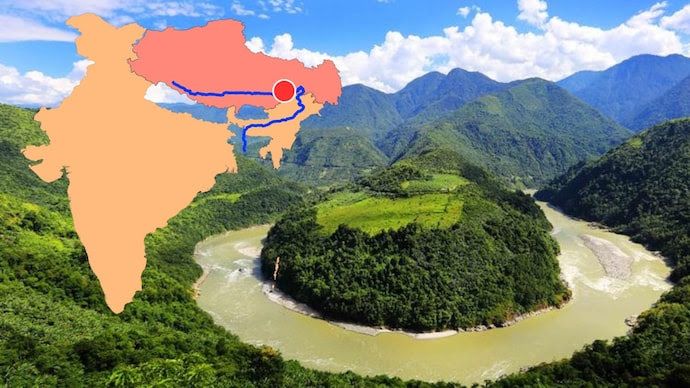
The massive project, designed to generate an unprecedented 60,000 megawatts of electricity, is expected to block as much as 80 percent of the river’s flow before it reaches Indian territory, threatening the water security of states such as Arunachal Pradesh, Assam, and other downstream regions.
The dam, situated on the Yarlung Zangbo River in Tibet — which transforms into the Brahmaputra once it enters India — represents a staggering investment of approximately $167 billion. Analysts note that the project could further deepen India’s trade imbalance with China, currently estimated at around $100 billion, potentially implicating India in financing a portion of the infrastructure indirectly.
While Indian authorities have occasionally leveraged concerns over Tibet and the Dalai Lama in broader geopolitical discussions, experts argue that China holds the upper hand, both economically and strategically, in this dispute. Indian officials have already coined the term “hydro bomb” to describe the potential impact of the dam.
They warn that a significant reduction in water flow could devastate the livelihoods of millions, particularly farmers whose crops depend on the steady supply of the Brahmaputra’s waters. Unlike the Indus Waters Treaty with Pakistan, which is internationally recognized and legally binding, there is currently no formal agreement between China and India governing the management or equitable sharing of the river’s resources.
Reports indicate that China has dismissed all Indian objections and is moving forward with construction. The first phase of the dam is slated for completion by 2030, with the full project expected to be operational by 2035. Observers suggest that the absence of a bilateral water-sharing agreement severely limits India’s options, leaving the country reliant on diplomacy, international advocacy, and potential multilateral pressure to mitigate the dam’s far-reaching effects.
The Brahmaputra, long regarded as a lifeline for northeastern India, now faces a future shaped by upstream control, underscoring the fragility of transboundary water politics in Asia. As China forges ahead with its ambitious hydropower ambitions, the region watches closely, acutely aware that the balance between development and environmental stewardship, livelihoods and geopolitics, has never been more precarious.
