





With trade already touching $4.7bn, Islamabad hailed the new accords as a chance to prise open untapped markets in palm oil, textiles, halal goods and emerging technologies
By Asghar Ali Mubarak
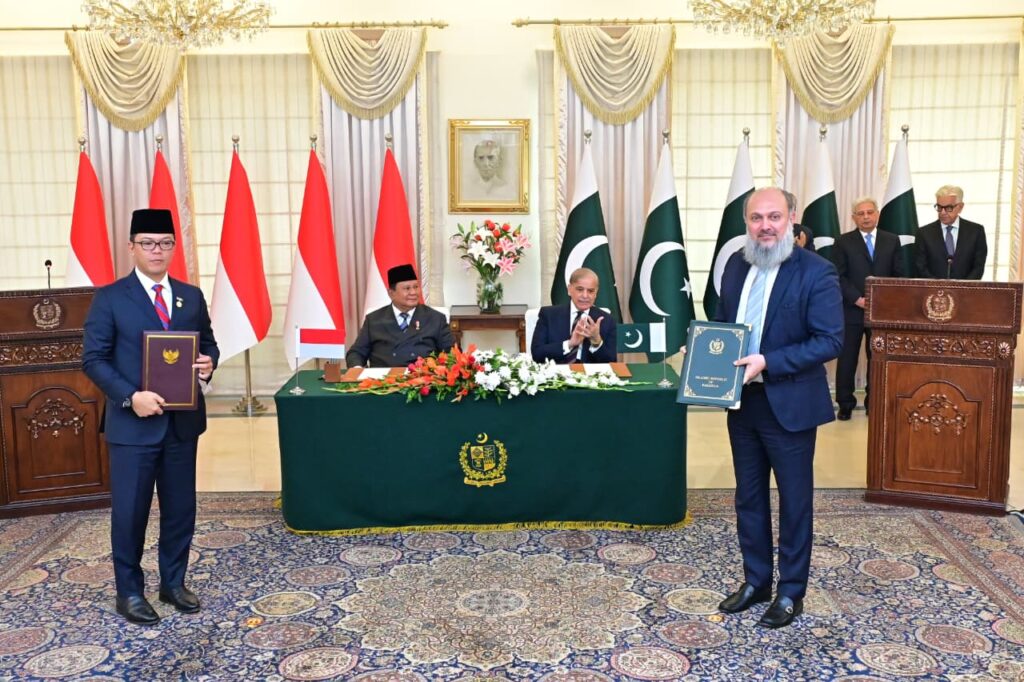
ISLAMABAD: Pakistan and Indonesia moved to deepen their long-standing relationship as President of Indonesia Prabowo Subianto arrived in Islamabad, where he and Prime Minister Muhammad Shehbaz Sharif witnessed the signing of a wide-ranging set of agreements aimed at expanding cooperation across multiple sectors.
The two governments signed seven Memorandums of Understanding, but it was the trade-centered commitments that dominated the conversation in diplomatic and business circles. With bilateral trade already standing at $4.7 billion, Pakistan’s commerce ministry said the agreements had the potential to significantly expand market access, particularly in palm oil, textiles, halal-certified goods, agricultural products and emerging technology sectors.
Jakarta remained one of Pakistan’s largest suppliers of palm oil, while Islamabad had been pushing to scale up value-added textile exports and secure smoother market entry for halal products under a streamlined certification arrangement signed during the visit. The ceremony, held at the Prime Minister’s Office, marked what officials described as a renewed chapter in bilateral engagement between two nations that have often referred to each other as “brotherly partners.”
The visit culminated in the signing of seven Memorandums of Understanding covering higher education, halal certification, narcotics control, health-sector collaboration, technological exchange and trade facilitation. Among the most notable arrangements was a framework enabling Pakistan to send qualified doctors to Indonesia as part of an evolving health cooperation program, while universities from both countries agreed to expand academic linkages, student mobility and joint research initiatives.
Trade officials highlighted that bilateral commerce had already reached $4.7 billion, a figure seen as evidence of growing economic momentum despite global uncertainties. The new MoUs were expected to broaden avenues for investment, streamline certification processes tied to halal exports and encourage partnerships in emerging technologies — sectors Islamabad hoped would help diversify its economic footprint in Southeast Asia.
Sharif said he believed the visit of President Subianto would “take these wonderful relations to a much higher level,” expressing hope that cooperation rooted in shared priorities would evolve into long-term strategic collaboration. The Indonesian president, for his part, emphasized the importance of economic resilience and technological advancement, telling officials that both countries stood to benefit from sustained engagement. For Islamabad, the visit carried particular significance at a time when Pakistan sought to strengthen global partnerships.
