





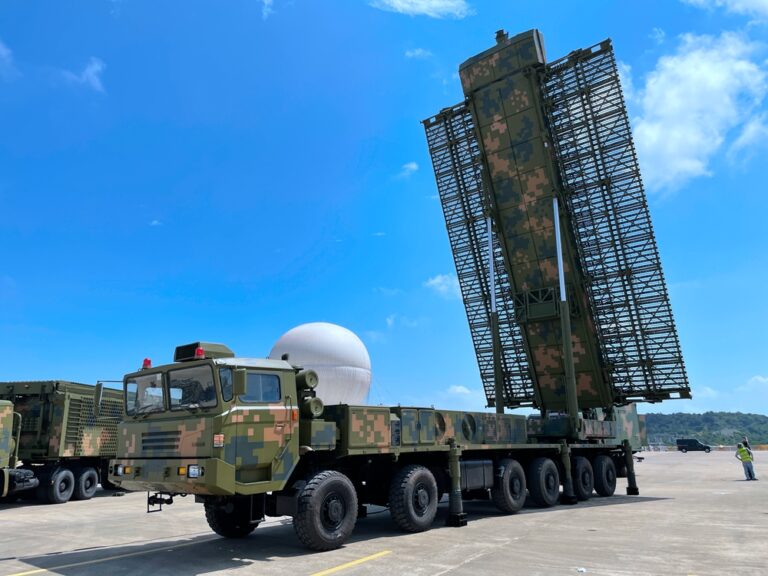
Its heightened sensitivity signalled a decisive shift in sensing power, promising unprecedented precision in tracking low-observable aircraft such as the F-22 Raptor and F-35 Lightning II
News Desk
BEIJING: China’s move to mass-produce an ultra-low-noise, four-channel photon detector marked a significant shift in the rapidly intensifying race between next-generation quantum radar technologies and the stealth aircraft long designed to evade traditional sensors.
Beijing’s claim that it had developed the world’s first single-photon detector with integrated four-channel capability signaled its ambition to close, and ultimately surpass, decades of Western advantages in radar, electronic warfare and stealth-countering systems. The device, capable of registering a single photon – the smallest measurable unit of electromagnetic energy – represented a major step forward in quantum-based military sensing.
Its sensitivity offered a new level of precision in tracking low-observable aircraft such as the F-22 Raptor and F-35 Lightning II. China’s quantum engineering community described the detector as an exceptionally sensitive instrument able to distinguish individual photons amid heavy background interference, placing the country among the few able to produce components essential for viable quantum radar systems.
Developed at a research center in Anhui province, the “photon catcher” formed part of a wider national effort to indigenize critical quantum technologies and reduce reliance on imported photonics hardware. Scientists likened the detector’s sensitivity to hearing a single grain of sand fall in the middle of a thunderstorm – an analogy intended to capture the difficulty of isolating quantum-level signals in the electromagnetic noise of the natural world.
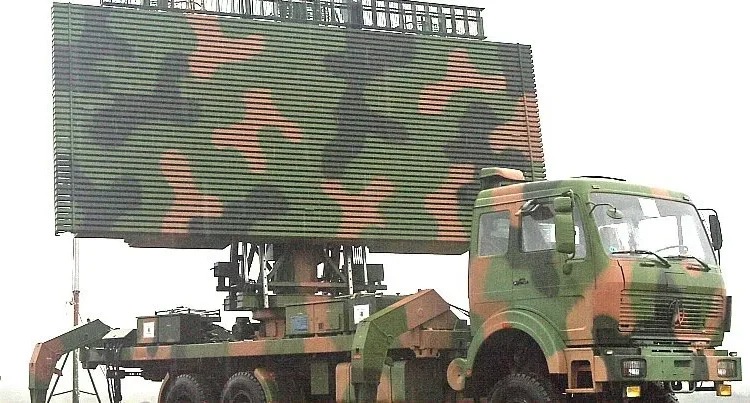
This level of detection meant even the faintest reflections from stealth aircraft – returns that conventional radars typically failed to register – could be separated, examined and converted into useful tracking data. Quantum detection therefore offered one of the strongest technical routes for challenging the fifth-generation stealth designs that had shaped airpower competition for more than thirty years.
Reaching mass-production suggested China was moving beyond laboratory breakthroughs towards scalable industrial output – an inflection point that often preceded rapid military adoption by the People’s Liberation Army. Domestic industrial capacity was expected to reduce costs and speed up deployment, supporting wider expansion of quantum communication, imaging and radar networks.
Industrializing such a detector also strengthened China’s position in global quantum hardware supply at a time when major powers, particularly the United States, regarded quantum technologies as decisive tools for future warfare.
The PLA’s confidence in quantum-enabled sensing aligned with a broader ambition to gain early advantage in what it saw as a coming “post-stealth era”, where traditional radar-evading technology no longer assured survivability. Quantum radars worked on principles fundamentally different from conventional radio-frequency systems, relying on entangled or single-photon emissions with quantum characteristics that could not be spoofed by stealth platforms.
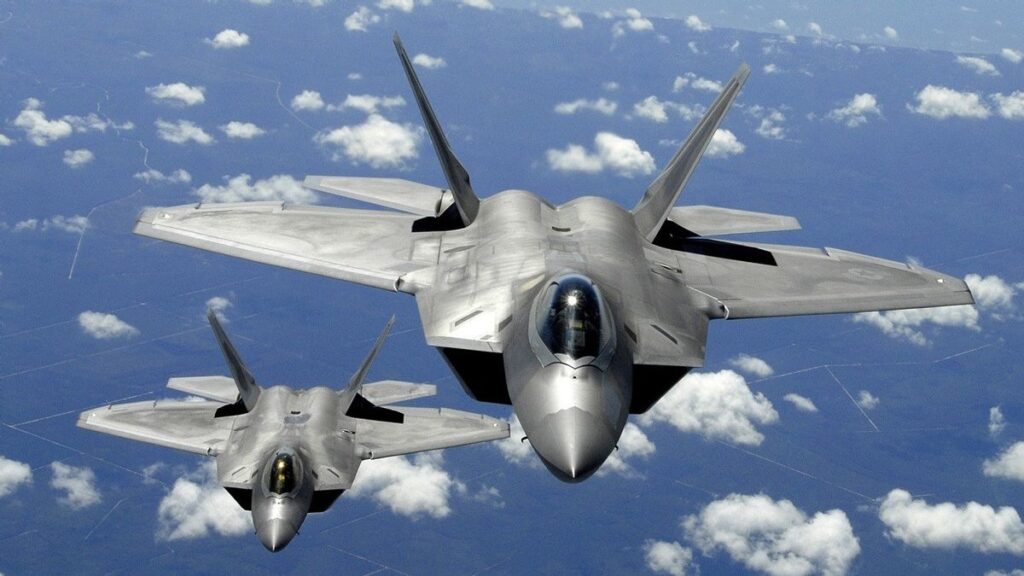
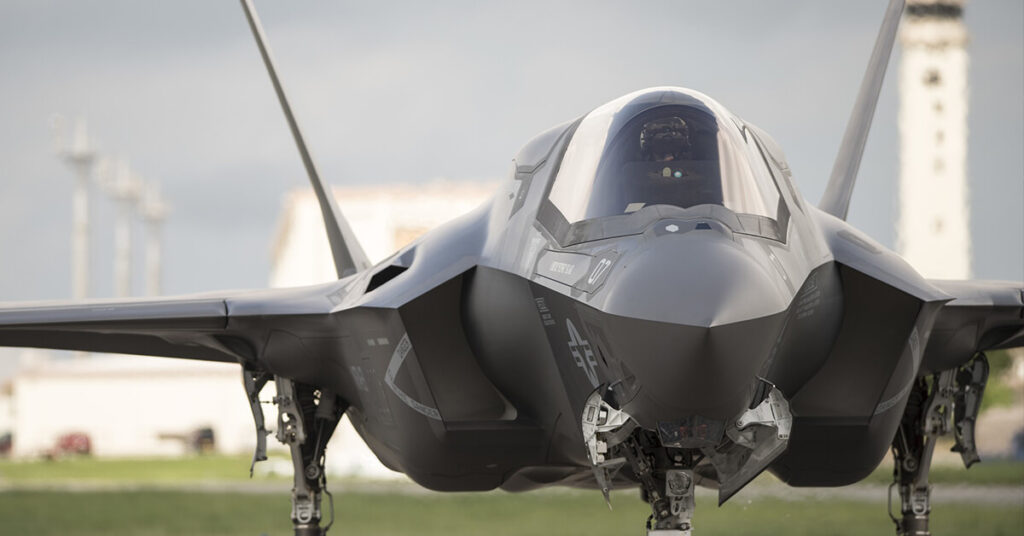
Modern stealth aircraft such as the F-22 and F-35 were built around shaping, radar-absorbent materials, aligned edges, concealed air intakes and internal weapons bays to reduce radar cross-section. These features were designed to defeat radars that emitted high-power waves and measured their reflections, enabling stealth designs to scatter or absorb incoming energy. Quantum radars, however, did not use high-power pulses.
They sent out individual photons with unique quantum states, and once these interacted with an object – even one coated with RAM or shaped with extreme precision – the resulting changes in quantum properties could not be hidden by countermeasures. This allowed detection not through the strength of a return signal, which stealth aircraft aimed to minimize, but through alterations in quantum states, which they could not fully mask.
The new four-channel detector sharply increased the volume of quantum returns that could be processed simultaneously, improving the ability of quantum radars to capture data from different angles, wavelengths or photon streams. This offered more accurate tracking and clearer identification of stealth targets whose radar signatures were often said to resemble those of a metal marble.
Quantum radar’s potential to tip the balance in future air combat was particularly relevant in the Indo-Pacific, where the detection of stealth aircraft underpinned strategic planning. Earlier Chinese claims of a quantum radar with a range of about 62 miles had been met with scepticism, as Western analysts questioned whether laboratory performance could translate into operational capability.
The new detector suggested China had overcome major obstacles relating to noise suppression, stability and multi-channel processing, enabling more mature prototypes. Quantum radars were also expected to consume far less power than traditional high-power arrays, reducing the energy signatures that typically exposed radars to anti-radiation missile attacks.
That advantage grew increasingly important as regional militaries devoted greater resources to electronic warfare, cyber disruption and counter-radar strategies, with China, the US, Japan and South Korea all investing heavily in spectrum competition. Quantum systems also promised better detection of small, slow or low-visibility targets, including loitering munitions, stealth drones, hypersonic glide vehicles and next-generation UAVs designed to operate beneath conventional radar horizons.
With stealth drones and cruise missiles proliferating across Asia – from China’s GJ-11 to the US XQ-58A Valkyrie and emerging South Korean programs – quantum detection was set to reshape the region’s arms race. If deployed on mobile platforms, such radars could allow China to establish a resilient anti-stealth detection network across large parts of the East China Sea, South China Sea and the Taiwan Strait.
