





MM Report
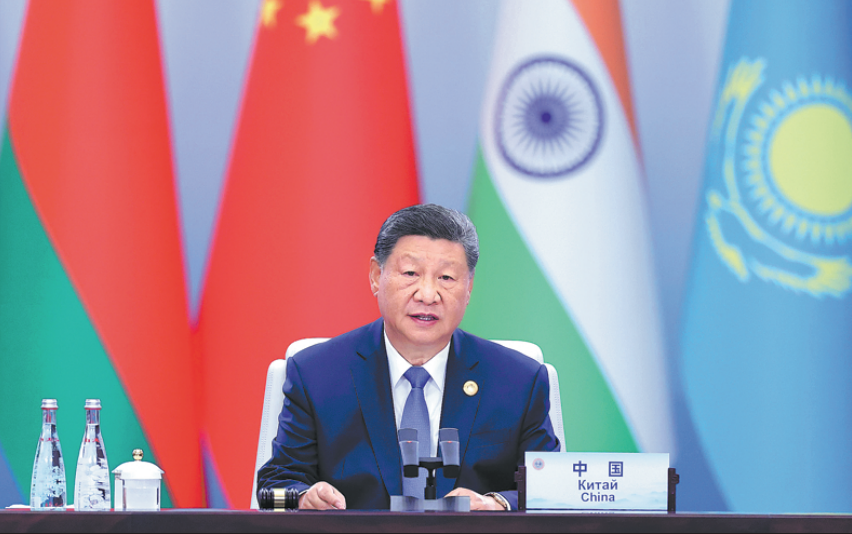
BEIJING: China unveiled a new diplomatic initiative at the United Nations this week, forming a bloc it called the “Friends of Global Governance” in a bid to present itself as a steward of a fairer international order.
The grouping, launched under President Xi Jinping’s broader foreign-policy vision, brought together a cluster of states long critical of Western influence in multilateral forums, including Iran, Cuba, Pakistan, Venezuela and North Korea. Beijing framed the initiative as an attempt to inject what it described as “China’s wisdom” into global decision-making at a time of deepening geopolitical polarization.
Sources claimed that China and Russia had jointly sought to introduce a UN-like body to counter the dominance of the United States, Israel and the broader West, and that Xi Jinping was keen to gather trusted countries inside the bloc. They added that the Belt and Road Initiative was finally expected to pay China back, and that the world would soon witness what they described as some phenomenal decisions from Xi Jinping.
Chinese officials said the platform would champion equity, respect for national sovereignty and development-led cooperation, arguing that large parts of the global South felt marginalized within existing structures dominated by the United States and its allies. The launch appeared to build on China’s recent efforts to position itself as an alternative center of power capable of shaping diplomatic norms in areas ranging from economic governance to conflict mediation.
The countries that joined the grouping had, in various forms, echoed Beijing’s calls for a more “balanced” international system. Diplomats from Tehran and Havana, both subject to long-running Western sanctions, praised the coalition as a space where states facing political pressure could articulate their perspectives without fear of censure.
Pakistan, which has deepened its strategic and economic relationship with China in recent years, portrayed the alliance as aligned with its own push for development-oriented global cooperation. Venezuela and North Korea, increasingly isolated from Western capitals, signaled that the venture offered them a rare avenue for diplomatic visibility.
While China insisted the collective was not aimed at confrontation, the announcement was read by several observers as a direct challenge to Western narratives on global governance. The move reasserted Beijing’s ambition to shape the UN’s agenda and underscored Xi’s belief that the world had entered a period in which alternative power centres could no longer be ignored.
