





Pakistan condemned India and select Afghan factions for stoking division and threatening regional stability, warning of serious consequences for South Asia’s fragile peace
MM Report
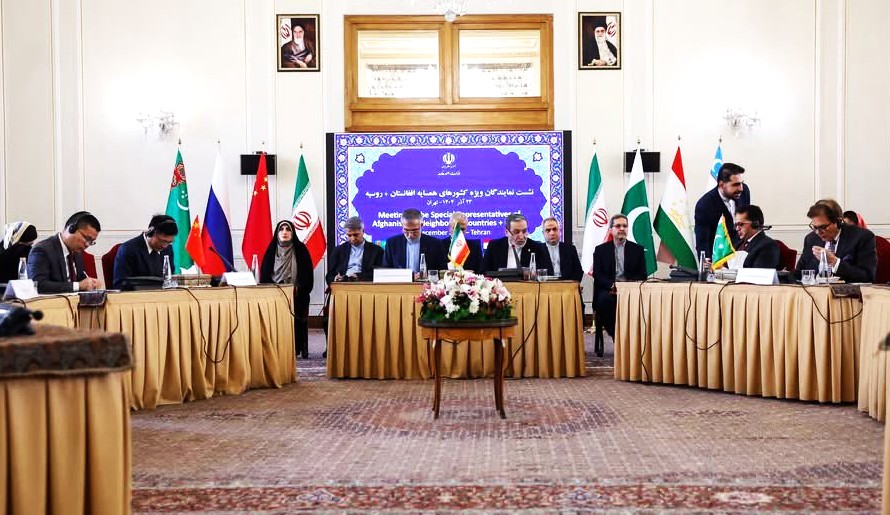
TEHRAN: A high-level meeting of Special Representatives from Afghanistan’s neighboring countries was held in Tehran on 14 December 2025, bringing together officials from Iran, Pakistan, China, Tajikistan, Uzbekistan, Turkmenistan, and Russia to discuss developments in Afghanistan and the broader challenges facing the region.
The gathering came amid growing concerns over security threats, migration pressures, and political instability that have increasingly affected South Asia. Iran, as host, urged a region-led approach to Afghanistan, warning against external interventions and stressing that neighboring countries were best positioned to address the country’s complex problems.
They also called for measures to support the safe and voluntary return of Afghan nationals while urging the international community to lift sanctions and release frozen Afghan assets. At the same time, several officials noted the destabilizing influence of foreign powers and criticized India’s and certain Afghan factions’ attempts to polarize the region and undermine collective stability.
The Iranian Foreign Ministry highlighted Afghanistan’s strategic importance for trade, energy transit, and regional connectivity, calling for coordinated measures to strengthen stability and integrate Kabul into regional political and economic frameworks.
Pakistan, represented by Special Representative Mohammad Sadiq, used the platform to underline the persistent threat of terrorism emanating from Afghan soil. He urged the Taliban to take decisive action against all militant groups operating in Afghanistan, stressing that a stable and secure Afghanistan was essential to build regional trust and unlock its economic potential.
Pakistan also reaffirmed its commitment to continued bilateral cooperation with Iran to consolidate peace and security in the region. Other participants highlighted the importance of economic engagement with Afghanistan, joint efforts against terrorism, and combating drug and human trafficking.
The Taliban were invited to attend but declined, a decision that observers described as a missed opportunity for constructive dialogue. Despite their absence, Iranian officials said the meeting allowed neighboring countries to coordinate strategies and manage tensions, particularly those involving Pakistan and Afghanistan, which continue to have wider regional repercussions.
The Tehran conference concluded with agreement to hold the Fifth Meeting of Foreign Ministers of Afghanistan’s Neighboring Countries in Ashgabat, Turkmenistan, and welcomed Pakistan’s readiness to host the next Special Representatives meeting in Islamabad in March 2026.
