





By Aziz Khatri
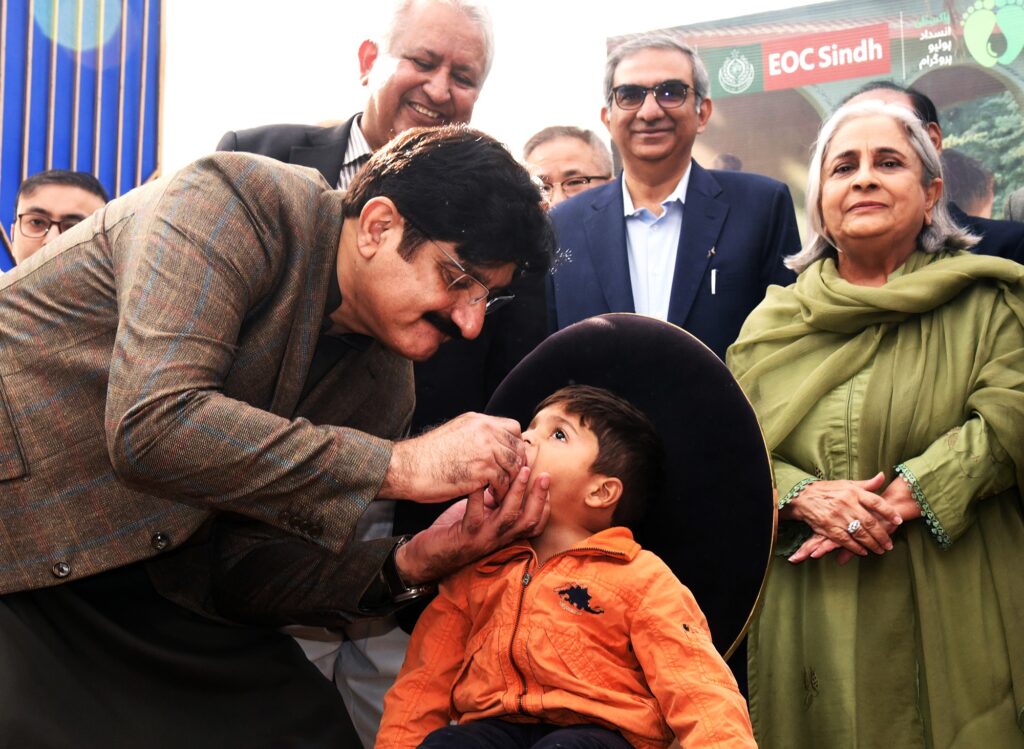
KARACHI: Sindh Chief Minister Syed Murad Ali Shah launched a week-long polio vaccination campaign on Monday, urging parents and communities to ensure that children across the province receive the life-saving drops. The campaign, running from 15 to 21 December, will cover 1,345 Union Councils in all 30 districts of Sindh, aiming to reach every eligible child in the province.
Speaking at the inauguration ceremony at Haji Camp CMC School in Karachi’s old city, Shah expressed concern over the resurgence of polio in recent years. He noted that nine cases had already been reported in Sindh this year, adding to the 30 children infected nationwide last year, nine of them from the province.
The chief minister stressed that vaccination remained the only proven safeguard against the disease, underscoring that eradication was a collective responsibility requiring cooperation from parents, communities, and government officials alike. Shah highlighted that Pakistan and Afghanistan are currently the only Islamic countries still reporting polio cases.
“In other Islamic nations, every child received polio drops and the disease was eradicated,” he said, describing the situation as “a source of shame” and urging families to participate actively in the campaign. He also noted that officials who had previously failed to carry out vaccination drives properly faced disciplinary action, including suspensions, reinforcing the government’s commitment to accountability.
Authorities said the campaign would involve door-to-door visits by health workers to administer polio drops, particularly targeting areas with low vaccination coverage or higher risk of virus transmission. The chief minister appealed to citizens to cooperate fully and report any negligence, stressing that the success of the campaign depended on active engagement from both the public and government machinery.
Shah concluded by reiterating the urgency of the effort, warning that polio posed a continuing threat to children’s health unless immunisation coverage was universal, echoing global public health messages that eradication was achievable only through sustained, collective action.
