




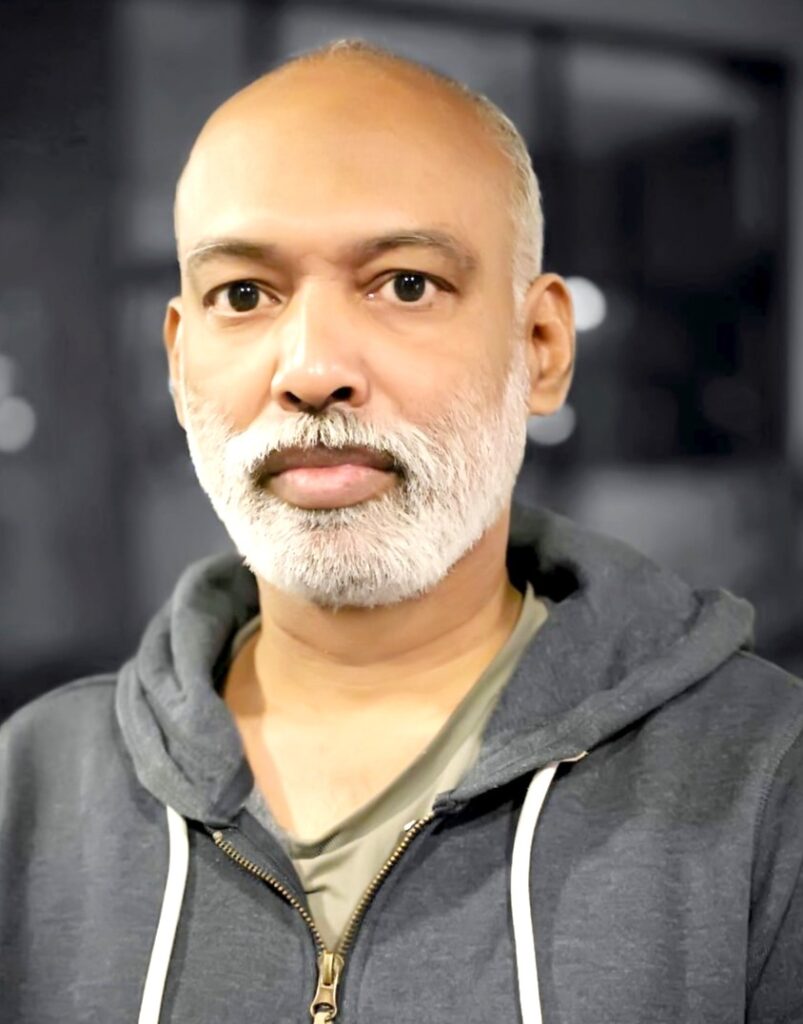
By Mohammad Basir-Ul-Haq Sinha
The United States did not so much fight its way into superpower status as drift into it on the currents of other nations’ ruin. Its supremacy, often celebrated as the natural outcome of strength and vision, was in truth something more contingent — less a victory seized than a vacuum filled. In the cold arithmetic of history, power rarely passes cleanly from one hand to another; it accumulates in the spaces left behind when others falter. The 20th century was, above all, an age of collapse. The twin devastations of the First World War and the Second World War did not merely redraw borders; they shattered entire systems of authority.
Europe, long the center of global power, emerged fractured and exhausted. The United Kingdom, though nominally victorious, found itself financially drained and politically diminished. Germany and Japan lay in ruins, their imperial ambitions extinguished. The Ottoman Empire had already dissolved into history. Decades later, the ideological rival that might have balanced American power, the Soviet Union, would collapse under the weight of its own contradictions. What remained was not a carefully engineered order, but a void — a geopolitical silence where competing voices had once been. Into that silence stepped the United States, not as an architect of the vacuum, but as its principal beneficiary.
The metaphor often invoked is that of reluctant leadership, yet even that risks overstating the degree of intention involved. America did not so much set out to dominate as find itself, almost unexpectedly, in a position where no one else could. This was the so-called unipolar moment, a brief and historically unusual period following the collapse of the Soviet Union in which global power appeared to coalesce around a single state. For a time, the world seemed to orbit Washington with little resistance. Yet such dominance, far from being the culmination of a long imperial tradition, marked the ascent of a comparatively young nation — a state whose own origins remain within living historical memory.
Unlike the ancient polities of Europe or Asia, the United States lacks the deep sediment of centuries. Its founding was abrupt and violent, forged through revolution and sustained by expansion across a continent already inhabited. This relative youth matters. It shaped not only the speed of America’s rise but also the character of the order it would later construct — pragmatic, often improvised, and underpinned by a certain impatience with the constraints of history. For much of its early existence, the United States had little appetite for global entanglement. Protected by oceans and preoccupied with internal consolidation, it adhered to a doctrine of strategic distance.
The turmoil of Europe was, for a long time, something to be observed rather than joined. Yet the scale of the 20th century’s upheavals made detachment untenable. By the end of the Second World War, the old world lay prostrate, and America — whether it wished to or not — was drawn into the task of reconstruction and stewardship. What followed was not merely an assumption of power but a reconfiguration of the international system itself. Institutions were built, alliances forged, and economic frameworks established, many of them bearing the unmistakable imprint of American priorities. The language of order became, in subtle ways, the language of Washington.
Seen through this lens, the American century appears less as a story of triumph than of inheritance — a moment made possible by the failures of others and sustained by a vigilant, sometimes ruthless, defence of that inherited space. It is a sobering interpretation, one that resists the comforting narratives of destiny and virtue. History, after all, is rarely kind to such narratives. Power acquired by circumstance can be as fragile as it is formidable. And as new centers of influence begin, once again, to stir, the question is not whether the vacuum will return, but who, this time, will be waiting to fill it.
(The writer is a Dhaka-based journalist and executive director of Citizens Power, the civic platform, writes incisively on people and power, political economy and the unfinished legacies of post-colonialism, can be reached at editorial@metro-morning.com)
#SuperpowerBornOfVacuum #Geopolitics #AmericanCentury #History #InternationalRelations #MohammadBasirUlHaqSinha #USHistory #GlobalOrder #PoliticalAnalysis #MetroMorning #PakistanNews #OpinionPiece #ThoughtLeadership #WorldAffairs #PowerAndHistory
