




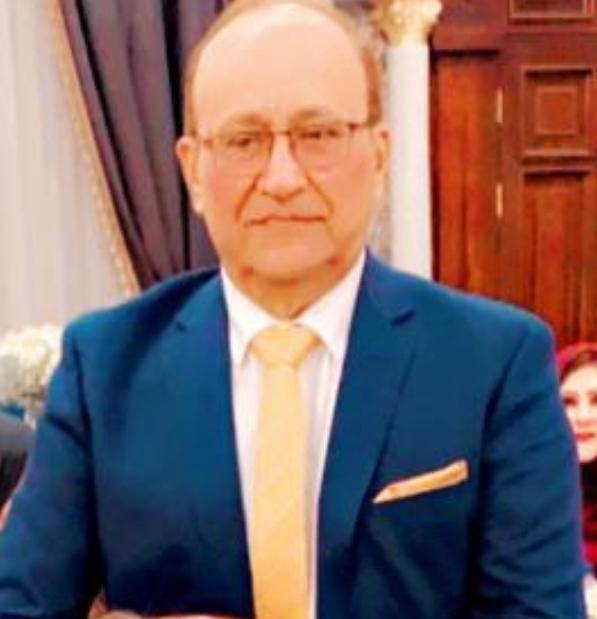
By Amir Muhammad Khan
The recent unfair war between Iran and Israel, backed by the United States, has slowed the process of strengthening the world’s peace-loving powers and has further weakened the economies of developing countries. The conflict has rendered ineffective all those global systems and institutions built at the expense of billions of dollars, which have failed to resolve international disputes and have consequently lost their standing. With the “only me” policy now taking hold, it forces us to ask how peace-loving nations and developing economies around the world can ever hope to see success. Pakistan has now acquired the status of a crucial country in many respects. Its geographical position, shared border with Iran, access to the Indian Ocean and its role as a gateway to Central Asia all make it a natural mediator.
Those who understand the world map know that no peace project in the Middle East can succeed without Pakistan. In the current conflict, India has taken an extremely weak and self-effacing approach to foreign affairs. Despite having spent billions of rupees on projects such as the Chabahar port with Iran, when this crisis broke, India found itself limited to concerns over its oil routes. The Indian media has been emphasizing that the ring on the finger of Iran’s religious and political leader, Khamenei, is a sign of Iran’s strength. However, those prone to superstition and who believe that cows are slaughtered cannot think beyond such things.
On the other hand, the peace-loving Islamic country of Pakistan is playing an active role, not only in its own interests but also in the cause of regional peace. Pakistan’s balanced foreign policy, its commitment to regional stability and its careful relations with global powers – whether the United States or China, both of which view Pakistan with respect – are the reasons why, when communication was needed between two important and conflicting countries such as Iran and the United States, Pakistan emerged as an acceptable intermediary. This episode not only shows Pakistan’s diplomatic maturity but also exposes the complete failure of India’s “globalization” and “isolation” strategy.
Pakistan’s military leadership is also an important factor in its diplomatic successes. Field Marshal Asim Munir’s personal contact with US President Donald Trump has played a significant role. The Indian army and leadership, which dream of a united India and remain entangled in border tensions with Pakistan, cannot mediate impartially at this level. That is why the United States turned to Pakistan for mediation rather than India. The recent reforms introduced by the government of Prime Minister Shahbaz Sharif, along with the increase in foreign exchange reserves and cooperation with international organizations, have given Pakistan a new confidence. When a country is internally stable, it can play a greater role on the global stage.
India, a country five times larger than Pakistan, is nowhere to be seen in this real crisis. It is enjoying the embrace of Yahoo and celebrating Indian investment in Iran, investments it made to position itself in Pakistan’s neighborhood and to fight terrorism. Yet despite that, Pakistan has looked after Iranian interests in Washington ever since diplomatic relations between Iran and the United States were severed in 1979. This longstanding role is now proving valuable in mediation. Meanwhile, India’s recent policies are facing strong criticism within India itself, with people asking what benefit India has gained by sitting in America’s lap.
This policy has cost India its regional influence. In the spirit of “the cat that craves the meat ends up clawing its own ear”, the Indian foreign minister is having to play a very low and despicable role, resorting to undiplomatic and immoral language. Jaishankar’s recent statements have only added to India’s embarrassment. It is a heavy blow for India, the advocate of Akhand Bharat and Greater Israel, that when real diplomacy was needed, the world chose Pakistan. Deputy Prime Minister Ishaq Dar is busy with negotiations despite being injured. The global attention and discussion surrounding Pakistan’s diplomacy is also an opportunity for Pakistan.
If the negotiations in Islamabad succeed, Pakistan’s standing in the world will be further elevated. The growing rivalry among major powers, regional conflicts, economic instability and the weakening credibility of international institutions have raised an important question: if a new world order is born out of this situation, will it too be designed only for powerful countries, leaving smaller nations to remain victims of the oppression of the great?
(The writer is a veteran journalist having 45 years of experience across print and broadcast media in Pakistan and the United States, can reached at editorial@metro-morning.com)
