



By Imtiaz Hussain
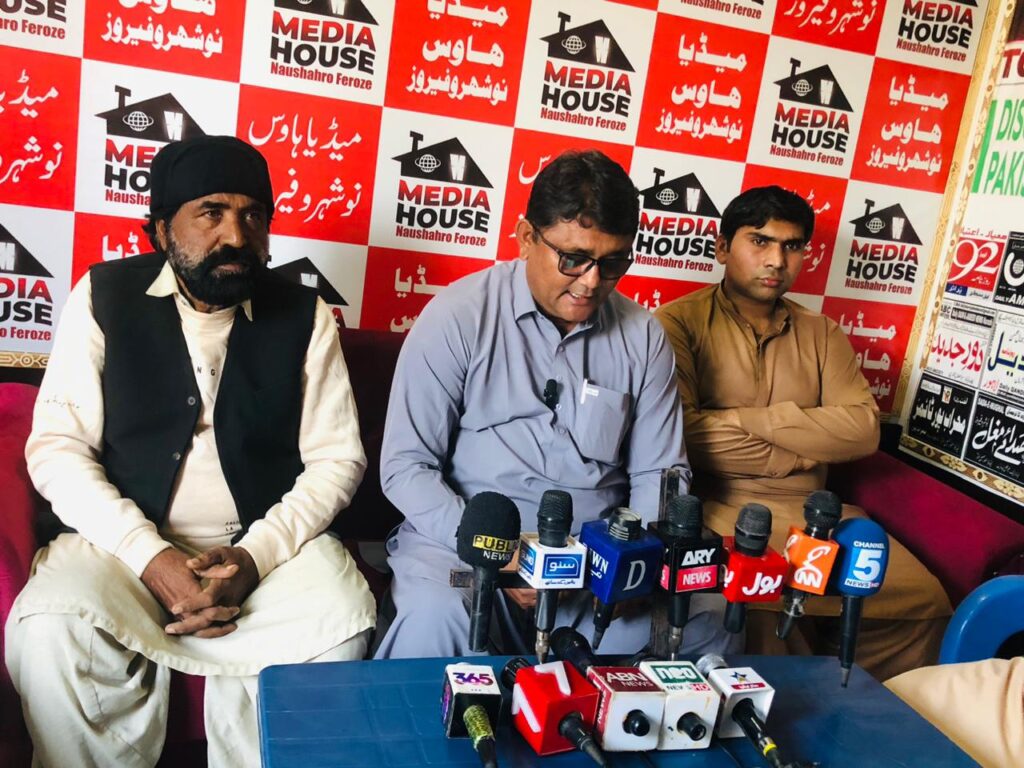
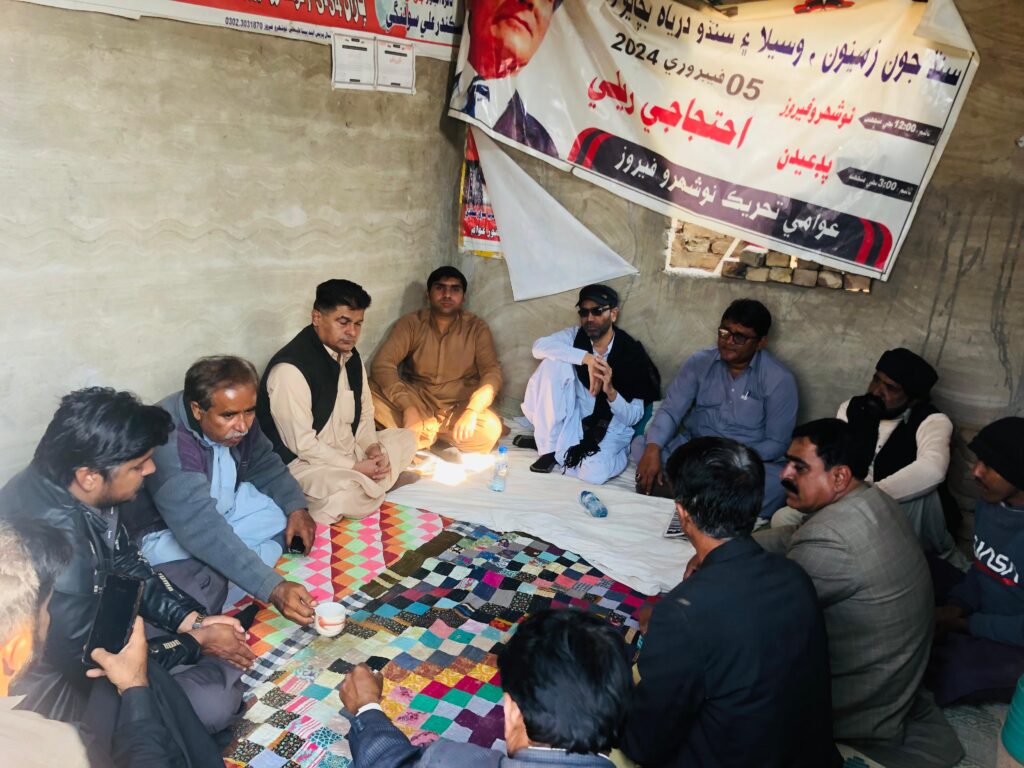
KARACHI: Senior leaders of Awami Tehreek continued a two-day visit to Naushahro Feroze on 19 December, holding corner meetings in villages across the district and addressing separate press conferences at the Bhriya City Press Club and Media House Naushahro Feroze.
The delegation was led by the party’s central president, Advocate Vasand Thari, along with central media secretary Kashif Mallah, Hussain Soomro, Awami Tehreek Naushahro Feroze district president Latif Bhatti, Sarwar Sindhi and other party leaders. Speaking to the media, they claimed that the Pakistan People’s Party government had “surpassed even the world’s worst fascist rulers,” arguing that Sindh and the wider country were now under a system comparable to the regimes of Adolf Hitler and Benito Mussolini.
They alleged that Sindh had been “handed over to criminals and armed gangs,” with robberies in homes, shops and markets becoming routine, and passenger vehicles looted on a daily basis. They cited incidents in which passengers were allegedly robbed and abducted from a coach near Ubauro, followed by the looting of a passenger van in Ratodero.
The leaders blamed such lawlessness on PPP patronage of criminal groups, saying that instead of launching effective operations and imprisoning tribal leaders accused of sheltering gangs, the Sindh government was “honoring criminals with feasts and gatherings.” Turning to water and land issues, they argued that many countries were moving away from large dams, citing Iran, where dams had caused water shortages and displacement, and the United States, where hundreds of dams were being dismantled due to environmental damage.
In contrast, they alleged, a powerful lobby in Pakistan had abandoned its constitutional responsibilities and was pushing to construct dams and canals on the Indus River to facilitate the sale of 1.3 million acres of land in Sindh and 4.8 million acres nationwide to “global imperialist forces.” The PPP, they said, had “signed away everything” in exchange for remaining in power.
The leaders also claimed that Pakistan’s establishment, in alliance with the PPP, the Pakistan Muslim League-N, Muttahida Qaumi Movement and other parties, had betrayed the vision of Muhammad Ali Jinnah. They described the 27th constitutional amendment as a clear deviation from federal principles and Jinnah’s ideology, accusing rulers of acting under foreign influence to turn Pakistan into “a prison for oppressed nations,” replacing constitutional governance with force and imposing amendments to undermine the constitution.
Corporate farming projects, canals and dams on the Indus, they said, had led to the plunder of Sindh’s rights. Under slogans of agricultural revolution and economic development, the leaders argued, land, rivers, resources and historical sites of Sindh and other regions had been handed over to foreign corporations, compromising national sovereignty.
Warning that Sindh and Pakistan were passing through an “extremely dangerous and critical period,” they claimed an artificial system of bandit rule had been created in the province, where criminals wielded modern NATO-grade weapons and operated with the support of elected representatives, tribal chiefs and feudal elites. They accused the PPP government of deliberately undermining peace in Sindh to retain power, alleging that in exchange for making Bilawal Bhutto Zardari prime minister and securing the presidency for Asif Ali Zardari, the party had “sold every inch of Sindh.”
The leaders described the current PPP rule as the worst in Sindh’s history and said the damage inflicted on the constitution surpassed that of former military rulers Zia-ul-Haq and Pervez Musharraf. They announced that Awami Tehreek would organise a large march in Larkana on 21 December to protest what they called constitutional dictatorship, the 27th constitutional amendment, corporate farming projects, canals, the weakening of the judiciary, the plunder of Sindh’s resources and the imposition of lawlessness in the province. They appealed to the people of Sindh to take part.
