



By our correspondent
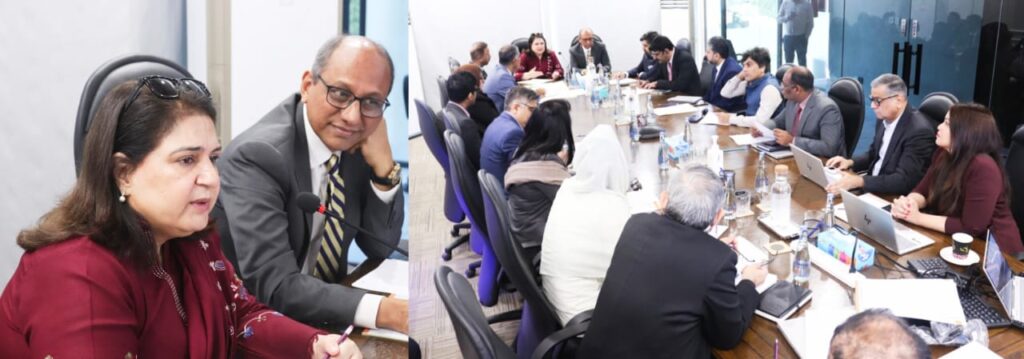
KARACHI: Senator Rubina Khalid, chairperson of the Benazir Income Support Program, emphasized the need to devolve education and health-related programs to the provinces to strengthen the federation. She made the remarks during a visit to the Sindh Social Protection Authority and the social protection department of the Sindh government.
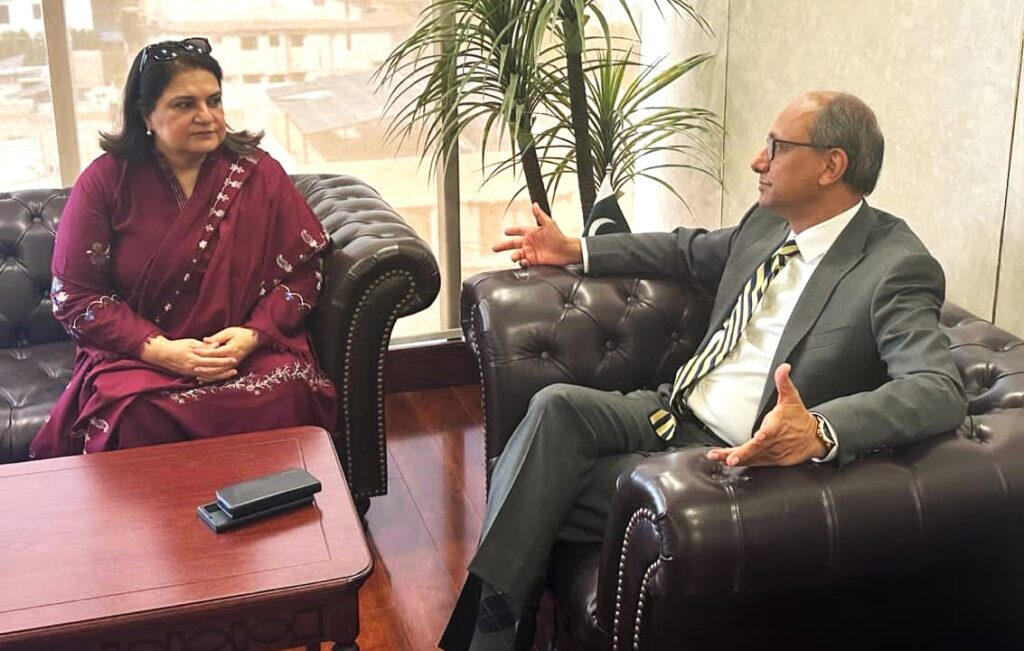
The BISP chairperson was received by Sindh’s minister for social protection, Saeed Ghani, and briefed by Irshad Sodhar, the chief executive officer of the Sindh Social Protection Authority. Khadim Hussain Channa, secretary of the social protection department, was also present.
Senator Khalid said the core BISP cash support program should remain at the federal level. However, she argued that health and education schemes would be more effectively implemented if they were managed by the provinces.
She was accompanied by a delegation that included Asim Aizaz, director general of the National Socio-Economic Registry at BISP, and Adnan ul Hassan, director general of BISP Sindh.
The chairperson also expressed BISP’s interest in establishing a data integration arrangement with Sindh. She said closer coordination with the provinces was essential for the success of social protection initiatives and would ultimately strengthen the federation.
Welcoming the visit, Saeed Ghani said discussions were under way with BISP to expand collaboration and formalise data-sharing agreements. He said such cooperation would help streamline access to social support programs and benefit millions of beneficiaries across Sindh. He added that the provincial government was also coordinating with other departments to develop a central data repository.
During the briefing, Asim Aizaz said Sindh had an estimated 9.8 million households, of which 9.1 million were registered in the BISP database. He said 2.65 million households were currently receiving unconditional cash assistance under the Benazir Kafalat Program. Irshad Sodhar told the meeting that the Sindh Social Protection Authority already had data-sharing protocols in place with BISP and NADRA. He said these arrangements supported enrolment under the Mamta Program. He added that around 910,000 mothers had been registered across 15 intervention districts, with more than four million hospital check-ups completed under the initiative.
