




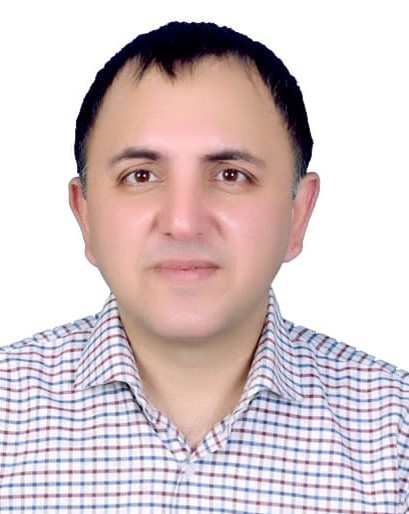
By Atiq Raja
For more than seven decades, Kashmir has remained one of the world’s most emotionally charged and politically complex disputes. Often reduced in international discourse to lines on a map, ceasefire arrangements, or strategic calculations, the reality on the ground is far more intimate, tragic, and enduring. For the people of Kashmir, this is not merely a territorial dispute between states—it is a human story of identity, dignity, and the right to choose one’s own future. At its heart lies a question both simple and profound: can Kashmir ever exist as a homeland where its people live with freedom, safety, and self-determination, free from fear and foreign dictates?
Much of the discussion around Kashmir is framed in the cold language of geopolitics. Analysts speak of borders, military deployments, and regional alliances, while newspapers tally ceasefire violations and track troop movements. Yet for Kashmiris themselves, the stakes are personal. Decades of political uncertainty, militarization, and repeated unfulfilled promises have left deep scars. Families live with the memory of lost loved ones, communities cope with the disruption of their livelihoods, and generations grow up under the constant shadow of suspicion and surveillance. Cultural survival, religious freedom, and economic security are not abstract policy goals—they are the rhythms of daily life, constantly threatened by a conflict that has no clear resolution in sight.
True freedom for Kashmir, therefore, cannot be reduced to a change in administrative control. It must mean self-determination, safety, and dignity for the people who have borne the heaviest costs. Any approach that sidelines Kashmiri voices risks repeating the errors of the past. Time and again, international attention has focused on state-centric solutions, with the aspirations of the very people affected treated as secondary or symbolic. This is a fundamental flaw that no framework, no matter how well-intentioned, can overcome. Some have looked to other protracted conflicts for lessons. Former US President Donald Trump, for example, promoted a transactional, deal-driven approach to Israel–Palestine, emphasising economic incentives, regional buy-in, and power-based negotiation over ideological debate.
Could a similar model work for Kashmir? In theory, perhaps—but only with major caveats. The key difference lies in representation: while Israel and Palestine have defined leadership structures participating in negotiations, Kashmiris have been largely excluded from meaningful dialogue. Any “Peace Board” or international mediation effort that treats Kashmiris as spectators is doomed from the start. For peace to take root, the people most affected must be at the centre of the process. Mediation must be credible, impartial, and guided by human rights and demilitarization rather than narrow strategic interests. Solutions must be co-created, not imposed. Peace cannot be sold as a deal—it must be owned.
The possibility of an independent Kashmir is often dismissed as unrealistic. Yet history shows that what once seemed impossible—South Sudan, East Timor, Kosovo—became reality through a combination of international consensus and internal unity. A peaceful, independent Kashmir would require a clear, democratic mandate from its people, guarantees of security from regional and global powers, and a constitution designed to protect religious, ethnic, and cultural diversity. Economic self-reliance, supported by tourism, agriculture, education, and trade, would be crucial. Above all, independence would need to be understood not as isolation but as agency: the ability for Kashmiris to decide their own path while remaining a responsible, non-aligned participant in regional and global affairs.
Yet political arrangements alone cannot guarantee peace. True resolution must begin with humanity. Restoring trust through confidence-building measures, the release of political prisoners, and the restoration of civil liberties is essential. Demilitarization, even if gradual, would alter the psychological landscape, replacing fear with dialogue. Inclusive political processes must empower youth, women, civil society, and diaspora Kashmiris to shape the region’s future. Cultural and religious freedoms, long under pressure, must be safeguarded, allowing people to live according to their beliefs and traditions without fear.
(The writer is a rights activist and CEO of AR Trainings and Consultancy, with degrees in Political Science and English Literature, can be reached at editorial@metro-morning.com)
#KashmirFreedom #SelfDetermination #HumanRights #PeaceInKashmir #Demilitarization #InclusiveGovernance #KashmiriVoices #RegionalStability #CulturalRights #KashmirSolidarity
