




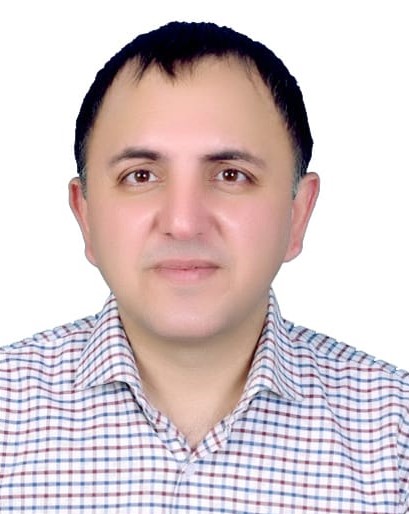
By Atiq Raja
For more than seventy years, Kashmir has remained one of the world’s most emotionally charged and politically complex disputes. It is often reduced to lines on a map, strategic calculations, or the ambitions of distant capitals. Yet at its heart, the conflict is profoundly human: it is the story of people struggling for identity, dignity, and the right to determine their own future. The question that resonates across valleys and mountain passes is simple, yet deeply unsettling for those who wield power beyond the region’s borders: can Kashmir ever be free to exist as an independent, peaceful homeland, where Kashmiris live the lives they choose?
Discussions of Kashmir are often dominated by geopolitics. Terms such as borders, ceasefire lines, and territorial sovereignty dominate international discourse, but these abstractions obscure the lived reality of millions of people. For ordinary Kashmiris, the stakes are existential. Decades of militarization, political uncertainty, and repeated cycles of violence have eroded trust and inflicted trauma across generations. Life in the Kashmir Valley is lived under the shadow of checkpoints, curfews, and the constant presence of armed forces. Schools, hospitals, and homes become sites of vulnerability; economic opportunities shrink; cultural and religious freedoms are circumscribed. True freedom, therefore, cannot be measured solely by administrative control—it must mean security, self-determination, and dignity.
Some observers have suggested that the region might be approached through the lens of international mediation or frameworks inspired by other protracted conflicts. Former U.S. President Donald Trump, for instance, popularized a business-oriented model for Israel–Palestine, emphasizing deal-making, economic incentives, and regional buy-in over ideological debate. Could a similar approach—an internationally facilitated “Kashmir Peace Board”—offer a path forward? In theory, perhaps, but only with stringent caveats. The crucial distinction is that Kashmiris themselves have been largely excluded from meaningful negotiations. A peace process that ignores the voices of those most affected is doomed to fail. Any credible mechanism must place Kashmiris at its center, ensure genuine neutrality, prioritize human rights and demilitarization, and create solutions that are owned rather than imposed.
Peace cannot be “sold” like a transaction; it must be nurtured, lived, and safeguarded by the people themselves. The notion of an independent Kashmir is often dismissed as unrealistic or unachievable. Yet history is littered with examples of what once seemed impossible becoming reality: South Sudan, East Timor, and Kosovo all emerged through a combination of international consensus and internal resolve. For Kashmir, independence would require not only a clear democratic mandate but also guarantees of security from regional and global powers, a constitution protecting religious, ethnic, and cultural diversity, and a commitment to economic self-reliance through tourism, agriculture, education, and trade. It would require a principled stance of peaceful, non-alignment, ensuring that the region does not become a battlefield for competing external interests.
However, the path toward peace extends beyond abstract notions of sovereignty. It is fundamentally a question of humanity. Confidence-building measures are an essential starting point: the release of political prisoners, the restoration of civil liberties, the protection of freedom of speech, and tangible steps to rebuild trust between the state and its citizens. Demilitarization, paired with sincere dialogue, can transform the psychological landscape of the region, creating conditions where negotiation replaces coercion. Political inclusion must extend beyond traditional power structures to involve youth, women, civil society actors, and the Kashmiri diaspora.
The pluralistic identity of Kashmir—its rich tapestry of culture, religion, and tradition—must be preserved so that its people can live without fear or suppression. The role of the international community is equally critical. Moral responsibility cannot be fulfilled through statements of condemnation alone. Global actors must move beyond the convenience of geopolitical calculations and engage with principled consistency, prioritizing human rights over strategic expediency. Kashmir is not merely a regional dispute; it is a test of whether the world is willing to recognize and protect the agency of people denied voice for decades. A future worth imagining for Kashmir is not a fantasy.
(The writer is a rights activist and CEO of AR Trainings and Consultancy, with degrees in Political Science and English Literature, can be reached at editorial@metro-morning.com)
#Kashmir #KashmirFreedom #SelfDetermination #HumanRights #PeaceInKashmir #Demilitarization #KashmiriVoices #ConflictResolution #InternationalMediation #CulturalPreservation #RegionalPeace #CivilLiberties #YouthEmpowerment #WomenInPeace #HumanityFirst #Geopolitics #KashmirValley #JusticeAndDignity
