




News Desk
TEHRAN: The martyrdom of Ali Larijani, Iran’s powerful security chief, has sent shockwaves across the Middle East, raising questions about whether his loss could fundamentally alter the Islamic Republic’s strategic decision-making and internal stability. Larijani was a unique figure who bridged the military (IRGC), religious leadership, and political elite—three pillars of Iran’s establishment that rarely find such unified representation in a single individual.
Following the martyrdom of Ayatollah Ali Khamenei, Larijani had informally emerged as the most powerful figure within the system, functioning as the brain of the regime. As Secretary of the Supreme National Security Council, he oversaw defense strategy, the nuclear program, and foreign relations, effectively serving as the architect of Iran’s most critical policies. His ability to maintain balance between the armed forces, clerical establishment, and political factions made him indispensable to the functioning of the Islamic Republic.
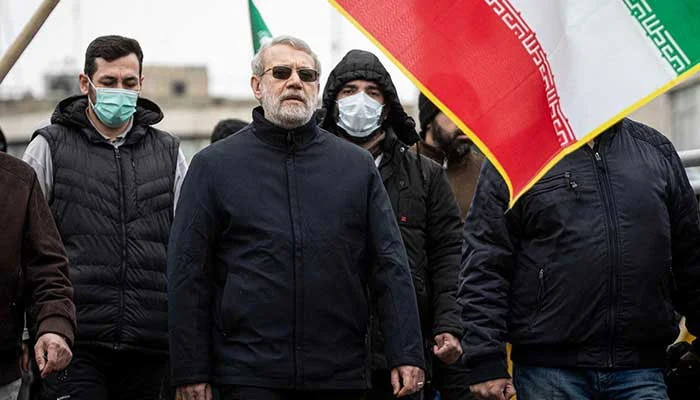
Larijani’s role had become increasingly prominent as the regional conflict intensified, particularly while the new Supreme Leader Mojtaba Khamenei remained largely out of the public eye. Recently seen among crowds at a government rally in Tehran, Larijani’s public presence embodied Iran’s defiant posture. On the nuclear and diplomatic fronts, he held key significance, having supported the 2015 nuclear deal from which US President Donald Trump later withdrew.
Potential impacts of his martyrdom
The assassination could disrupt Iran’s power equilibrium, potentially triggering internal political friction and further escalating regional tensions. Analysts suggest several possible consequences: a power vacuum may emerge, competition between different factions could intensify, wartime decision-making might slow or become less effective, and the command and control system could weaken without his coordinating presence.
Larijani’s death removes a figure who possessed both institutional memory and strategic vision, raising concerns about whether successors can maintain the same coherence in Iran’s multi-layered governance structure. As the conflict with Israel and the United States continues, Tehran now faces the challenge of filling a void at the very center of its national security apparatus.
