



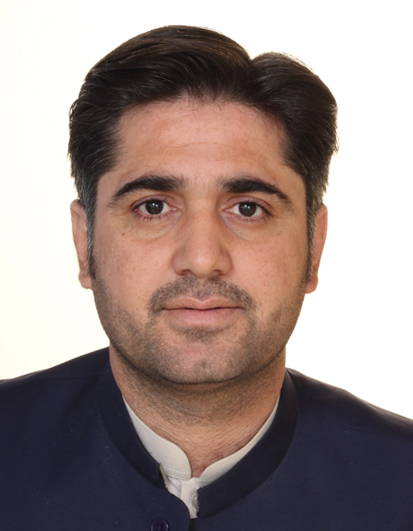
By Mehrab Shah Afridi
Pakistan stands at the precipice of a demographic crisis that threatens to strain every aspect of its social and economic fabric within little more than a decade. Recent projections, produced with the support of the United Nations Population Fund, UK Aid, and the Population Council, offer an unflinching view of a nation growing faster than its institutions can adapt. The statistics are stark, yet they risk being dismissed as abstract numbers; what they reveal is not just a challenge for policy makers but a reality that will shape the everyday lives of millions of Pakistanis. By 2040, the country will need eight million additional housing units, a sharp rise from the current shortfall of around 0.9 million annually.
This demand emerges from a population growth rate of roughly 2% per year, a pace that urban planning and construction sectors are ill-equipped to match. Without intervention, experts warn, the result will be sprawling informal settlements, overcrowded neighborhoods, and the overwhelming of already fragile water, electricity, and sanitation networks. The consequences will not be confined to statistics; they will be felt in daily commutes clogged by congestion, families squeezed into unsafe and substandard homes, and neighborhoods lacking access to clean water or reliable electricity. Education, too, faces an impending collapse if the trajectory continues unchecked. Current fertility patterns show that almost a third of women give birth before reaching the age of 20, and projections suggest that by 2040, a quarter of all births will still be to very young mothers.
The result will be a tidal wave of school-age children, necessitating the establishment of nearly 19,000 new schools just to maintain the minimum coverage. Classrooms are already overcrowded, teachers overworked, and infrastructure strained to breaking point. The challenge is not merely administrative; it is profoundly human. Each child unable to access a quality education represents lost potential, futures limited by a system unable to keep pace with the society it serves. Equally worrying is the pressure this demographic surge will place on Pakistan’s labor market. By 2040, an estimated 59 million people will enter the workforce. The formal economy is unlikely to absorb even a fraction of these entrants, potentially leaving millions in unemployment or underemployment.
Economists caution that such a scenario could exacerbate poverty, fuel informal and precarious work, trigger mass internal migration, and, in the worst case, spark social unrest. The danger lies not just in numbers but in human consequences: young men and women with skills and ambition may find themselves without opportunity, disillusioned and marginalized, their energy diverted from constructive engagement into survival and frustration. Underlying this crisis is a persistent neglect of family planning and reproductive health. Despite decades of advocacy and awareness campaigns, access to contraception and reproductive healthcare remains uneven, particularly in rural and underserved areas. Cultural norms, early marriage, limited educational opportunities for girls, and male-dominated decision-making continue to drive high fertility rates.
Experts argue that political sensitivity and fear of backlash from conservative groups have left the government reluctant to confront the issue head-on. The result is weak legislation, underfunded programs, and inconsistent implementation, leaving communities without the support they need to manage family size and invest in the future of each child. The message from these findings is clear: Pakistan’s demographic emergency is not a distant specter but a reality in the making. Every year of inaction compounds the problem, pushing the nation closer to a breaking point. Housing shortages, overcrowded schools, and an unprepared labor market are not theoretical—they are unfolding now, quietly but inexorably shaping the lives of millions.
Yet the crisis is not inevitable. The path forward, though challenging, is evident. Universal access to family planning, investment in girls’ education, robust maternal healthcare, and targeted job creation could stabilize growth and empower communities. Training more teachers, building schools, and implementing a coordinated national population management strategy are essential. Each measure represents more than policy; it is an investment in human potential, a commitment to ensure that children can grow up with homes, classrooms, and livelihoods rather than in overcrowded settlements or on the margins of society.
Pakistan’s demographic challenge is a test not only of governance but of collective vision. The stakes are profound: without urgent, coordinated, and sustained action, the nation risks entering 2040 with its social and economic systems under unmanageable strain. However, with foresight, investment, and the political will to confront uncomfortable truths, the country can transform this looming crisis into an opportunity—guiding growth in ways that strengthen communities, protect human dignity, and secure a future in which the population is an asset rather than a burden.
(The writer is a journalist in tribal region, covers various beats, can be reached at news@metro-morning.com)
