



By Ahsan Mughal
KARACHI: The anguish of the fall of Dhaka continues to resonate deeply within Pakistan, Mohajir Qaumi Movement-Haqiqi (MQM-H) chairman Afaq Ahmed said, drawing a stark comparison between past and present challenges in the country.
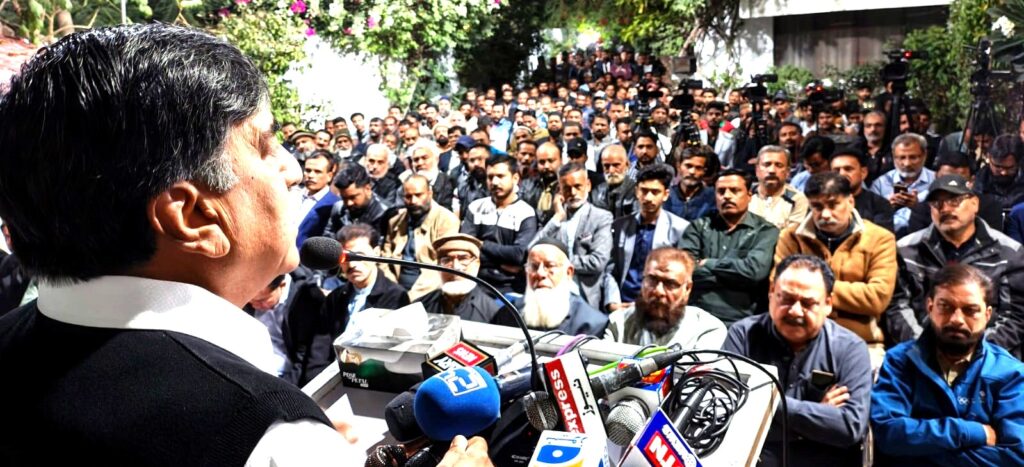
Speaking at a prayer ceremony organized by his party to mark the anniversary of Dhaka’s fall, Ahmed warned that the use of force against one’s own people still posed a threat to national cohesion, echoing the circumstances that led to the 1971 breakup of the country. Addressing party members and families, Ahmed said the event was intended to ensure that younger generations understood the lessons of Pakistan’s most painful tragedies.
Afaq Ahmed highlighted the findings of the Hamoodur Rahman Commission, which concluded that political power rightfully belonged to the Awami League but had been denied through ruthless suppression and political maneuvering. “Those responsible may no longer be alive,” Ahmed said, “yet the consequences of their actions continue to be borne by ordinary citizens.”
He also drew attention to the enduring plight of Pakistanis stranded in former East Pakistan, describing their ongoing suffering as a “price of loving Pakistan.” Citing records from the Red Cross, he noted that thousands were still living in 44 camps abroad, many maintaining Pakistan’s flag and identity, yet largely forgotten by successive governments and centers of power.
Ahmed emphasized that these communities remained symbolic reminders of unresolved injustices, underscoring the human cost of political decisions and state action. The ceremony also included prayers for the victims of the Army Public School attack, linking past and present tragedies and stressing the need for national reflection.
