




By Moin Ullah Shah
KARACHI: Economist Kaiser Bengali on Saturday urged immediate land reforms and quarterly revisions of the minimum wage, warning that Pakistan’s current wage structure has left millions of workers in poverty despite growth in the textile sector following the restoration of GSP Plus status.
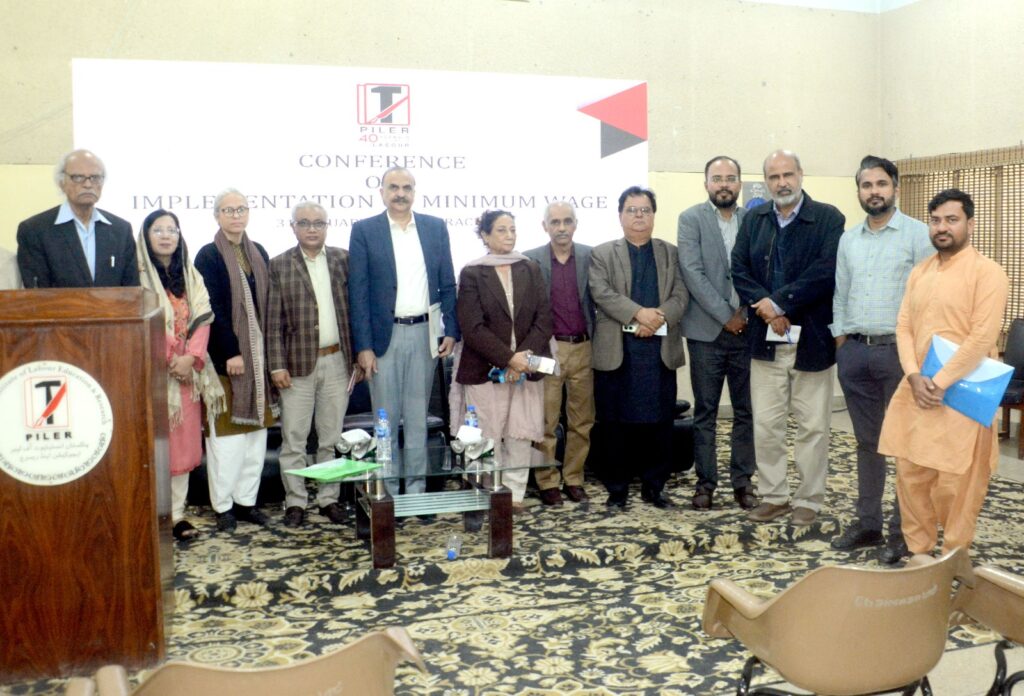
Speaking at a conference on minimum wage implementation organized by the Pakistan Institute of Labor Education and Research (PILER), Bengali highlighted stark gender wage gaps. In rural areas, men earn Rs30,000 monthly versus Rs28,000 for women, while in cities, men earn Rs37,250 and women Rs35,000.
Punjab leads in youth education and technical training, whereas Sindh lags behind, with only 5.8 percent male and 3.2 percent female participation in education. “People are poor because they don’t have assets. Even one acre of land can improve livelihoods in rural Sindh,” Bengali said, noting that Sindh has the highest percentage of landless farmers at 69 percent.
PILER director Abbas Haider said while business has increased after GSP Plus, workers’ wages remain stagnant, forcing overtime, particularly for women. He stressed the need for employment contracts to protect workers’ rights. Veteran journalist Husain Naqi called for revising the minimum wage every three months.
Nasir Mansoor of the National Trade Union Federation revealed that Rs1.2–1.5 billion is lost monthly through wage theft, affecting unregistered workers who collectively save employers billions. Anna Bryher of Labor Behind the Label announced the “Raise the Wages” campaign, citing ongoing wage theft and harassment.
Abida Ali of Workers Rights Consortium highlighted that 80 percent of textile workers earn below minimum wage despite the industry’s $1.85 trillion value. Qazi Khizer of HRCP Sindh recommended raising the minimum wage to Rs75,000. PILER chairman Dr Riaz Shaikh warned of a widening rich-poor divide, while Sindh Labor Secretary Sajid Jamal Abro assured government measures for improvement.
The conference concluded with recommendations including immediate implementation of minimum wage, cheque-based salary payments, stronger factory inspections, inclusion of economists on wage boards, protection for trade union rights, and accountability of government institutions for labor law enforcement.
#Pakistan #MinimumWage #LaborRights #TextileWorkers #PovertyTrap #WageInequality #WorkersRights #GenderPayGap #LandReforms #EconomicJustice #GSPPlus #WorkerProtection #TradeUnions #FairWages #LaborLawEnforcement
