




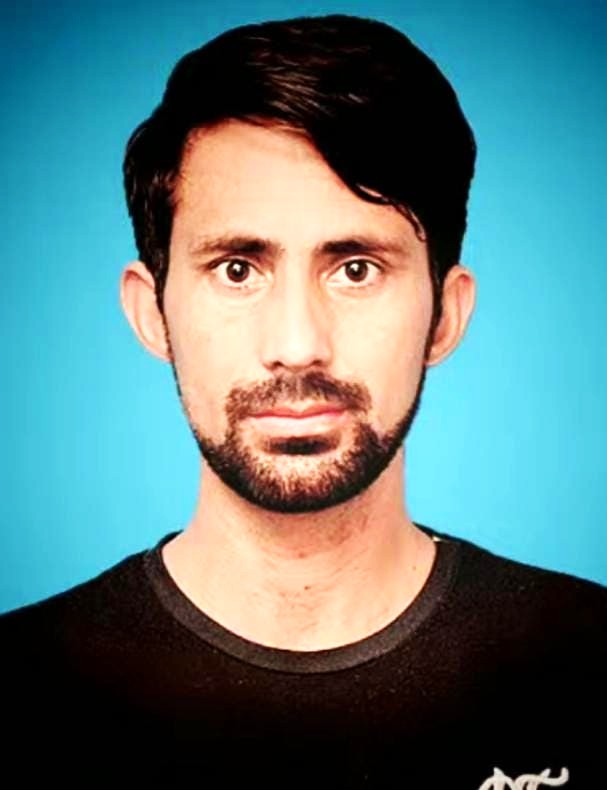
By Shakeel Hussain
History does not forget: it records, it remembers, and it warns. When Christopher Columbus arrived in the Americas, it was not merely a “discovery”; it marked the beginning of conquest, bloodshed and the erasure of entire civilizations. Indigenous populations were displaced, cultures were shattered, and a new world order was built on suffering. What was celebrated as expansion was, in reality, a foundation laid in injustice. The consequences of that era still echo today in the social and economic marginalization of native communities. For centuries, the language of power has attempted to justify such actions.
Yet voices of conscience have always challenged it. Mark Twain mocked the hypocrisy of empire, exposing how noble words often conceal brutal realities. H.G. Wells also pointed towards the immense human loss behind imperial ambition. Their critiques remain relevant because the pattern they criticized never truly ended: it merely adapted to new circumstances and new forms of influence. The 20th century proved that modernity does not guarantee morality. The atomic bombings of Hiroshima and Nagasaki during the second world war were not just military actions; they were displays of overwhelming force with devastating human consequences.
Entire cities were reduced to ruins, and generations were left to endure the long-term effects of radiation, trauma and loss. It was a moment when technological advancement was used without ethical restraint. The same logic continued in later decades. The Vietnam war exposed the limits of military might against determined resistance. The Iraq war destabilized an entire region, leaving behind political chaos and humanitarian crises. The war in Afghanistan became one of the longest wars in modern history, draining resources while failing to deliver lasting stability. These conflicts reinforced a troubling reality: military strength alone cannot secure peace.
Power in the modern world is not limited to the battlefield. It extends into economic systems, political influence and cultural narratives. In Venezuela, economic pressure and political interference highlight another dimension of global power struggles. In Iran, years of sanctions and diplomatic tensions have created a prolonged standoff shaped by competing interests and regional ambitions. These examples demonstrate that power operates through multiple channels, often blurring the line between defence and dominance. The events of 28 February 2026 marked a dangerous escalation in this ongoing pattern. The United States and Israel launched Operation Epic Fury, targeting Iran’s military infrastructure and leadership.
At the same time, internal and external pressures began to surface. Within the United States, public opposition to the conflict grew, reflecting concerns over its cost and consequences. Political divisions became more visible, and debates over strategy intensified. Internationally, several European nations showed reluctance to fully support the escalation, emphasizing diplomacy over confrontation. This divergence highlighted the fragility of alliances in times of crisis. The deployment of powerful military assets, including the USS Abraham Lincoln and the USS Gerald R. Ford (CVN-78), was intended to demonstrate strength and deterrence.
However, reports of operational challenges, regional resistance and rising tensions in the Strait of Hormuz revealed the limits of military dominance. In a highly interconnected world, even localized conflicts can have global consequences, affecting trade, energy supplies and international stability. This is where the transformation becomes clear. What begins as “epic fury”—a demonstration of power and dominance—inevitably evolves into “epic fear”. This fear is not confined to governments or military institutions; it spreads to ordinary citizens, global markets and vulnerable societies. It disrupts economies, destabilizes regions and creates uncertainty that can last for generations.
The lesson is both simple and profound. Power, when exercised without restraint, does not create lasting control: it generates resistance, instability and fear. The cycle of action and reaction becomes self-perpetuating, with each escalation increasing the stakes. What is gained in the short term is often outweighed by long-term consequences. From the bloodshed of early colonization to the complex geopolitical conflicts of today, the pattern remains consistent. The actors may change, the technologies may evolve, but the underlying dynamic of power and its consequences remains the same. Fury may dominate the moment, but fear defines the aftermath.
Breaking this cycle requires a fundamental rethinking of global priorities. True strength lies not in domination but in restraint, not in aggression but in diplomacy, and not in short-term victories but in long-term stability. Without this shift, the world risks repeating its most destructive patterns, where every act of fury plants the seeds of future fear. In the end, the choice is not between strength and weakness: it is between wisdom and recklessness. History has already shown the cost of ignoring this distinction. The question that remains is whether the world is willing to learn from it.
(The writer is a university student and puts his views on various topics, can be reached at editorial@metro-morning.com)
