



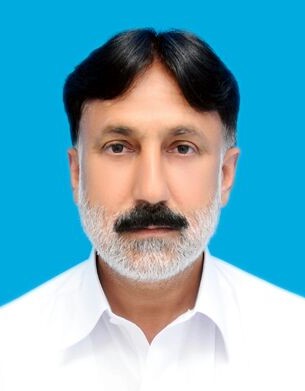
By Sudhir Ahmed Afridi
Improving the quality of education in Khyber Pakhtunkhwa’s most deprived districts, particularly the former tribal areas where literacy levels remain low, is neither an impossible task nor an unrealistic ambition. Student dropout rates can also be brought under control, provided the government shows seriousness and places education reform at the very top of its priorities. If urgent and practical steps are taken to improve the system, align curricula with modern needs, make syllabuses shorter, clearer and more engaging, reduce overcrowding in classrooms, and address the acute shortage of teachers in public schools, fixing the education system in the province would not be difficult.
From primary to higher levels, subject specialist teachers are essential. Without them, talk of reform remains hollow. My proposal is straightforward. Excess bureaucrats, officers on special duty and surplus staff in other government departments should be assigned teaching duties for limited periods under a rotation system. This would allow them to gain classroom experience while contributing directly to the education of the next generation. In fact, teaching for a defined period should be made mandatory for every government employee before they return to their parent department. Khyber Pakhtunkhwa presents a strange and bitter contradiction. On one side, government departments are bloated with officers and staff far beyond actual need.
On the other, particularly in the tribal districts, a severe shortage of teachers has paralyzed the education system. This is not merely administrative mismanagement. It is a clear policy failure that demands serious reflection. The reality is that in almost every department, surplus bureaucrats are simply accommodated somewhere to keep them occupied. Some are made officers on special duty, others are given ineffective or symbolic postings. Rarely is the more fundamental question asked: how can the state and society meaningfully benefit from these human resources? A system trapped in the endless circulation of files seems to have forgotten that real capital lies in people, not in chairs or offices.
Education is not just another department. It is a vocation of responsibility rather than authority, one that demands patience, integrity and the shaping of minds. Perhaps that is why it is so often neglected. There are no lucrative incentives here, no paper games, only sustained effort and nation-building. Yet the question remains unavoidable. If a bureaucrat can serve across multiple departments and civil servants can be sent on deputation, why can they not also serve as teachers in educational institutions? The situation in the tribal districts is particularly alarming. In many schools, a single teacher is forced to teach several classes at once.
In hundreds of schools, one or two teachers are expected to handle up to seven grades, covering nearly 47 subjects a day, an impossible demand by any standard. Subject specialists are almost non-existent at primary, middle and even high school levels. Classrooms are overcrowded and educational standards continue to decline. All this is happening while hundreds of officers and government employees across the province remain practically idle, underutilized or simply passing time. If the government is willing, a simple but effective model can be adopted. The academic qualifications of surplus bureaucrats and government employees should be assessed, and those found suitable should be assigned teaching responsibilities in primary, middle and high schools, as well as colleges in the tribal districts, for fixed periods of six months or a year.
This can be done on a voluntary, selection-based and training-linked basis. Even compulsory service should not be ruled out. Legislation could require every government employee, after recruitment, to teach in a school for at least six months, with this rotation continuing over the years. These children belong to the same nation, and to the same officers who serve the state elsewhere. Educational standards must not be compromised. This idea is not limited to filling teacher shortages. Its broader benefits are significant. Officers would gain first-hand exposure to grassroots realities and public challenges. Teaching would make them more sensitive, responsible and humane administrators.
Social awareness would grow within the bureaucracy, and the culture of keeping officers idle as OSDs could be discouraged. Just as officers rotate through departments to gain experience, classroom exposure can become part of their professional development. The real question, then, is not where surplus officers should be placed. It is whether the state truly wants to use them for nation-building. If the bureaucracy remains confined to files, stagnation will persist. But if that same bureaucracy reaches classrooms, schools may revive, educational standards may improve, and children in the tribal areas may come to recognize the state through books rather than guns.
(The writer is a senior journalist at tribal region, covers various beats, can be reached at editorial@metro-morning.com)
