



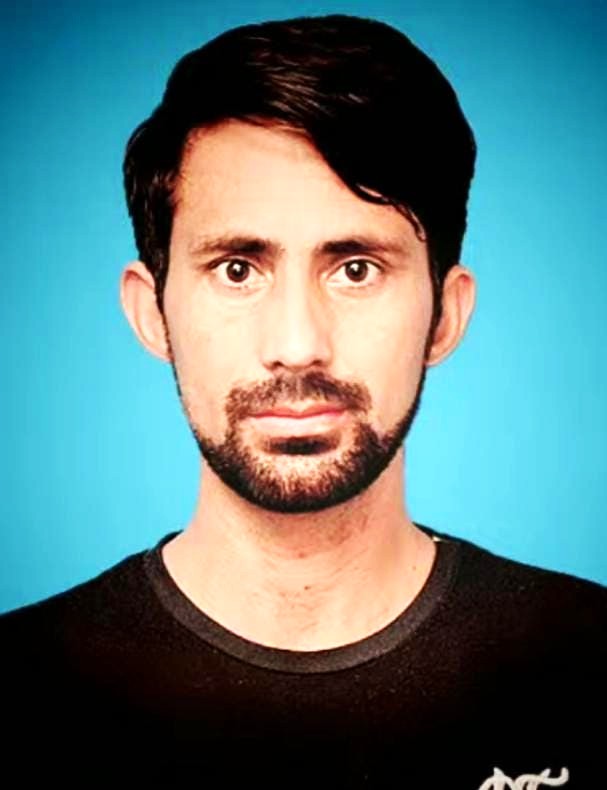
By Shakeel Hussain
Classical literature endures not because it is old, but because it refuses to grow irrelevant. Across centuries and continents, it returns to the same elemental concerns: dignity, identity, humiliation, hope. In Dream on Monkey Mountain, the Nobel laureate Derek Walcott crafts a drama rooted in the post-colonial Caribbean, yet expansive enough to speak to any society wrestling with power and selfhood. When read alongside the contemporary realities of Venezuela, the play becomes less a theatrical artefact and more a moral lens. It invites us to see how ordinary citizens endure pressure, and how freedom often begins as an interior act long before it becomes a political one.
History and literature are often treated as separate disciplines, one concerned with fact and the other with feeling. In truth, they are interwoven. History is not merely a catalogue of events but a living archive of memory and consequence. Literature, meanwhile, animates those memories, translating them into voices, faces and interior monologues. Together, they sustain a conversation between past and present. They allow us to recognize recurring patterns of domination and resistance, and to ask what it means to remain human when systems strain that humanity. Walcott centers his drama on Makak, a marginalized charcoal burner whose sense of self has been eroded by an oppressive social order.
Makak is mocked, dismissed, reduced. His humiliation is not incidental; it is structural. Yet the play’s genius lies in its insistence that liberation is not solely a matter of external overthrow. Makak’s transformation unfolds through dreams, visions that force him to confront internalized inferiority. His journey is psychological before it is political. Walcott suggests that when power distorts one’s reflection, the first act of resistance is to imagine oneself whole. The resonance with Venezuela is difficult to ignore. Over the past decade, the country has endured hyperinflation, shortages of basic goods, mass emigration and deep political polarization. These crises are frequently reported in aggregate terms: inflation rates, GDP contraction, electoral disputes.
But statistics, however stark, do not capture the quieter corrosion of self-worth that prolonged instability can inflict. To queue for hours for bread, to watch savings dissolve, to weigh the decision to leave one’s homeland — these are experiences that shape identity as much as they shape economics. Like Makak, many Venezuelans have had to navigate a terrain where institutional trust is fragile and opportunity uncertain. The strain is not merely material. It is emotional and symbolic. Prolonged crisis can narrow the horizon of expectation; it can persuade citizens that they are defined solely by scarcity and dysfunction. Walcott understood that domination operates as much through narrative as through force.
To be told repeatedly that one is peripheral, incapable or condemned to failure is to risk believing it. Yet, as in the play, the story does not end with humiliation. Makak’s dreams are not escapism; they are acts of reclamation. They contest the version of himself imposed upon him. In Venezuela, similar acts of imaginative resistance persist. Community kitchens have emerged in neighborhoods where the state falters. Independent journalists continue to report under pressure. Cultural festivals, music and poetry endure, asserting continuity in the face of rupture. These gestures may appear modest, but they are expressions of collective self-definition. Identity, in both Walcott’s drama and Venezuela’s lived reality, is contested ground.
Makak struggles even to name himself, a metaphor for the way oppression fractures self-perception. Venezuela, too, grapples with competing narratives: a revolutionary project defended by some, a failed experiment lamented by others, a humanitarian crisis described by international observers. Yet beyond these macro labels lies a more intimate truth. Identity is shaped in kitchens and classrooms, in conversations between parents and children, in the decision to stay or to depart. It is in these spaces that dignity is quietly negotiated. Hope, in such contexts, cannot be sentimental. In Dream on Monkey Mountain, it is fragile, born in the uncertain space of dreams.
(The writer is a teacher and content writer, keen to put his views on various topics, can be reached at editorial@metro-morning.com)
#HumanStories #Drama #ClassicalLiterature #DerekWalcott #DreamOnMonkeyMountain #PostColonialDrama #VenezuelaCrisis #IdentityAndDignity #Resilience #FreedomWithin #PsychologicalJourney #LiteratureAndHistory #SocialJustice #CommunityStrength #ImaginativeResistance #HopeInCrisis #Makak #CulturalStories #EverydayHeroes #LifeAndLiterature #TeachingPerspective #StorytellingMatters #ArtReflectsLife #CitizenVoices #CollectiveIdentity #EnduringHope
