



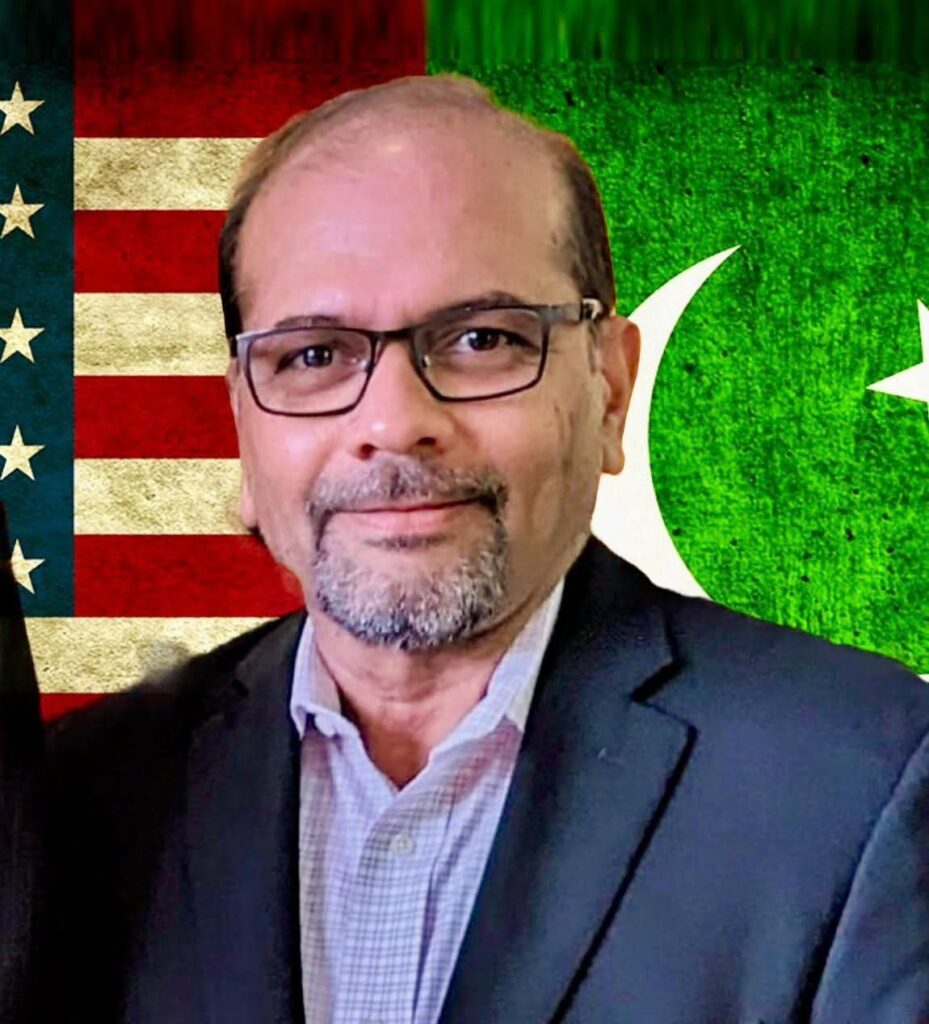
By Siraj Narsi
We live in an age of increasing polarization, where political, ideological, and religious narratives divide societies into rigid camps of “us” and “them.” These narratives thrive, unfortunately, because they are endlessly repeated—amplified by social media, where misinformation is often accepted as truth without verification, and where echo chambers reinforce existing biases. Even well-meaning people sometimes circulate these ideas with little pause for reflection, historical context, or critical inquiry. One visible consequence of this is the persistence of Islamophobia in the West, a fear rooted less in facts than in a lack of knowledge and ignorance of Islamic history, its ethical principles, and intellectual traditions.
History, however, offers powerful counter-narratives grounded in our shared humanity. By overlooking the historical depth of Islamic thought, we miss universal truths that could bridge gaps between faiths. Such truths can be found in the legacy of Ali ibn Abi Talib—the cousin and son-in-law of Prophet Muhammad (PBUH), the fourth Caliph of Islam, and the first Imam in the Shia tradition. As Muslims around the world celebrate Youm-e-Ali on 13 Rajab, marking his birthday, this moment invites reflection on a dimension of his legacy that remains profoundly relevant today: his model of governance, rooted in justice, accountability, and human dignity.
Although Imam Ali was a religious figure, his approach to leadership and governance was grounded in universal humanism, transcending religion and theology. At a time when fear and exclusion dominate headlines, his philosophy offers a blueprint for a society built on inclusion, equity, and social justice. His core mandate was captured in a famous letter to Malik al-Ashtar, his appointed governor of Egypt: “Among your subjects there are two kinds of people: those who are your brothers in faith, and those who are your equals in humanity.” This single line challenges the very ideas of extremism and exclusion. In Ali’s view, a leader’s duty was not only to those who prayed like them or belonged to their tribe but to every human soul. This revolutionary stance is one reason the United Nations has cited this letter as a historical model for fair governance.
Imam Ali’s guidance to his governor in the seventh century aligns remarkably with twenty-first-century ideals of transparency, meritocracy, and human rights. He warned that leaders should not behave like dictators, but instead lead with mercy, kindness, and love. He emphasized that the true test of government lies in how it treats those without a voice—the poor, the disabled, and the elderly. He advised allocating treasury resources for their welfare and meeting them directly, without guards, so they could speak freely. On economic matters, he argued that the development of land and people should take priority over tax collection, and he cautioned against nepotism, urging that friends and relatives should not receive special favors at the public’s expense.
Ali also placed great importance on the judiciary, instructing Malik to select judges who could not be bribed or intimidated, who investigated disputes deeply, and who had the courage to correct mistakes. Likewise, he emphasized meritocracy in civil service, advocating for careful selection, trial periods, and fair remuneration to prevent corruption. He viewed the military not as a tool of oppression, but as a protector of the people, and he insisted that leadership in all spheres—military, economic, judicial—should rest on character and competence, not privilege or rank. He described the state as an interconnected web, where each part depends on the others: taxpayers cannot thrive without the army; the army relies on revenue; both require judges and civil servants to maintain order; and all depend on traders and craftsmen to keep the economy moving.
His advice to prioritize listening to ordinary citizens over elites reinforces a universal truth: the strength of a nation lies in its people, not its powerful few. Ali’s principles of governance resonate with modern ideals. He championed consultation with wise individuals, evidence-based policymaking, meritocracy, transparency, and accountability. He affirmed equal rights for non-Muslims, reflecting contemporary human rights standards. His governance was not about enforcing religion, but justice; he believed a state could survive without faith, but could never endure injustice. Reading his words today, one finds not a foreign or ancient ideology, but a mirror of the highest aspirations of humanity: a society where every individual, regardless of background, caste, creed, or faith, is treated with dignity.
(The writer is a business finance professional, Rotarian, and active community volunteer, sits on the executive and advisory boards of several non-profit organizations, can be reached at editorial@metro-morning.com)
