




MM Report
DHAKA: Concerns over information security and India’s influence resurfaced in Bangladesh after reports emerged that sensitive details relating to a recent visit by foreign defence industry representatives had been leaked and subsequently circulated in Indian media.
According to accounts shared in diplomatic and security circles, officials linked to a foreign military equipment manufacturing firm had travelled to Bangladesh as part of routine engagements involving defence cooperation.
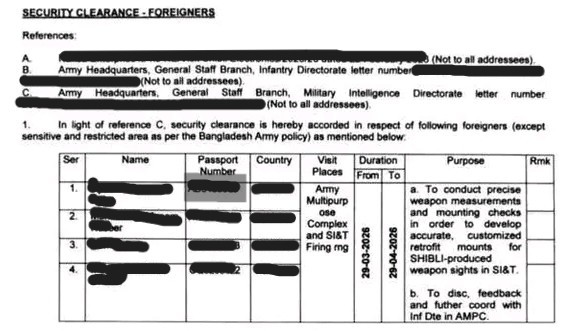
During the visit, the delegation was granted clearance to access certain military installations, a process typically governed by strict confidentiality protocols. However, documents containing their identities, passport numbers and details of their authorized movements were later reported to have found their way into external hands.
What appeared to have heightened unease in Dhaka was not only the alleged breach itself but the manner in which the information was handled thereafter. Indian media outlets reportedly published elements of the leaked material, framing it in a way that risked fueling suspicion about Bangladesh’s defence ties and internal safeguards.
Observers suggested that such disclosures, whether intentional or incidental, had the potential to shape public perception and complicate regional sensitivities. Security analysts noted that even isolated lapses involving classified or semi-classified information could carry broader implications.
Bangladesh, which has sought to maintain a balanced foreign policy while diversifying its defence partnerships, relies heavily on the credibility of its military and intelligence institutions. Any perception that sensitive data could be compromised might deter prospective partners or complicate ongoing negotiations.
The episode also coincided with renewed scrutiny over reports concerning Bangladesh’s potential acquisition of advanced military hardware, including a new batch of fighter aircraft from the same country. While officials did not publicly link the two developments, some experts argued that narratives emerging from such leaks could indirectly influence both domestic opinion and international confidence.
Authorities in Bangladesh had yet to issue a public response, but the incident underscored the persistent challenges facing states operating within a complex web of regional rivalries, information flows and strategic alignments.
