




Speculation grows that Tehran could sever fibre-optic links in the Strait of Hormuz, a move that would cripple connectivity across the region and beyond
MM Report
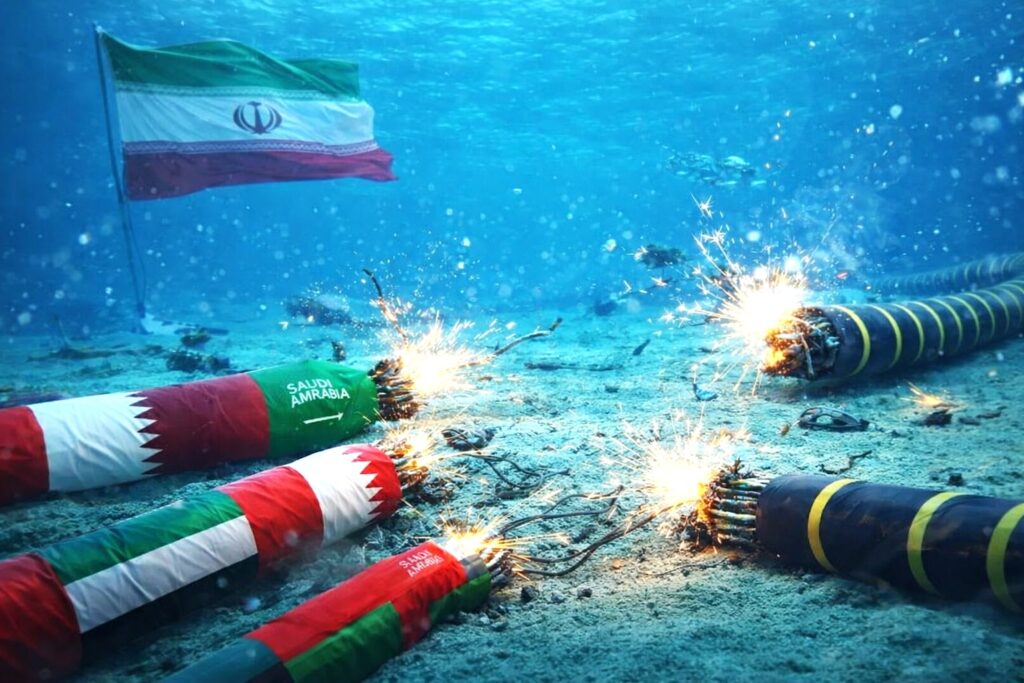
KARACHI: Iran is drawing up plans to sever undersea internet cables in the Gulf, a dramatic escalation that would cut off Gulf states from global networks and potentially drag Pakistan and other neighbouring countries into the digital crossfire, according to the sources.
The reported strategy, which has been circulating among defence and intelligence circles, suggests Tehran is considering targeting only those cables serving nations it deems directly or indirectly involved in the current conflict. But experts warn that any interference with the dense web of fibre-optic links on the seabed could have catastrophic, unintended consequences for the entire region.
“The Strait of Hormuz is one of the world’s most concentrated choke points for data as well as petroleum products,” said a senior telecoms analyst familiar with the region’s infrastructure. “If cables are deliberately cut, you’re not just taking out one country. You’re severing the digital arteries that connect the Middle East to Asia and Europe as well.”
The Gulf’s waters are crisscrossed with dozens of fibre-optic cables carrying the world’s financial data, internet traffic and communications. Systems such as the 2Africa Pearls cable, the SEA-ME-WE-6 and the Gulf’s own FIG cable all pass through the strait, linking the Arabian Peninsula to Pakistan, India and beyond .
Defence analysts urged caution, stressing that Tehran must think carefully before acting. “The repercussions would be far-reaching and deeply unpredictable,” one regional security expert said. “This is not a decision that can be taken lightly. Realism needs to prevail.”
While the cutting of cables would undoubtedly disrupt connectivity, most modern economies have multiple redundant routes and satellite back-up systems, meaning a total blackout for entire nations is unlikely. However, significant degradation of service, slower speeds and patchy connections are almost certain.
There has been no official confirmation or denial from Iranian authorities. The Islamic Revolutionary Guard Corps, which controls the strait, has previously threatened to “set ablaze” any vessel attempting passage, but has made no specific threats against the seabed infrastructure .
The stakes are high. Recent analysis suggests that if both the Red Sea and the Strait of Hormuz were rendered inaccessible for repairs, the impact on global data flows would be unprecedented . In 2024, damage to just three cables in the Red Sea disrupted a quarter of traffic between Asia, Europe and the Middle East .
Pakistan, which relies on seven submarine cables for international connectivity, has already experienced outages in recent years due to faults on the AAE-1 and SMW-4 systems . Any fresh damage in the Gulf would place further strain on the country’s already fragile internet infrastructure. For now, the world waits to see whether Tehran will follow through on what some analysts believe is a credible threat, or whether cooler heads will prevail beneath the waves.
