




MM Report
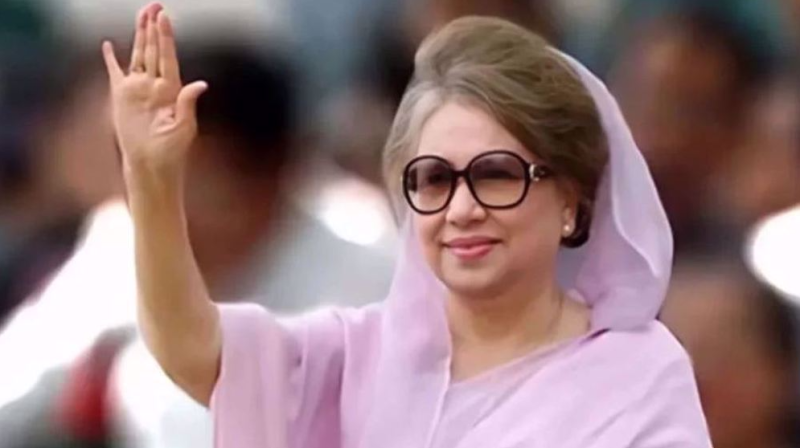
DHAKA: Bangladesh’s former prime minister and BNP chairperson Begum Khaleda Zia has died at the age of 80 after a prolonged illness. She passed away while undergoing treatment at Evercare Hospital in Dhaka.
A two-time prime minister and one of the most influential figures in Bangladesh’s political history, Khaleda Zia had been hospitalized for more than a month with multiple health complications. Her death marks the end of a defining chapter in the country’s politics, coming just months before crucial national elections scheduled for February 2026.
Her passing also comes at a politically significant moment. Her son, Tarique Rahman, has recently returned to Bangladesh after 18 years in exile, and the BNP has decided to contest the upcoming elections. Sources said Begum Khaleda Zia and her son were expected to submit nomination papers from multiple constituencies.
Khaleda Zia was the first female prime minister of Bangladesh and the second woman to hold the office in the Muslim world, after Pakistan’s former prime minister, Shaheed Benazir Bhutto.
The chief adviser of the interim government, Professor Muhammad Yunus, has expressed profound sorrow over the death of Begum Khaleda Zia, the three-time former prime minister, a symbol of the democratic movement and chairperson of the BNP.
In a condolence message, the chief adviser said that with the passing of Begum Khaleda Zia, the nation had lost a great guardian. “I am deeply saddened and grief-stricken by her death,” he said. Professor Yunus said Begum Khaleda Zia was not merely the leader of a political party. She represented an important chapter in the history of Bangladesh. In recognition of her contributions, her long struggle and the deep public sentiment towards her, the government declared her a Very, Very Important Person of the state earlier this month.
The chief adviser said her role in the struggle to establish democracy, a multi-party political culture and the rights of the people in Bangladesh would be remembered forever. Through her uncompromising leadership, the nation was repeatedly freed from undemocratic conditions and inspired to reclaim liberty. Her contributions to the country and its people will be remembered with respect.
