




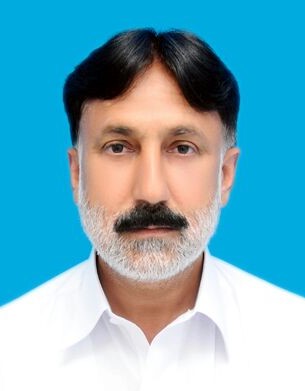
By Sudhir Ahmed Afridi
The Middle East awoke to another shock when Iranian state media confirmed the death of Seyyed Ali Khamenei, the Supreme Leader whose authority had defined the Islamic Republic for more than three decades. Born in 1939 in Mashhad, Khamenei lived to the age of 86, spending a lifetime steeped in religious scholarship, revolutionary struggle, and the stewardship of a state forged amid turmoil. Within hours of the announcement, streets in Iran, Iraq, and beyond were filled with mourners. Black flags flew from rooftops, processions wound through cities, and pledges of loyalty mingled with tears and vows of retribution.
Khamenei’s influence went far beyond the formalities of office. He was the custodian of a revolutionary creed, shaped by his proximity to Ruhollah Khomeini and hardened by imprisonment under the Shah. When Khomeini died in 1989, Khamenei assumed the mantle of Supreme Leader, inheriting a system that fused clerical authority with republican institutions. His task was to navigate the delicate balance between ideological orthodoxy and the practical demands of governance. To his supporters, he embodied austerity and personal restraint, projecting the image of a leader untouched by private wealth in a region often marked by opulence.
The circumstances surrounding his death remain a source of immediate concern. Reports suggest Khamenei was killed in a recent joint strike attributed to the United States and Israel, an operation that may also have claimed the life of Ali Larijani. The first indication came from Israeli Prime Minister Benjamin Netanyahu, before Tehran confirmed the event. Details are still emerging, and questions about intelligence breaches and internal vulnerabilities abound, though no definitive evidence has yet been made public.
Beyond the immediate shock lies a deeper challenge: the question of succession. Iran’s constitution vests the authority to appoint a new Supreme Leader in the Assembly of Experts, a body designed to ensure continuity and institutional stability. Yet, the death of such a long-serving figure inevitably reshapes the balance among Iran’s competing power centers. The coming weeks will test the coherence of the political class, the resilience of the institutions, and the capacity of the republic to navigate both internal and external pressures.
Regionally, the implications are immediate and profound. Relations with Israel may deteriorate further, while Iran’s influence across Iraq, Lebanon, Yemen, and Syria could come under renewed scrutiny or strain. Globally, major powers will watch cautiously, aware that any misstep could unsettle energy markets and exacerbate an already fragile world economy. In the intricate web of Middle Eastern politics, the vacuum left by Khamenei could trigger both uncertainty and opportunity, depending on how swiftly and effectively Iran’s leadership manages the transition.
Khamenei’s death is not simply the passing of a man; it represents the closing of a chapter in Iran’s revolutionary history. He symbolized a generation shaped by upheaval, whose authority was as much ideological as institutional. The challenge ahead is to determine whether Iran’s complex system of governance—its fusion of religious legitimacy, republican structures, and entrenched political networks—can maintain stability without the familiar presence of its long-standing leader.
Iran has always positioned itself as more than a state; it defines itself as a civilization, with enduring traditions and a profound sense of continuity. Whether this inheritance will steady the republic in a moment of uncertainty remains to be seen. In the coming days, the world will watch not just for political announcements or military movements, but for signs of social cohesion, institutional strength, and the ability of the nation to navigate a moment that is both a political and historical turning point.
The passing of Khamenei is a reminder that leadership in the Middle East is inseparable from ideology, identity, and the rhythms of history. It is a moment that will test the Islamic Republic’s capacity for continuity amid change and the resilience of a political system forged in revolution but tempered by decades of survival. For Iran, the question now is whether the structures he left behind can carry forward the vision he embodied, or whether the nation will confront a period of uncertainty that will reverberate far beyond its borders.
(The writer is a senior journalist at tribal region, covers various beats, can be reached at editorial@metro-morning.com)
#Iran #Khamenei #MiddleEast #SupremeLeader #IranPolitics #RegionalStability #GlobalImpact #RevolutionaryHistory
