




By Syed Tauqeer Zaidi
PESHAWAR: A consultative meeting on the Smog Action Plan and Air Quality Management for Khyber Pakhtunkhwa was held via video link with the technical team of the World Bank, highlighting coordinated efforts to tackle air pollution across the province. The KP delegation was led by Junaid Khan, Secretary Climate Change, Forest, Environment and Wildlife Department, and included Special Secretary Talha Hussain Faisal, Additional Secretary Ahmad Kamal, MPA Ahmad Karim Kundi, and senior officers from the Environmental Protection Agency (EPA).
During the session, Shafiq, a World Bank team member, emphasised the importance of an airshed-based approach, noting that air pollution does not respect administrative boundaries. He highlighted that emissions from outside urban centres significantly affect downwind populations, making cross-boundary cooperation and multi-sectoral coordination essential. Key sectors identified for collaboration include transport, energy, industry, agriculture, urban planning, and local governance.
Shafiq further outlined the “35 by 35” target — a 35 percent reduction in particulate pollution by 2035 — as realistic and attainable through coordinated policy action, technological upgrades, and public participation. Achieving this goal, he said, would bring substantial public health, climate resilience, and economic benefits, particularly for vulnerable urban populations.
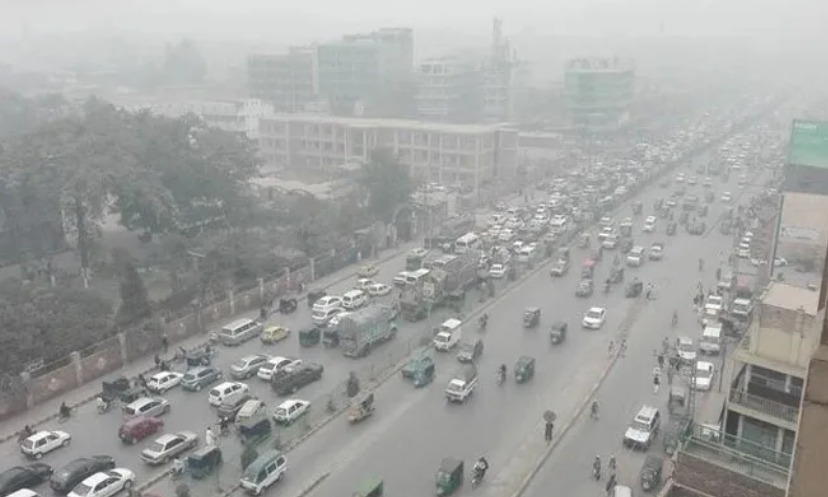
The World Bank team shared insights from satellite-based monitoring, revealing that the Peshawar Valley remains among the most polluted areas in KP, with persistently high concentrations of fine particulate matter (PM2.5) posing serious health risks. The discussion aligned with the Pakistan Country Partnership Strategy (2025–2035), with Outcome #4 focusing on mitigating pollution across the Greater Peshawar–Hayatabad–Frontier corridor through cleaner fuels, vehicle emission standards, industrial compliance, and improved waste management.
Strategic action areas identified included strengthening enforcement mechanisms, enhancing institutional capacity, and deploying modern monitoring infrastructure. The World Bank will support KP through regulatory reforms, sector-specific mitigation, capacity building, public awareness campaigns, and strategic partnerships, based on stakeholder consultations and a gap analysis identifying key governance and technical bottlenecks.
Secretary Junaid Khan reaffirmed the provincial government’s commitment to environmental protection and clean air initiatives, designating the Special Secretary Climate Change as the official Focal Person to coordinate with the World Bank team. He assured that the PC-I would be prepared with transparency, technical rigor, and long-term sustainability, focusing on improving air quality, particularly in Peshawar District.
MPA Ahmad Karim Kundi stressed that air pollution is one of KP’s most pressing environmental and public health challenges and reiterated the government’s commitment to ensuring clean air as a fundamental right for all citizens.
The meeting concluded with a shared resolve to translate policy dialogue into concrete action, aiming to transform blueprints into cleaner skies and a healthier, more resilient future for the people of Khyber Pakhtunkhwa.
#KPK #WorldBank #SmogActionPlan #CleanAirKP #AirQualityManagement #EnvironmentalProtection #ClimateActionPakistan #PollutionReduction #35by35 #PublicHealth #SustainableDevelopment #UrbanAirQuality #PeshawarValley #EnvironmentalPolicy #AirPollutionAwareness #GreenInitiatives #KPEnvironment #ClimateResilience #CleanAirForAll #PakistanUpdates
