




News Desk
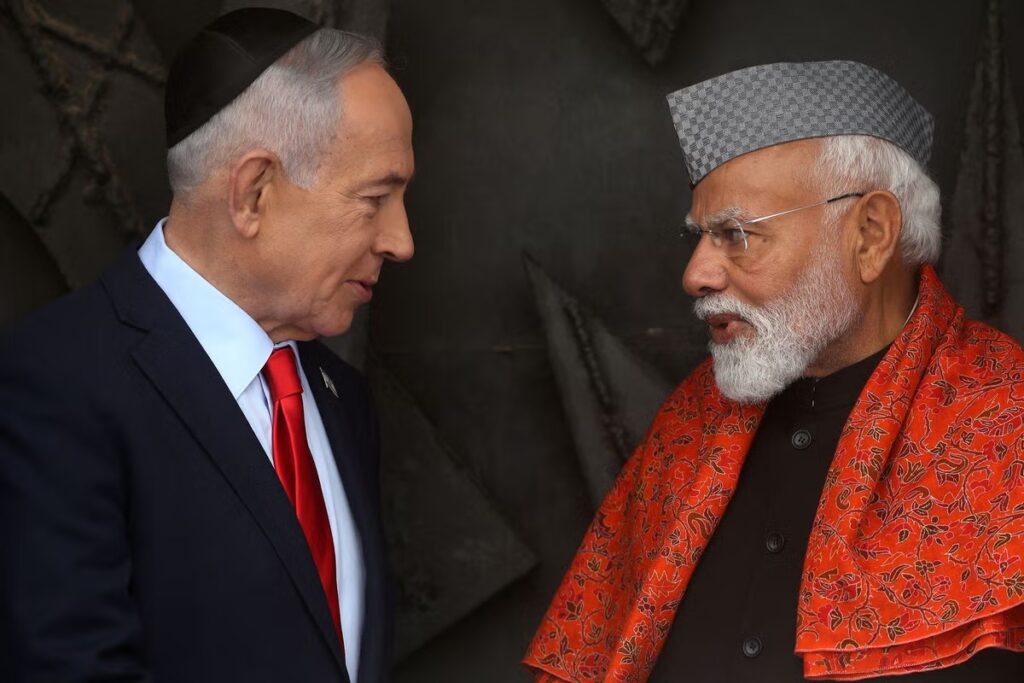
NEW DEHLI: Indian Prime Minister Narendra Modi faced mounting criticism at home over his recent foreign policy choices, with opposition figures questioning his approach to Iran and his close ties with Israel.
The backlash intensified after Modi visited Israel while the country was engaged in a military offensive in Gaza, drawing sharp condemnation from politicians and analysts alike. Anand Bhadauriya, a prominent Indian politician, publicly challenged the Bharatiya Janata Party (BJP) leadership, asking why Modi had been the only world leader to travel to Israel at a time when Palestinians were under attack.
Bhadauriya demanded to know whose advice had guided the prime minister’s decision to visit a country on the verge of war. He accused Modi of compromising India’s independent foreign policy and argued that aligning so closely with the United States was unacceptable. Experts also raised concerns about India’s broader regional stance.
They claimed that Modi’s visit to Israel, coupled with alleged sharing of sensitive intelligence on an Iranian vessel, amounted to a betrayal of Iran, a long-standing regional partner. Analysts described these actions as undermining India’s credibility in the Middle East and questioned the long-term consequences for India’s diplomatic relationships.
The criticism reflected deeper unease within India’s political circles about the balance between strategic alliances and moral responsibility. Observers noted that the prime minister’s alignment with Israel and perceived subordination to US interests could inflame regional tensions and complicate India’s role in ongoing Middle Eastern conflicts.
